




A Fire Safety Inspection is one of the most practical ways to spot hazards before they put lives, property or a business at risk. Blocked escape routes, damaged fire doors, missing signs and poorly maintained alarms can easily be overlooked during day-to-day building management.
For landlords, employers and property managers, the purpose is not simply to complete paperwork. A careful inspection shows whether the precautions in place still suit the building, the people using it and the way the premises operate.
What Is the Difference Between an Inspection and a Fire Risk Assessment?
The terms are often used together, but they are not always interchangeable. A fire risk assessment is the formal process of identifying hazards, deciding who may be at risk and determining what precautions are required. A Fire Safety Inspection is a practical review of the premises and its safety measures, often forming part of the assessment or its ongoing review.
Under the Regulatory Reform (Fire Safety) Order 2005, the responsible person must carry out and regularly review a suitable fire risk assessment for workplaces and the common parts of buildings containing two or more domestic premises. The findings and fire-safety arrangements must also be recorded. Read the official government fire-safety guidance and the London Fire Brigade’s fire risk assessment advice for further information.
A private home occupied by a single household is generally treated differently, although landlords may have other duties relating to alarms, property licensing and housing safety.

What Does a Fire Safety Inspection Cover?
The exact scope should reflect the property, its occupants and the risks identified. A professional Fire Safety Inspection may examine:
- Escape routes, corridors and stairways
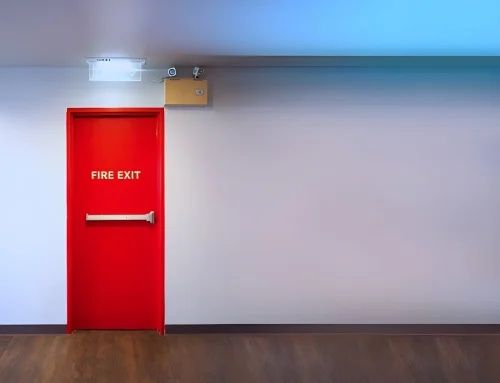
- Final exit doors and emergency exit signs
- Fire doors, frames, seals and self-closing devices
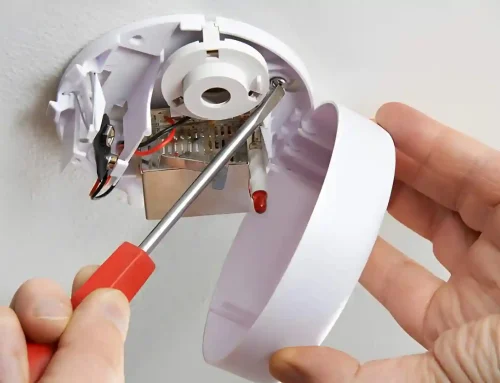
- Smoke detectors, heat detectors and alarm panels
- Emergency lighting and illuminated signs
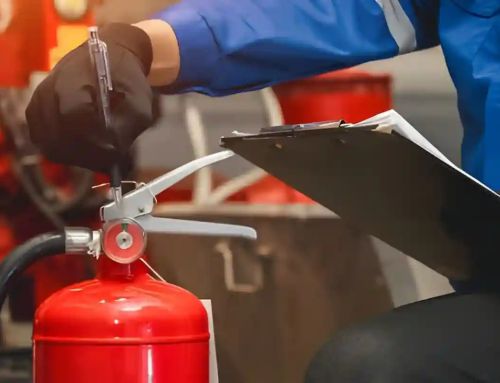
- Fire extinguishers and their locations
- Electrical or heating-related ignition risks
- Storage of combustible materials
- Fire-stopping around service penetrations
- Evacuation procedures and staff training
- Records of testing, maintenance and previous actions
The inspector should consider whether people can raise the alarm, escape safely and understand what to do during an emergency. Vulnerable residents, visitors, night-time occupants and people with limited mobility may require additional planning.
Finding Problems Before They Become Emergencies
Fire precautions can deteriorate even when a building has not undergone major changes. Doors may stop closing properly, contractors may create unsealed holes around cables, stock may be placed in corridors and alarm faults may go unreported.
Regular checks help identify these issues early. They are particularly important after refurbishment, a change in occupancy, a new business activity, alterations to the layout or an incident that may have affected safety equipment.
Where a review identifies wider concerns, arrange a complete fire risk assessment rather than relying on a simple checklist.
How a Fire Safety Inspection Supports Legal Duties
The law places responsibility on the person who controls the premises. Depending on the property, this may be an employer, owner, landlord, managing agent or occupier. That person must put suitable precautions in place, maintain them and plan for emergencies.
A Fire Safety Inspection creates a useful record of what was checked, what was found and what action is needed. However, a report alone does not make a building compliant. Recommendations must be prioritised, completed and followed by appropriate testing or review.
Multi-occupied residential buildings may have additional duties under the Fire Safety (England) Regulations 2022. These include providing residents with fire-safety instructions and information about fire doors. Buildings over 11 metres have specific fire-door checking requirements, while high-rise residential buildings have further obligations involving building plans and firefighting equipment. Read the government overview of the 2022 regulations.

Checking the Building’s Main Protection Systems
An inspection may reveal that specialist testing, repair or installation is required. The following services can support the next steps:
- Arrange fire alarm installation where detection or warning coverage is unsuitable.
- Book an emergency lighting test to check whether escape routes remain visible if normal lighting fails.
- Request a fire door inspection for doors that are damaged, poorly fitted or not closing correctly.
- Organise a fire extinguisher test to confirm equipment is correctly located and maintained.
Each system has a different purpose. Fire alarms provide warning, emergency lighting supports escape, fire doors limit the spread of smoke and flame, and extinguishers may help trained users tackle a small fire when it is safe to do so.
How Often Should a Building Be Checked?
There is no single inspection interval that suits every building or every type of equipment. The fire risk assessment should be reviewed regularly and whenever there is reason to believe it is no longer valid, including after significant alterations or changes in use.
Routine checks may be daily, weekly, monthly, quarterly or annual depending on the equipment and premises. A regular Fire Safety Inspection should be planned around the building’s risk level, occupancy, previous findings and maintenance instructions—not an arbitrary calendar date.
Keep clear records of alarm tests, emergency-lighting checks, fire-door observations, extinguisher servicing, staff training, evacuation drills, faults and completed remedial work.
Common Mistakes to Avoid
One common mistake is treating the inspection as a quick visual walk-through. Another is assuming that a certificate proves every aspect of a building is compliant. In England, there is no single universal fire-safety certificate that replaces the responsible person’s ongoing legal duties.
Other avoidable errors include:
- Blocking escape routes
- Wedging fire doors open
- Ignoring alarm-panel faults
- Using unsuitable extension leads
- Failing to update evacuation plans
- Leaving previous recommendations unresolved
- Failing to review precautions after building alterations
An inspection is only valuable when the person responsible for the premises acts on its findings.
Book a Fire Safety Inspection in London
Landlord Certificate London supports landlords, letting agents, property managers and businesses with fire-safety assessments and related testing across London.
A thorough review can identify practical improvements, support accurate records and give the responsible person a clear action plan. To discuss your building, call 020 4518 8198 or use the contact page.
Frequently Asked Questions
Does every building require the same checks?
No. The appropriate precautions depend on the building’s use, layout, occupancy, construction and level of risk. The inspection should be specific to the premises rather than based on a generic checklist.
Can I carry out the checks myself?
The responsible person may complete some routine checks if they have enough knowledge and experience. Complex premises or uncertain risks should be assessed by a competent fire-safety professional.
What happens after hazards are found?
The report should prioritise the actions required. Immediate dangers should be addressed without delay, while other work should be completed within an appropriate risk-based timescale and recorded.
Is an annual check always enough?
Not necessarily. Some systems need much more frequent user checks and scheduled maintenance. The correct programme should follow the fire risk assessment, relevant guidance and equipment manufacturer’s instructions.
Conclusion
A Fire Safety Inspection is most valuable when it leads to action. Regular reviews, accurate records and prompt repairs help protect occupants, reduce disruption and keep fire precautions suitable as a building changes.
About the Author: LandlordCertificate

Related Posts
Get Social
Recent Posts
- Residential EICR London: Complete Electrical Safety Inspection Guide for Landlords & Homeowners
- Property Owners and Landlords Across London
- Emergency Lighting Assessment Failure Signs: 4 Critical Indicators Your System Needs Immediate Attention
- Annual Fire Alarm Inspection Checklist and Industrial Facility Solutions Safety Plan: 5-Step Shield
- Fuse Box Installation by a Certified Fuse Box Electrician for Circuit Failures and Safety Control