



A fire risk assessment should not be completed once and then forgotten. Buildings change, tenants change, and safety measures can deteriorate over time. A fire risk assessment review checklist helps landlords and property managers check whether an existing assessment still reflects the property as it is today.
There is no single legal review interval that applies to every building. Government guidance says fire risk assessments must be reviewed regularly and when there is reason to think an assessment is no longer valid or there has been a significant change. For small and simple premises, an annual review is recognised as good practice.
For the official rules, see the GOV.UK fire risk assessment guidance.
When Should a Fire Risk Assessment Be Reviewed?
Do not wait for the document to “expire”. Use your fire risk assessment review checklist when something happens that could change the level of fire risk.
Typical review triggers include:
- alterations to the building or internal layout;
- a change in how the premises are used;
- a noticeable increase in occupancy;
- new equipment or work processes;
- increased storage of combustible or hazardous materials;
- changes to escape routes;
- faults in alarms or other fire precautions;
- a fire or near miss;
- changes affecting people who may need help to evacuate.
These are the kinds of changes highlighted in official government fire-safety guidance.
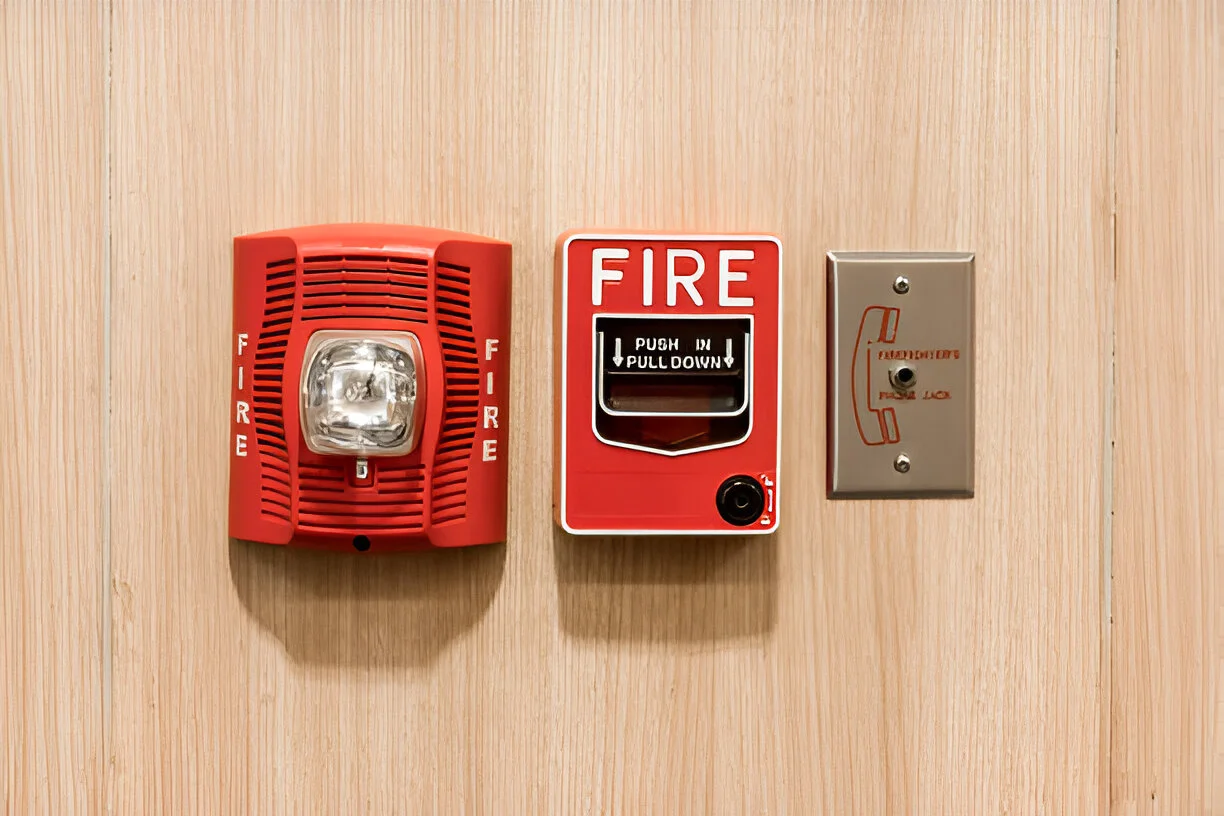
fire risk assessment review checklist
1. Walk Through the Property Again
Start the fire risk assessment review checklist with a fresh walk-through.
Compare the property with the previous assessment. Have rooms been divided? Has storage moved into a corridor? Has a kitchen, office or bedroom been added? Have doors been replaced?
You do not need to rewrite an assessment because a desk moved. What matters is whether a change creates a new hazard, affects an escape route, or makes an existing fire precaution less effective.
2. Check Occupancy and Building Use
A property can look the same while its risk changes.
A landlord may have more occupants than before. A business may bring in new machinery. A shop may hold more stock. A communal area may start being used for storage.
Your fire risk assessment review checklist should ask one simple question: is this building still being used in the same way as when the previous FRA was completed?
If the answer is no, the change needs to be considered.
3. Look at Escape Routes and Fire Doors
Walk the actual escape routes. Do not rely only on what the old report says.
Check that routes remain clear and final exits can still be used. Look for obvious damage to fire doors, problems with closing, or changes that may affect their performance.
If a door needs a specialist inspection, Landlord Certificate London also provides a Fire Door Certificate and inspection service.
A previous assessment can only remain useful if the safety measures it relied on are still doing their job.
4. Check Fire Alarms and Emergency Lighting
Fire alarms and emergency lighting should also form part of the review.
A repeated alarm fault, a disabled detector, damaged emergency lighting, or a change to the building layout can affect the assumptions made in an older FRA.
Use the fire risk assessment review checklist to compare the current condition with the previous report.
If further work is needed, see the Fire Alarm Installation service or the Emergency Lighting Testing service.
5. Go Back to the Old Action Plan
This is a simple step that is often missed.
Look at every action raised in the previous assessment. Was it completed? Is there evidence? Is anything still outstanding?
A review is not only about finding new hazards. It should also confirm that earlier problems were actually dealt with.
Government guidance notes that a review can include checking that previous actions have been completed and that fire-safety measures have not deteriorated.
6. Review After a Fire or Near Miss
A fire or near miss is a strong reason to revisit the assessment.
Ask what happened, why it happened, and whether the event exposed a risk that had been missed or underestimated. Do not simply repair the immediate damage and leave the old FRA unchanged.
Add the findings to your fire risk assessment review checklist and update the assessment where needed.
Official guidance also says that a fire or near miss can be a sign that the existing assessment needs to be reconsidered.
7. Record What Changed
Keep a simple record of the review date, what you checked, what changed, and what actions are still required.
If the current assessment remains suitable, record that conclusion. If something has changed, update the relevant section and action plan.
London Fire Brigade also advises responsible persons to review their fire risk assessment regularly and whenever significant changes could affect it.
You can also read the London Fire Brigade fire risk assessment guidance.
Does a Review Mean Starting Again?
Not always.
A review may show that the current FRA is still suitable. Sometimes only a few sections need updating. A completely new assessment may be more sensible after major refurbishment, a major change of use, a fire, or when the existing document no longer reflects the premises.
The age of the document is not the only issue. The real question is whether it still matches the building, the people using it, and the fire precautions in place.
Government guidance confirms that reviewing an FRA does not automatically mean carrying out a completely new assessment.
Who Is Responsible for the Review?
The Responsible Person must make sure the fire risk assessment is carried out and kept up to date.
Depending on the premises, this may be an employer, owner, landlord, occupier, building manager, facilities manager or managing agent.
If the premises are complex or you are not confident that the existing assessment is still suitable, professional help can be the safer option.
Quick Checklist Before You Finish
Before you finish, confirm that:
- the layout and use of the property are still accurately recorded;
- occupancy changes have been considered;
- escape routes remain clear;
- fire doors have no obvious problems;
- alarm and emergency-lighting issues have been considered;
- previous actions have been completed;
- new hazards have been recorded;
- any fire or near miss has been considered;
- the review and new actions have been documented.
If your assessment is old or the property has changed, Landlord Certificate London provides professional Fire Risk Assessment services in London for landlords, businesses and property managers.
The fire risk assessment review checklist is most useful when it becomes part of normal property management, rather than something you only think about before an inspection.
About the Author: LandlordCertificate

Related Posts
Get Social
Recent Posts
- Residential EICR London: Complete Electrical Safety Inspection Guide for Landlords & Homeowners
- Property Owners and Landlords Across London
- Emergency Lighting Assessment Failure Signs: 4 Critical Indicators Your System Needs Immediate Attention
- Annual Fire Alarm Inspection Checklist and Industrial Facility Solutions Safety Plan: 5-Step Shield
- Fuse Box Installation by a Certified Fuse Box Electrician for Circuit Failures and Safety Control