



Electrical appliances are part of everyday life in most rented homes. Kettles, microwaves, washing machines, lamps and other landlord-supplied items can develop damaged plugs, loose connections or worn cables over time.
For landlords, the aim is simple: make sure any electrical equipment you provide is safe for tenants to use. A Portable Appliance Testing Certificate can support that by giving you a clear record of appliances that have been inspected and, where appropriate, electrically tested.
PAT testing is often misunderstood. It is not the same as an EICR, and private landlords in England are not automatically required to obtain a PAT certificate every year. Here is what London landlords should know.
What Is a Portable Appliance Testing Certificate?
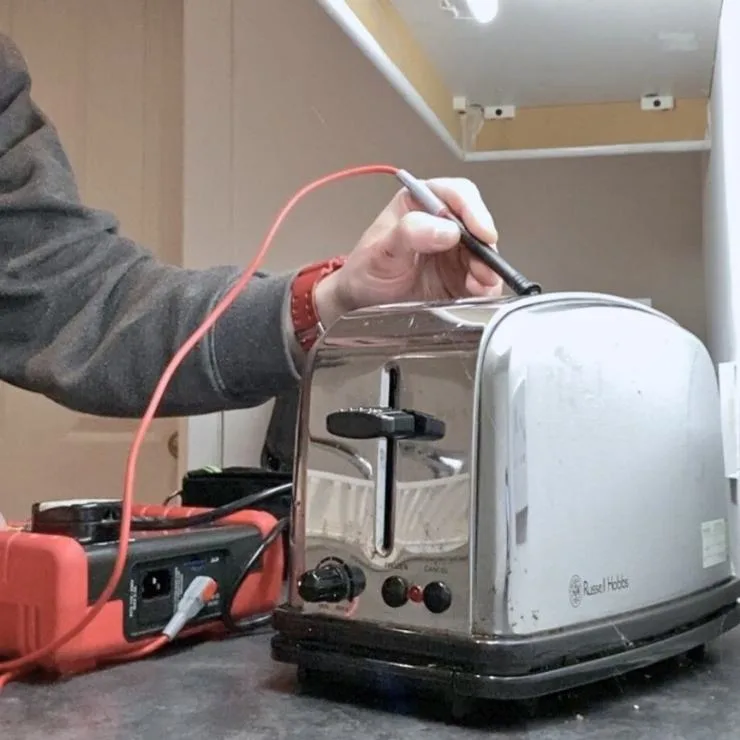
A Portable Appliance Testing Certificate is a record produced after portable electrical equipment has been checked. Depending on the appliance and the testing process, this may include a visual inspection and electrical tests.
The report normally identifies the appliances checked and records the result, helping landlords keep track of equipment supplied with a property.
PAT testing can cover items such as kettles, toasters, microwaves, lamps, extension leads and other plug-in appliances. Larger movable items, including washing machines or fridges, may also be included.
If you need appliances checked at a rental property, see our Portable Appliance Test service.
Is PAT Testing a Legal Requirement for London Landlords?
This is where the wording matters.
For private landlords in England, there is no blanket rule saying every supplied appliance must receive an annual PAT test or that every landlord must hold a Portable Appliance Testing Certificate. PAT testing is instead commonly used as part of a sensible approach to maintaining electrical equipment safely.
The Health and Safety Executive’s PAT guidance explains that inspection and testing frequency should reflect the type of equipment, how it is used and the environment in which it operates.
Rules for social rented homes are different. Current government guidance says social landlords who provide electrical equipment must have it checked by a qualified person at least every five years and retain the appropriate inspection and testing record.
You can read the details in the GOV.UK electrical safety guidance for rented homes.
PAT Testing and EICR Are Not the Same Thing
A common mistake is assuming that a Portable Appliance Testing Certificate replaces an Electrical Installation Condition Report. It does not.
PAT testing deals with electrical equipment and appliances. An EICR looks at the fixed electrical installation, including wiring, sockets, light fittings and the consumer unit.
Landlords covered by the electrical safety regulations must arrange inspection and testing of the fixed installation at least every five years, or sooner if the previous report requires it.
If your property is due for this check, our EICR service in London covers the fixed installation separately from PAT testing.
Which Appliances Should You Consider Checking?
Start with electrical items that belong to you and are provided as part of the tenancy.
This may include kitchen appliances, portable heaters, table lamps, televisions, extension leads and other plug-in devices supplied with the property.
Not every item presents the same level of risk. An appliance that is moved frequently or used heavily may need attention sooner than equipment that stays in one place and sees little use. HSE guidance specifically recommends considering the equipment, its use and its environment when deciding how often inspection or testing is appropriate.
A risk-based maintenance plan is therefore more useful than automatically choosing the same test date for everything. A Portable Appliance Testing Certificate can help you keep the results organised.
| Property Type | Appliance Testing Scope | Typical Price Range |
|---|---|---|
| Small Flat or Studio | Basic household electrical items | £55 – £80 |
| Standard Rental Flat | Kitchen and living area appliances | £70 – £105 |
| Family House | Multiple-room electrical appliances | £90 – £145 |
| HMO Property | Shared and private use appliances | £130 – £190 |
| Small Office Unit | Computers and office equipment | £110 – £160 |
| Medium Office Space | Workstations and shared devices | £160 – £240 |
What Happens During PAT Testing?
The process usually begins with a visual inspection. Problems such as a cracked plug, exposed cable, damaged casing or signs of overheating may be visible before any electrical test is carried out. HSE notes that visual examination is an important part of checking portable electrical equipment because some defects cannot be found through electrical testing alone.
Where testing is appropriate, a competent person may use suitable equipment to carry out the necessary electrical checks.
Afterward, the Portable Appliance Testing Certificate or test record should clearly show which items were checked and their results. If an appliance is found to be unsafe, it should not simply remain in use because it has been recorded on a report.
How Often Should Landlords Arrange PAT Testing?
There is no universal “once a year” rule for every private rented property.
The right interval depends on factors such as the appliance, its condition, how often it is moved and the environment in which it is used. A heavily used vacuum cleaner, for example, may justify more frequent attention than a bedside lamp that rarely moves.
Keeping a Portable Appliance Testing Certificate from previous inspections can make future maintenance easier because you have a history of the equipment and any faults that were found.
For social landlords, current regulations include a specific requirement for landlord-provided electrical equipment to be checked at least every five years, subject to the applicable arrangements and any need for earlier action.
Why Keep PAT Records?
Even where a specific PAT certificate is not legally required, keeping records can still be useful. HSE states that records and labels can help with monitoring an electrical maintenance scheme, although they are not universally required by law.
A Portable Appliance Testing Certificate can show which appliances were checked, when the inspection took place and whether an item needed attention.
This is particularly helpful for landlords with several properties or furnished rentals where appliance lists may change between tenancies. Clear records also make it easier to plan future checks and deal with appliances that need repair or replacement.
How Much Does PAT Testing Cost in London?
PAT testing prices vary, so relying on a generic price table can be misleading.
The cost can depend on the number of appliances, property type, access, location and whether the visit is combined with other electrical safety work. A small flat with only a few supplied appliances will usually involve a different amount of work from an HMO or commercial property containing many electrical items.
Before booking, ask whether the quotation is based on the number of appliances, whether a minimum call-out charge applies and what documentation is included.
Choosing a PAT Testing Provider
Price matters, but it should not be the only consideration.
For combined inspection and testing, the person carrying out the work needs the knowledge and experience to use the test equipment correctly and understand the results.
Ask what the service includes, how failed items will be reported and whether you will receive a clear appliance schedule with your Portable Appliance Testing Certificate.
A good provider should also be able to explain why a particular appliance needs testing rather than automatically claiming that every electrical item must be tested every year.
Final Thoughts
Electrical safety is an ongoing part of managing a rented property. PAT testing can help identify faults and keep track of appliances you provide, but it should form part of a sensible maintenance approach rather than being treated as a replacement for other electrical safety checks.
A Portable Appliance Testing Certificate provides a useful written record, while an EICR deals with the fixed electrical installation and follows separate requirements.
If you manage a rental property and want landlord-supplied appliances inspected, you can book a Portable Appliance Test in London and keep your electrical safety records organised and up to date.
About the Author: LandlordCertificate

Related Posts

Get Social
Recent Posts
- Residential EICR London: Complete Electrical Safety Inspection Guide for Landlords & Homeowners
- Property Owners and Landlords Across London
- Emergency Lighting Assessment Failure Signs: 4 Critical Indicators Your System Needs Immediate Attention
- Annual Fire Alarm Inspection Checklist and Industrial Facility Solutions Safety Plan: 5-Step Shield
- Fuse Box Installation by a Certified Fuse Box Electrician for Circuit Failures and Safety Control