





Under the Control of Asbestos Regulations 2012 (CAR 2012), Regulation 4 requires responsible dutyholders to assess and manage asbestos risks in non-domestic premises, including shared areas of residential buildings. If you own or manage London rental property, you need to establish where that duty applies. For CAR 2012 compliance, your decisions should reflect the building, repair responsibilities, and documented measures to prevent exposure.
An asbestos management survey helps identify suspected asbestos-containing materials (ACMs), assess their condition, and support a practical management plan during normal occupation. For professional assistance with an asbestos survey in London, you can review Landlord Certificate London’s dedicated service page. This guide instead explains the legal responsibilities, scope, and decisions you need to understand.

Field Insight from Hassan Sharif
Business Development Manager & Compliance Specialist at Landlord Certificate London
“Across the hundreds of pre-2000 London conversions and mansion blocks we coordinate surveys for—from Victorian terraces in Camden and Islington to post-war flats in Hackney—the most frequent compliance gap we encounter isn’t wilful neglect; it’s assuming a newly refurbished ground-floor flat means the communal meter cupboard or basement service riser is asbestos-free. Only recently, an electrician scheduled for a routine consumer unit upgrade had to halt work immediately because the original backing board behind the communal intake turned out to be suspected asbestos insulation board (AIB). A properly scoped management survey and an up-to-date asbestos register prevent costly contractor stand-downs, protect tenants and tradespeople from accidental fibre release, and keep your CAR 2012 audit trail watertight.”
What is an Asbestos Management Survey?
An asbestos management survey identifies asbestos-containing materials that might be disturbed during normal occupation or routine maintenance. It records their location and condition, informs your asbestos register, and supports a practical management plan. It does not certify that every part of a building is asbestos-free.
The survey normally uses visual inspection and limited access to spaces such as risers, ceiling voids, or service cupboards, with representative sampling where appropriate. A competent surveyor documents inaccessible areas and materials presumed to contain asbestos. You must not treat an uninspected area as asbestos-free merely because the report has no positive sample from it.
HSE’s Asbestos: The survey guide (HSG264) explains how competent surveys should be planned, scoped, and reported. Your brief should identify the exact building, shared areas, maintenance activities, and access arrangements. If you are searching for “asbestos management survey london”, check that the report makes its limitations clear and identifies practical precautions.
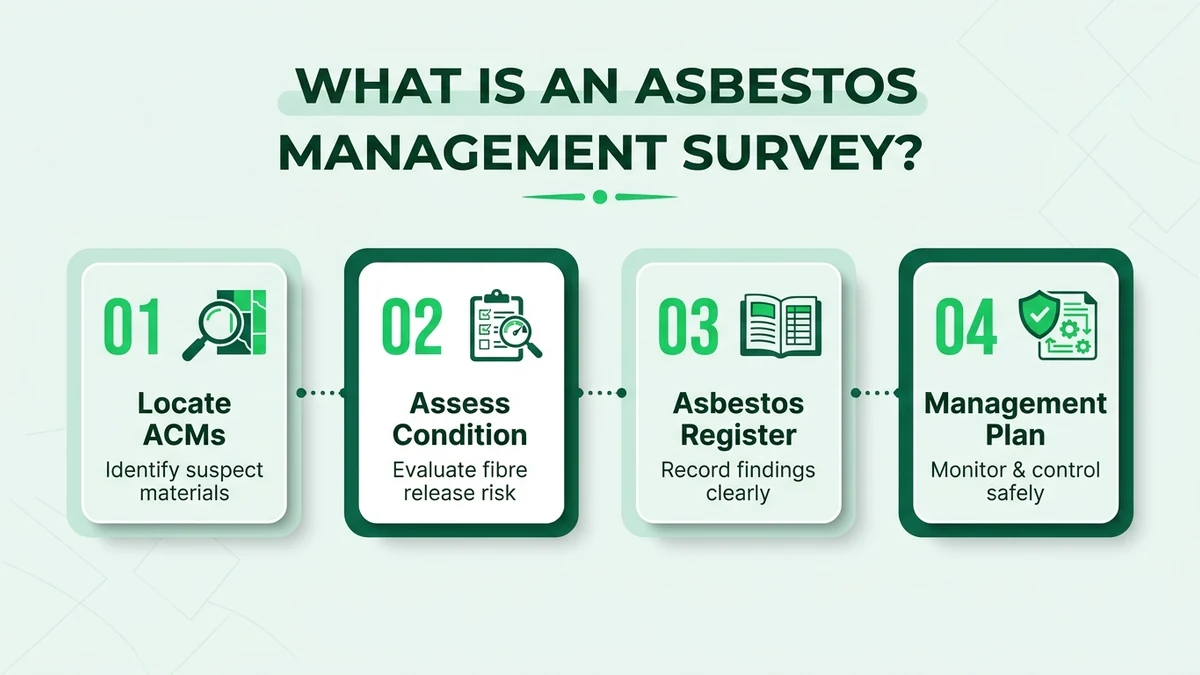
The four core stages of an HSG264-compliant asbestos management survey for occupied London properties.
Before Commissioning a Management Survey
- ✓Gather drawings, previous surveys, refurbishment records, and building dates.
- ✓Define communal spaces, roofs, basements, plant rooms, and service risers.
- ✓Arrange safe access and document any locked or concealed areas.
- ✓Confirm competence, sampling arrangements, reporting, and responsibilities.

Reviewing historical building plans and access arrangements with your surveyor before the inspection begins.
The Duty to Manage Under CAR 2012: Who is the Legal Dutyholder for London Properties?
Under Regulation 4, the dutyholder is generally the person whose lease, contract, or control makes them responsible for maintenance or repair of the relevant non-domestic premises. In residential blocks, this commonly includes the landlord, freeholder, managing agent, or management company responsible for shared areas. Duties can be shared.
Ownership alone does not settle responsibility. Read your leases, service agreements, and repair covenants to establish who controls and maintains entrances, stairs, lift shafts, communal corridors, and other common parts. For readers researching “landlord asbestos responsibilities london”, the essential step is checking who controls repairs: where duties are shared, each party must contribute and cooperate.
Regulation 4 requires a suitable and sufficient assessment, a record of findings, and, where asbestos is or may be present, a written risk-management plan. That plan must be implemented, reviewed, and communicated to people likely to disturb ACMs. Section 3 of the Health and Safety at Work etc. Act 1974 can also be relevant to risks arising from landlords’ work activities affecting tenants.
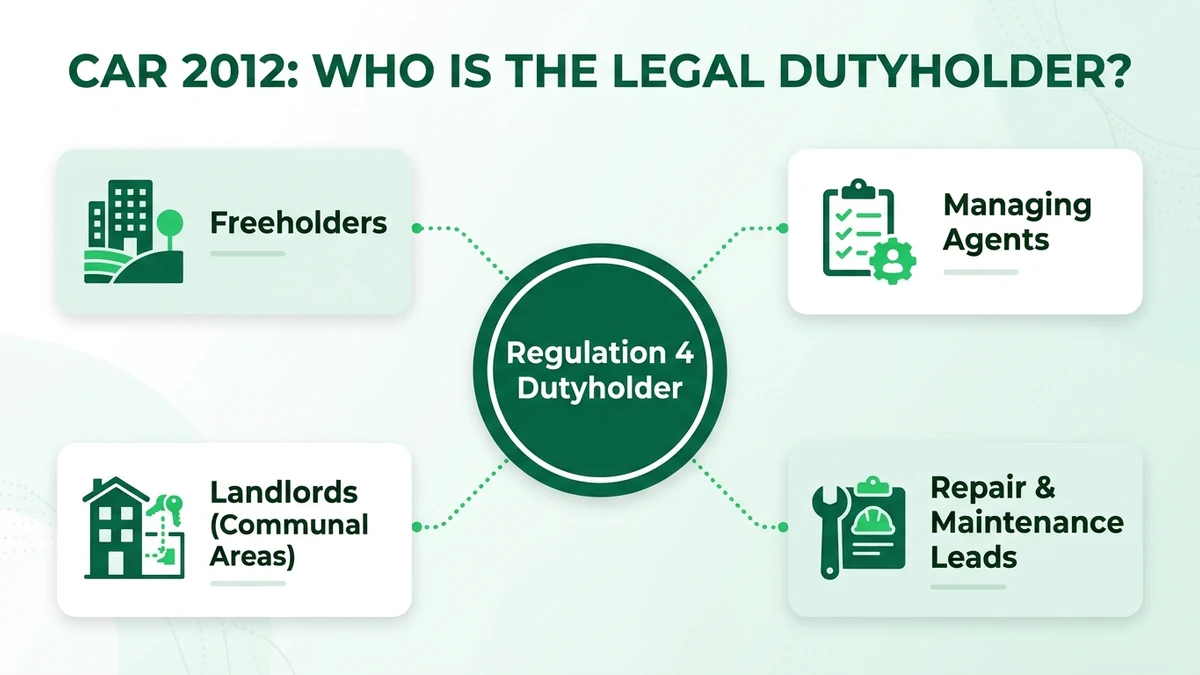
Who qualifies as the legal dutyholder under Regulation 4 of the Control of Asbestos Regulations 2012.
Practical Dutyholder Checklist
- ✓Confirm who is responsible for each communal area under the legal documents.
- ✓Review building age and evidence about suspect materials.
- ✓Commission a suitable assessment where existing evidence is insufficient.
- ✓Record risks, implement controls, and share relevant information before work.
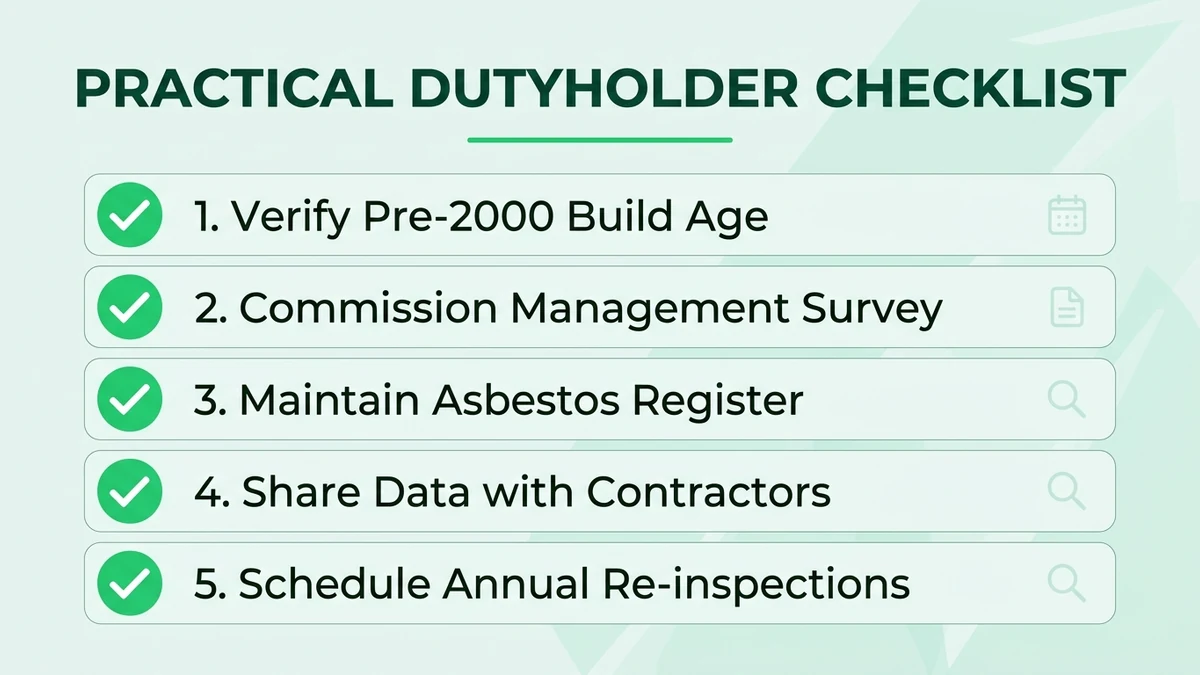
Five practical steps London dutyholders should follow to stay compliant with CAR 2012.
Why Pre-2000 London Buildings Pose Significant Asbestos Risks
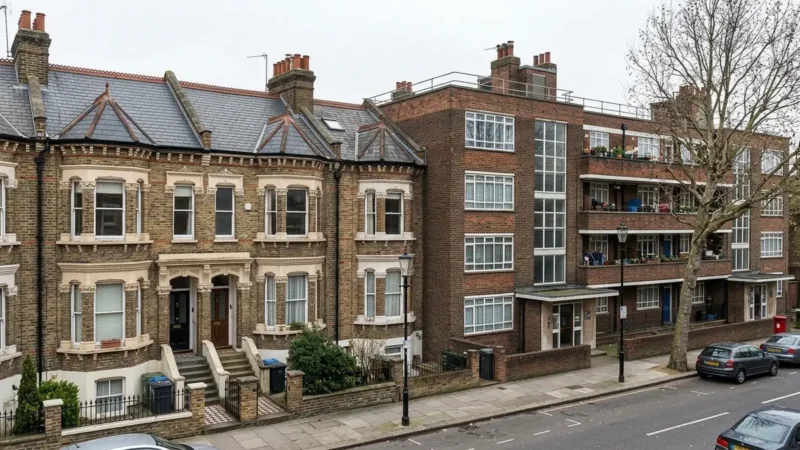
Properties built or refurbished in London before the 1999 UK asbestos ban frequently contain legacy ACMs.
Properties built or refurbished before 2000 deserve particular attention because asbestos products remained in use before the UK’s final prohibition in 1999. A pre-2000 construction date does not prove asbestos is present, but it is a practical trigger to investigate records and materials. Newer decorations can also conceal older components.
London’s housing stock includes converted Victorian terraces, post-war blocks, maisonettes, and mixed-use buildings altered over decades. One flat may have been modernised while a communal boiler room or service riser retains original insulation. Different construction phases matter, so a single age label or old survey may not reflect every part of the property.
An undisturbed ACM in good condition can often remain safely in place under appropriate management. The main danger arises when fibres are released by damage or unsuitable work, such as drilling through a board or cutting old floor materials. Avoid assuming all suspect products require immediate removal; assessment and exposure prevention determine the response.
Red Flags to Investigate Before Maintenance
- ✓Incomplete refurbishment histories or inaccessible service spaces.
- ✓Old insulation around pipework and heating equipment.
- ✓Damaged textured coatings, soffits, or partition boards.
- ✓Planned drilling, rewiring, bathroom refits, or structural alterations.
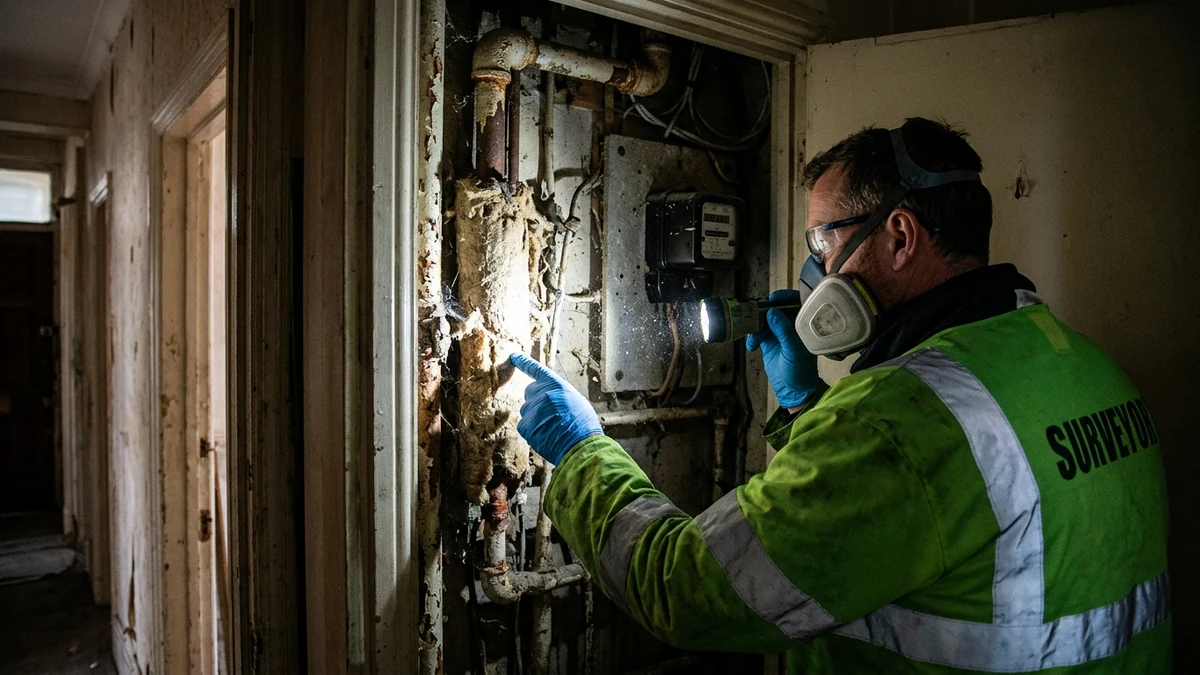
Checking older pipe lagging and electrical intake backing boards for suspect materials before maintenance starts.
Where is Asbestos Commonly Found in London Rental Properties?
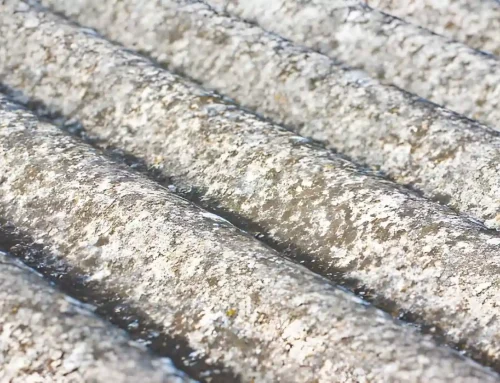
Suspected ACMs may occur in textured coatings, insulation board, lagging, floor coverings, and cement products in older buildings. Their appearance alone cannot reliably confirm asbestos content. A competent surveyor considers material type, condition, likely disturbance, and representative laboratory results before you decide how the risk should be managed.
Textured ceiling coatings, sometimes called Artex, can contain asbestos in older installations. Asbestos insulation board (AIB) may appear in partition walls, fire-protection panels, and service enclosures. Pipe lagging and sprayed insulation are potentially higher-risk materials when damaged; vinyl floor tiles and associated adhesives may contain asbestos, while asbestos cement can be found in roof sheets, gutters, and outbuildings.
Asbestos types include chrysotile (white asbestos) and amosite (brown asbestos), but colour is not a reliable way to identify fibres in a product. Do not scrape, drill, or take improvised samples. If an area is damaged or work could disturb a suspect material, restrict disturbance and seek competent advice before proceeding.
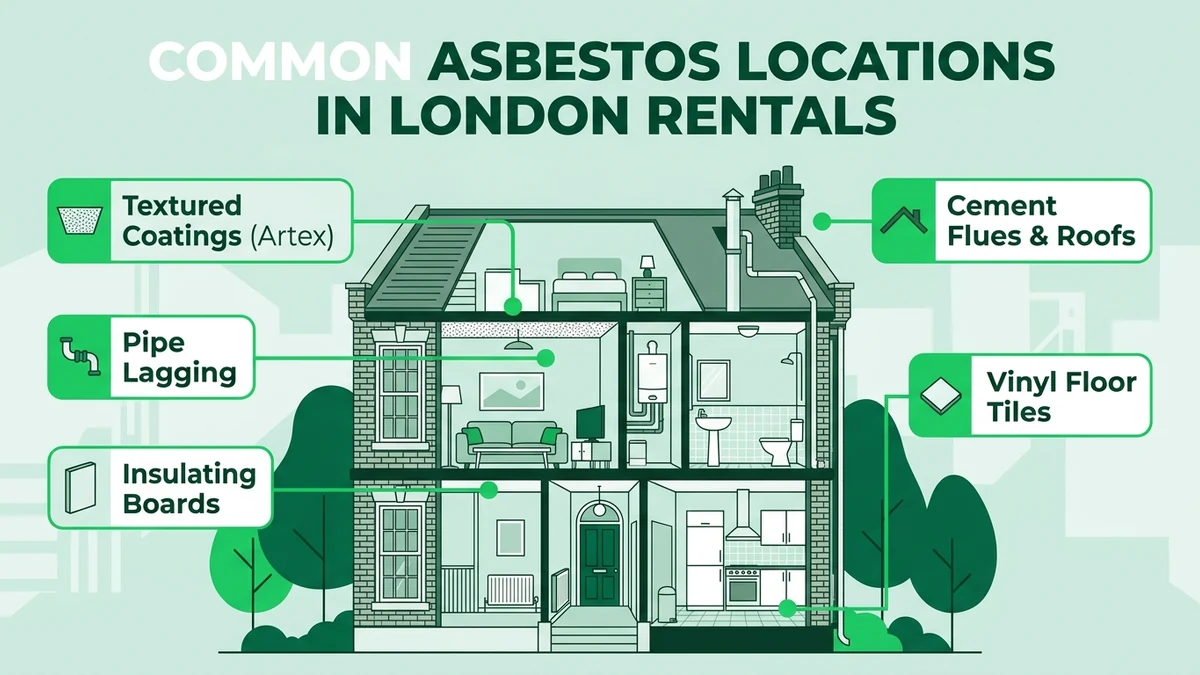
Typical building materials in London rental properties where asbestos was historically used prior to 2000.
Typical Location and Action Prompts
- ✓Stairwells and corridors: Check textured finishes, risers, and fire-protection boards.
- ✓Basements and plant rooms: Review lagging, ducts, and service penetrations.
- ✓Kitchens and bathrooms: Assess hidden boards or floor layers before refits.
- ✓Roofs and external stores: Identify older cement sheets before repairs.
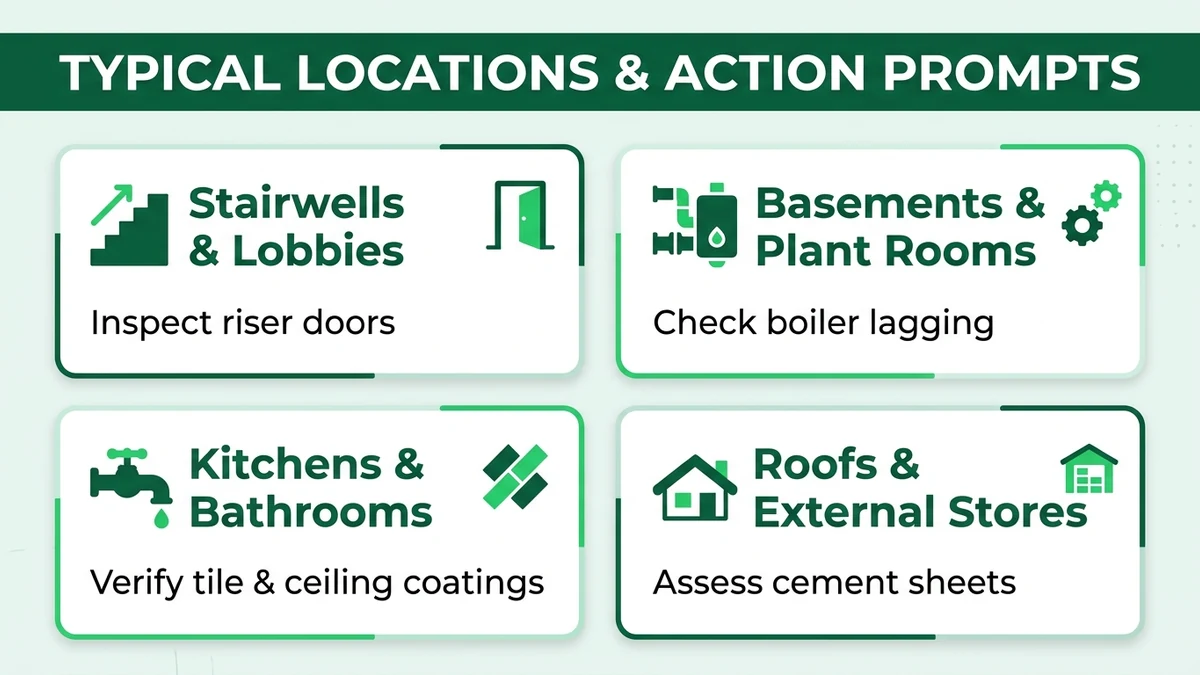
Area-by-area inspection prompts to help landlords prioritise checks across communal and service zones.
Communal Areas vs Demised Residential Units: Defining Landlord Jurisdiction
Regulation 4 covers non-domestic premises and shared parts of residential buildings, but generally not the interiors of private flats. You must nevertheless consider other health and safety obligations when arranging work inside homes. The legal boundary determines which duties apply; it does not remove asbestos risks.
Communal areas can include foyers, corridors, shared staircases, lifts, lift shafts, roof spaces, yards, and certain outbuildings. Whether a particular space is within the duty depends on its use and the relevant maintenance or repair obligations. Do not assume a shared kitchen in a house in multiple occupation is automatically a Regulation 4 common part; HSE distinguishes ordinary domestic shared rooms from specified common access areas.
When you commission electricians, plumbers, or refurbishment contractors to work inside flats, you must consider asbestos exposure risks under applicable health and safety duties and the requirements governing work that might disturb asbestos. Obtain suitable information or a survey where needed before intrusive tasks. Coordination with the tenant, managing agent, and contractor helps prevent gaps between communal and demised areas.
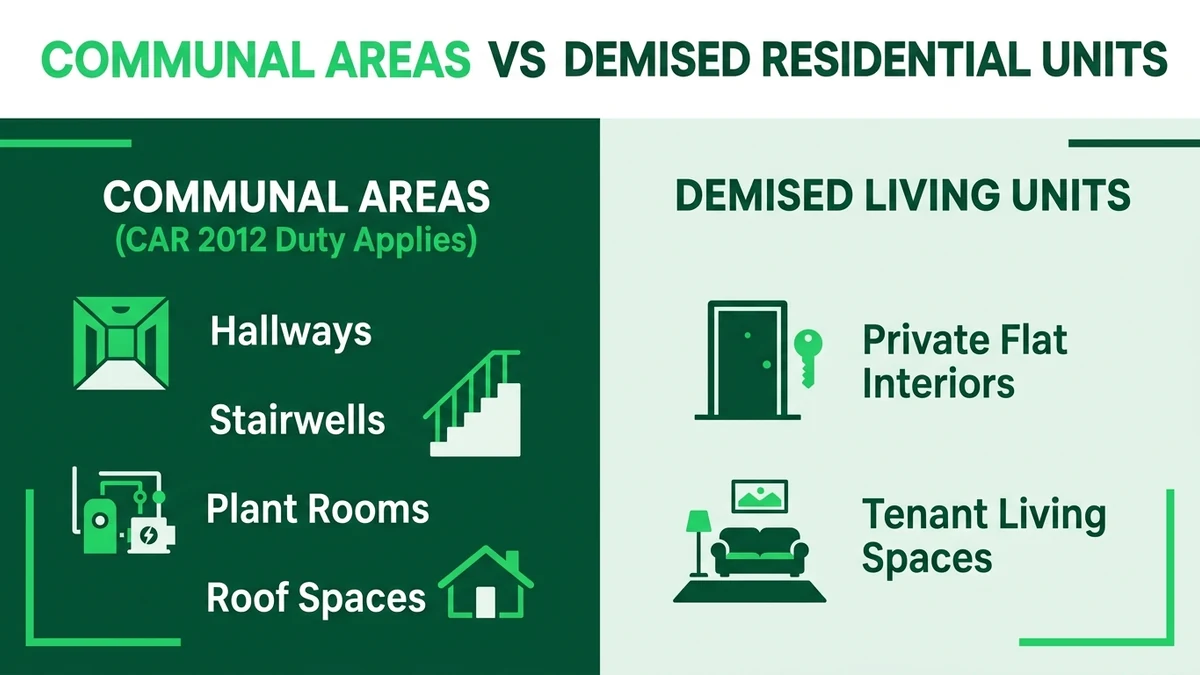
Understanding where Regulation 4 applies: shared communal parts versus private demised living quarters.
Boundary Checks for Mixed Responsibilities
- ✓Compare the lease plan with the actual areas being maintained.
- ✓Identify who controls communal roofs, risers, and plant cupboards.
- ✓Check who commissions and supervises repairs inside individual flats.
- ✓Share relevant survey findings across contractor and management teams.
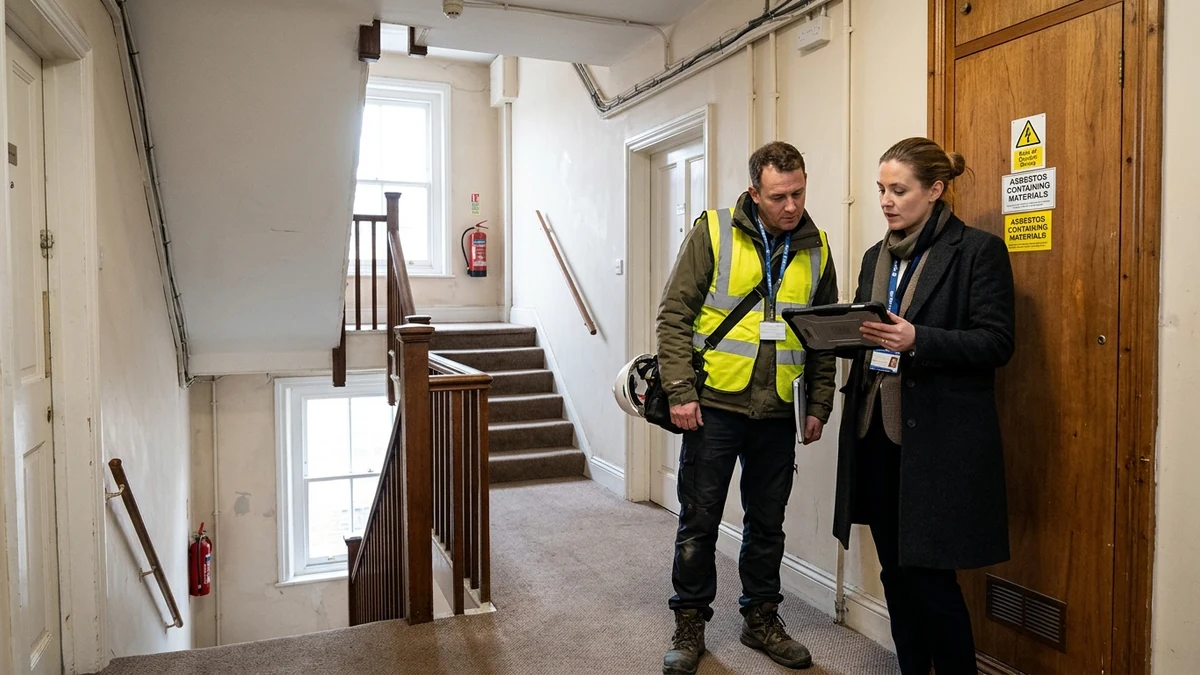
Verifying responsibility boundaries for shared risers, intake cupboards, and communal accessways.
Management Survey vs Refurbishment/Demolition (R&D) Survey: When Each Inspection is Legally Required
A management survey supports safe occupation and routine maintenance; a refurbishment or demolition survey investigates materials affected by planned intrusive work. The appropriate survey depends on the tasks and areas involved, not simply the building type. A management survey cannot automatically clear a work zone for refurbishment.
Under HSG264, a refurbishment or demolition survey is normally required before refurbishment or demolition work in the affected area, with the investigation designed to locate ACMs so work can be planned safely. It may involve opening structures and destructive inspection. The area should generally be unoccupied during the intrusive survey, with appropriate controls and reinstatement arrangements.

Intrusive Refurbishment and Demolition (R&D) surveys are legally required before major building or strip-out works.
Comparison of Asbestos Survey Types
| Feature | Management Survey | Refurbishment & Demolition Survey |
|---|---|---|
| Scope | ACMs relevant to normal use and foreseeable maintenance | ACMs in parts affected by planned refurbishment or demolition |
| Intrusiveness | Mainly non-destructive; minor access where appropriate | Intrusive and potentially destructive investigation in work areas |
| When Needed | To support assessment and an ongoing asbestos management plan | Before relevant intrusive works or demolition begin |
| Sample Testing | Representative samples or justified presumption, where appropriate | Targeted sampling and investigation of affected materials |
| Suitable Premises | Occupied buildings, common parts, and routinely accessed spaces | Defined work zones, with suitable access and controls |
Both surveys depend on competent planning, reporting, and suitable access; both can require samples. A report with exclusions is not evidence that excluded areas are clear. If work scope changes, reassess the survey coverage before contractors start, particularly around concealed walls, ceilings, and service penetrations.
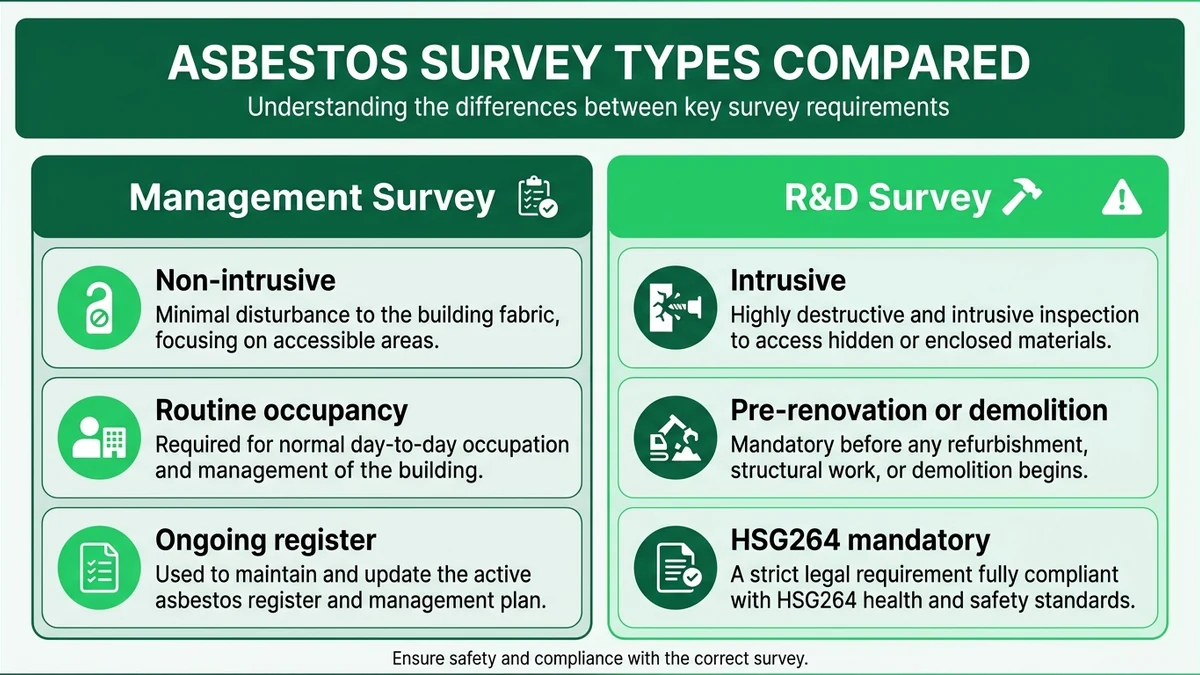
Key differences between non-intrusive Management Surveys and intrusive Refurbishment & Demolition (R&D) Surveys.
Choose the Right Approach
- ✓Ordinary occupation and routine inspection: Consider management survey information.
- ✓Bathroom refit, rewiring, or structural alteration: Assess need for an R&D survey.
- ✓Demolition: Plan a suitable demolition survey before intrusive operations.
- ✓Restricted access or changing works: Agree further investigation before disturbance.
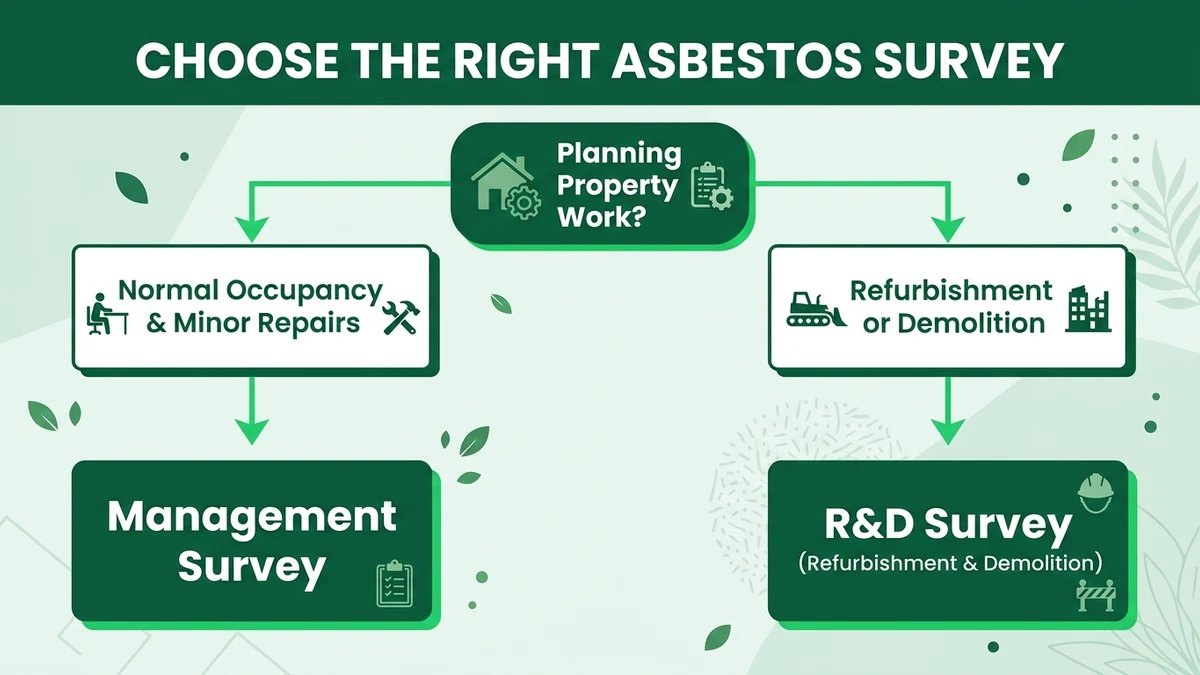
Selecting the correct asbestos survey based on whether your property is in routine use or scheduled for intrusive works.
The Asbestos Register & Management Plan: Ongoing Inspections, Maintenance & Contractor Briefings
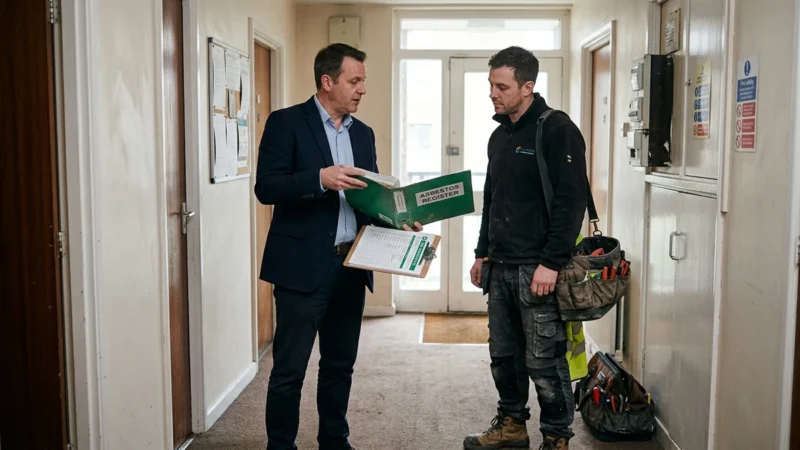
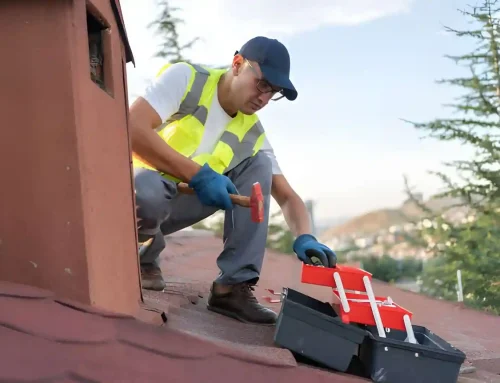
Sharing the asbestos register with electricians, plumbers, and maintenance contractors before any work starts on site.
Your asbestos register records where asbestos-containing materials are present or presumed, their condition, and associated findings. The management plan explains who controls the risks, how materials are monitored, and how contractors receive information. Under CAR 2012, both documents need active use, maintenance, and review.
A useful residential landlord asbestos register identifies the building area, product, quantity or extent where known, survey reference, condition, risk assessment, and any limitations. The management plan assigns actions, responsibility, monitoring arrangements, and procedures for accidental damage. You should record repairs, encapsulation, removal, and subsequent inspections so that the information remains auditable.
Review the asbestos management plan whenever relevant changes occur and ensure asbestos-containing materials are monitored regularly. HSE advises reviewing management arrangements at least annually as good practice, while inspection frequencies should reflect the condition of materials and disturbance risks. There is no universal statutory six-month reinspection interval for every property.
Put the Plan Into Day-to-Day Operation
- ✓Give contractors relevant register extracts before quoting or beginning work.
- ✓Mark or otherwise clearly communicate locations of known or presumed ACMs.
- ✓Set a documented inspection programme suited to material condition and exposure risk.
- ✓Stop work if unexpected suspect material is exposed and arrange assessment.
- ✓Update registers after surveys, damage, encapsulation, removal, or layout changes.
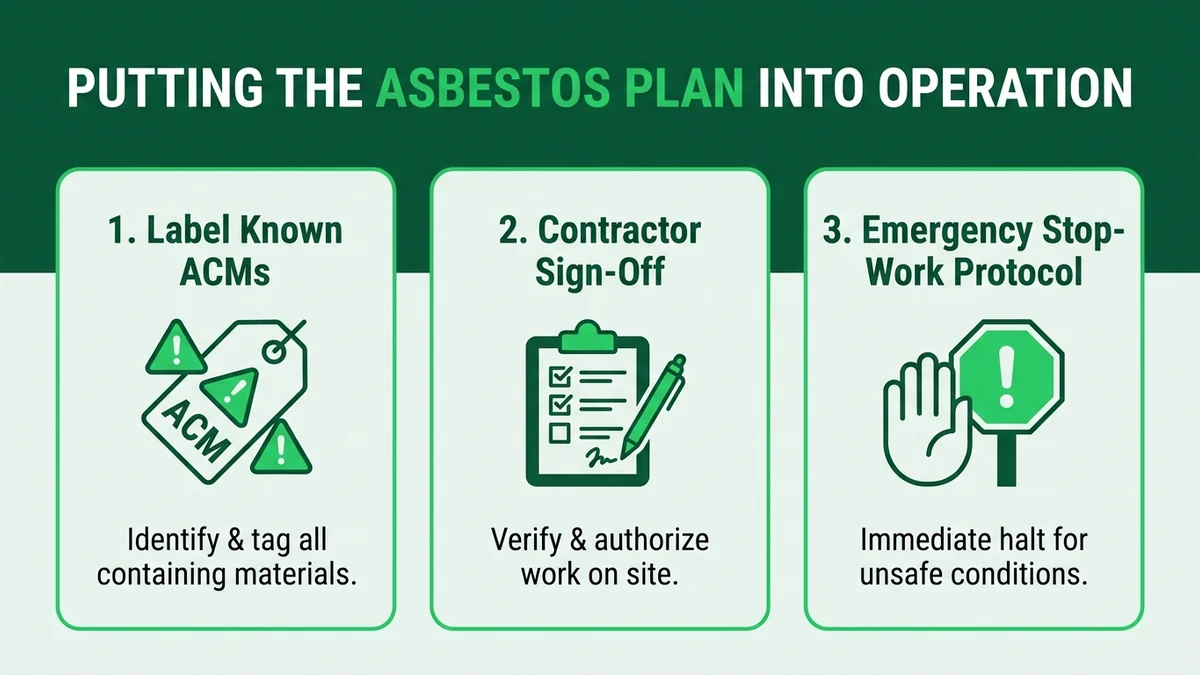
Three practical day-to-day controls to keep your asbestos management plan active and enforceable.
Competence matters at every step. UKAS accreditation to ISO/IEC 17025 is required for laboratories undertaking asbestos sample analysis for regulatory purposes; UKAS accreditation to ISO/IEC 17020 is a recognised way to demonstrate surveying-body competence, but it is not accurate to suggest every individual surveyor must personally hold UKAS accreditation. Ask who will inspect, who will analyse samples, and what their accreditations actually cover.
If you manage several London properties, a consistent digital register and controlled document-sharing process can make contractor briefings and follow-up reviews easier. Landlord Certificate London can help arrange suitable management surveys, laboratory analysis through UKAS-accredited facilities, and clear records for your ongoing compliance workflow. Responsibility for implementing the management plan remains with the relevant dutyholder. Call 020 4518 8198 to book.
Frequently Asked Questions on Landlord Asbestos Management
These FAQs answer seven practical questions about your duties, survey types, pre-2000 buildings, laboratory analysis, and ongoing asbestos management. The legal position depends on the premises, maintenance responsibilities, and work involved.
+ Are residential landlords legally required to have an asbestos survey?
Regulation 4 requires a suitable and sufficient assessment for non-domestic areas and shared parts of domestic buildings, rather than imposing an identical survey certificate requirement on every single-let home. A management survey is often the practical way to obtain reliable information for communal areas. Whether you need a survey depends on the area concerned, the available evidence, and the work being planned. Individual flat interiors are generally outside Regulation 4 itself, but other safe-work duties can apply.
+ What year was asbestos completely banned in UK construction?
The final UK prohibition of asbestos use and importation took effect in November 1999. A property constructed or altered before 2000 may contain ACMs, especially in insulation, boards, coatings, and older floor products. Construction date is a warning sign, not proof of presence or absence, so use records and competent assessment.
+ What is the difference between a management survey and an R&D survey?
A management survey identifies materials relevant to safe occupation and foreseeable maintenance, generally with limited intrusion. A refurbishment and demolition (R&D) survey investigates the specific areas that planned intrusive works will affect and may require destructive access. Do not rely on a management survey to authorise major alteration without checking coverage.
+ How often must an asbestos register be updated or re-inspected?
Keep the register current whenever building conditions or asbestos information change. HSE recommends reviewing the management plan every 12 months or sooner; identified or presumed ACMs need monitoring at intervals suited to their risk. Although six- to twelve-month checks may suit a building, Regulation 4 does not prescribe a blanket six-month interval for every ACM.
+ Can a landlord sample asbestos themselves?
You should not attempt ad hoc asbestos sampling: disturbing a suspect material can release hazardous fibres. Use trained, competent sampling personnel, such as an asbestos surveyor, and ensure laboratory analysis is carried out by an appropriately UKAS-accredited ISO/IEC 17025 laboratory. Surveying-body accreditation under ISO/IEC 17020 is separate from laboratory accreditation.
+ What are the legal consequences of failing to comply with CAR 2012?
Enforcement can include improvement or prohibition notices and prosecution where the applicable legal tests are met. Serious health and safety offences may attract unlimited fines and, depending on the offence and court, imprisonment of up to two years. Outcomes depend on facts and the relevant legislation; failure to hold a particular certificate is not automatically the same as proving a criminal breach.
+ How does Landlord Certificate London assist with asbestos compliance?
Landlord Certificate London can help coordinate asbestos management survey requirements for London buildings, with sample analysis arranged through UKAS-accredited laboratories and reporting suitable for informing an asbestos register. You can use that evidence to brief contractors and maintain an actionable management plan. The dutyholder must still make decisions, put control measures into practice, and keep records reviewed. To discuss your property’s requirements and book an asbestos management survey, call Landlord Certificate London on 020 4518 8198.
About the Author: Hassan Sharif

Related Posts

Recent Posts
- Asbestos Management Surveys for London Rental Properties: CAR 2012 Landlord Guide
- Commercial Fire Risk Assessment London: Workplace Fire Compliance & Safety Certification
- Commercial Gas Safety Certificate CP42 London: Commercial Kitchen & Catering Compliance
- Landlord Gas Safety Certificate CP12 London: Annual Inspection & Legal Compliance Guide
- Commercial EICR London: Business Electrical Testing & Workplace Compliance Guide








Get Social