



Getting landlord fire safety responsibilities right is not just about fitting smoke alarms and keeping a certificate on file. The rules depend on the type of property you manage, whether the building has shared areas, how many households live there and who controls the common parts.
For landlords in London, the safest approach is to understand which duties apply to the property and then keep clear records of the checks, repairs and assessments you arrange.
Where Landlord Fire Safety Responsibilities Apply
Not every rented home is covered by fire safety law in exactly the same way. A self-contained house or flat is different from a block of flats, an HMO or a mixed-use building with shared areas.
The common parts of multi-occupied residential buildings can fall under the Regulatory Reform (Fire Safety) Order 2005. The Fire Safety Act 2021 also clarified that the building structure, external walls and flat entrance doors between domestic premises and common areas can fall within scope.
If your property has communal corridors, staircases, shared entrances or other common parts, a proper Fire Risk Assessment can help identify what needs attention.
Smoke and Carbon Monoxide Alarms
One of the clearest landlord fire safety responsibilities is making sure the required alarms are in place and working.
In England, relevant landlords must provide at least one smoke alarm on each storey used as living accommodation. A carbon monoxide alarm is also required in any room used as living accommodation that contains a fixed combustion appliance, except a gas cooker.
The required alarms must be working at the start of a new tenancy. If a tenant reports a faulty alarm, the landlord should investigate and arrange repair or replacement where needed.
For the official rules, see the GOV.UK smoke and carbon monoxide alarm guidance for landlords.
Fire Risk Assessments for Shared Areas
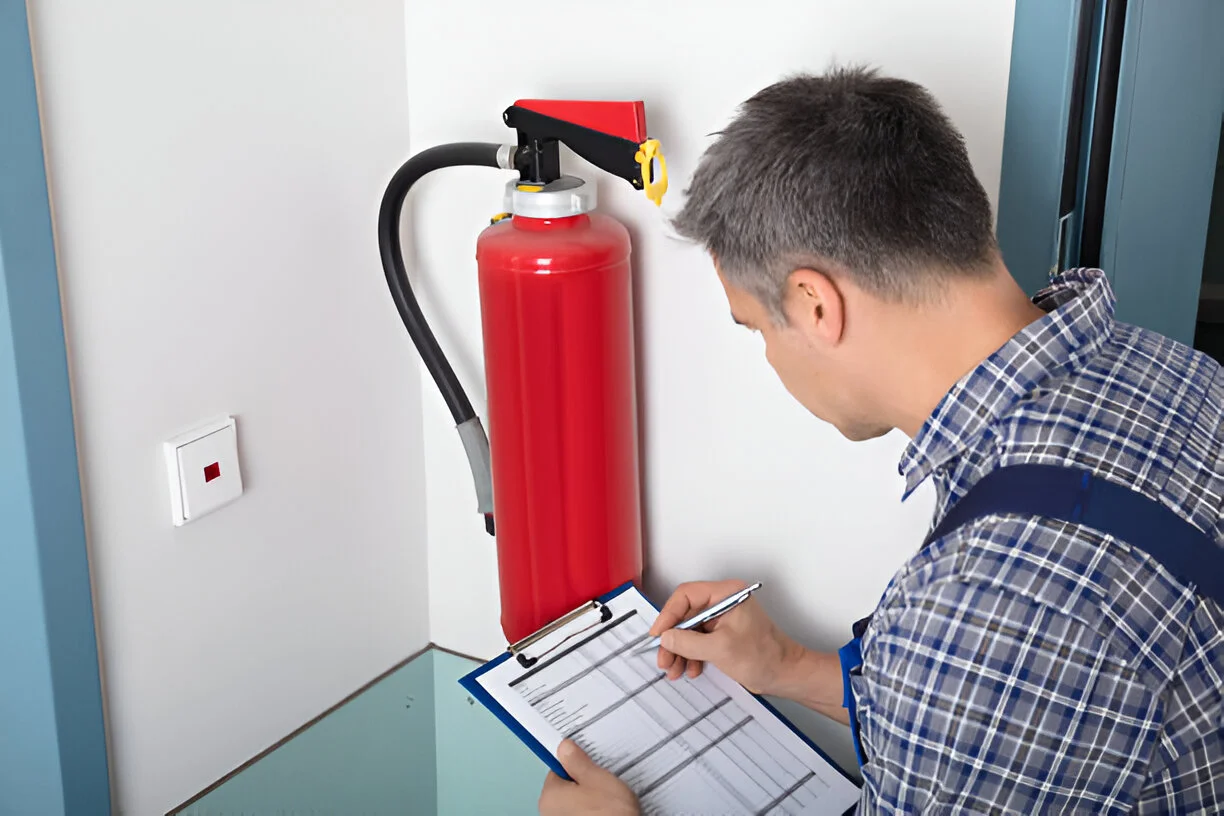
A fire risk assessment is not just paperwork. It should reflect the actual condition and use of the building.
Where the Fire Safety Order applies, the Responsible Person must make sure a suitable and sufficient assessment is carried out and kept under review. The assessment should look at fire hazards, people at risk, escape routes, fire doors, warning systems and other precautions that are relevant to the property.
This is where landlord fire safety responsibilities often become more detailed. A converted building with a shared staircase may need a different approach from a modern purpose-built block.
If the layout, occupancy or use of the building changes, the assessment may also need to be reviewed.
Fire Doors in Blocks of Flats
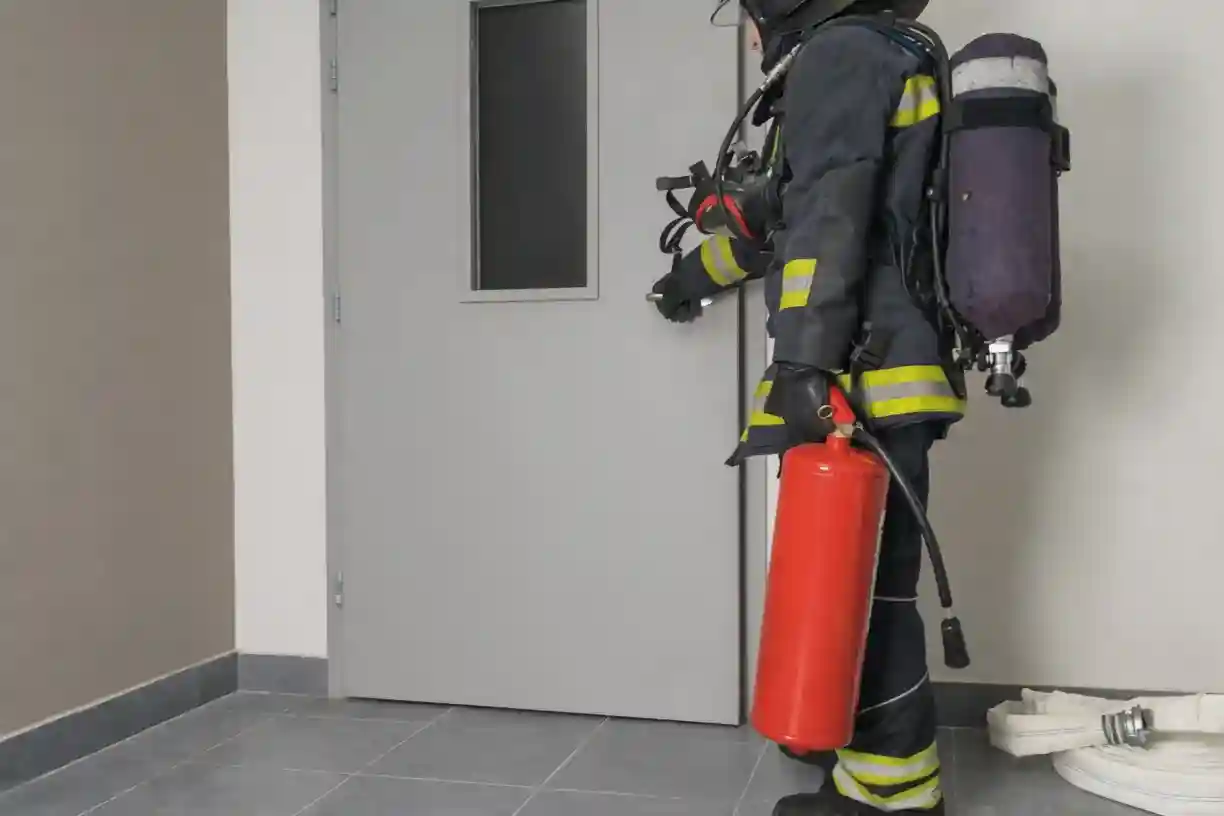
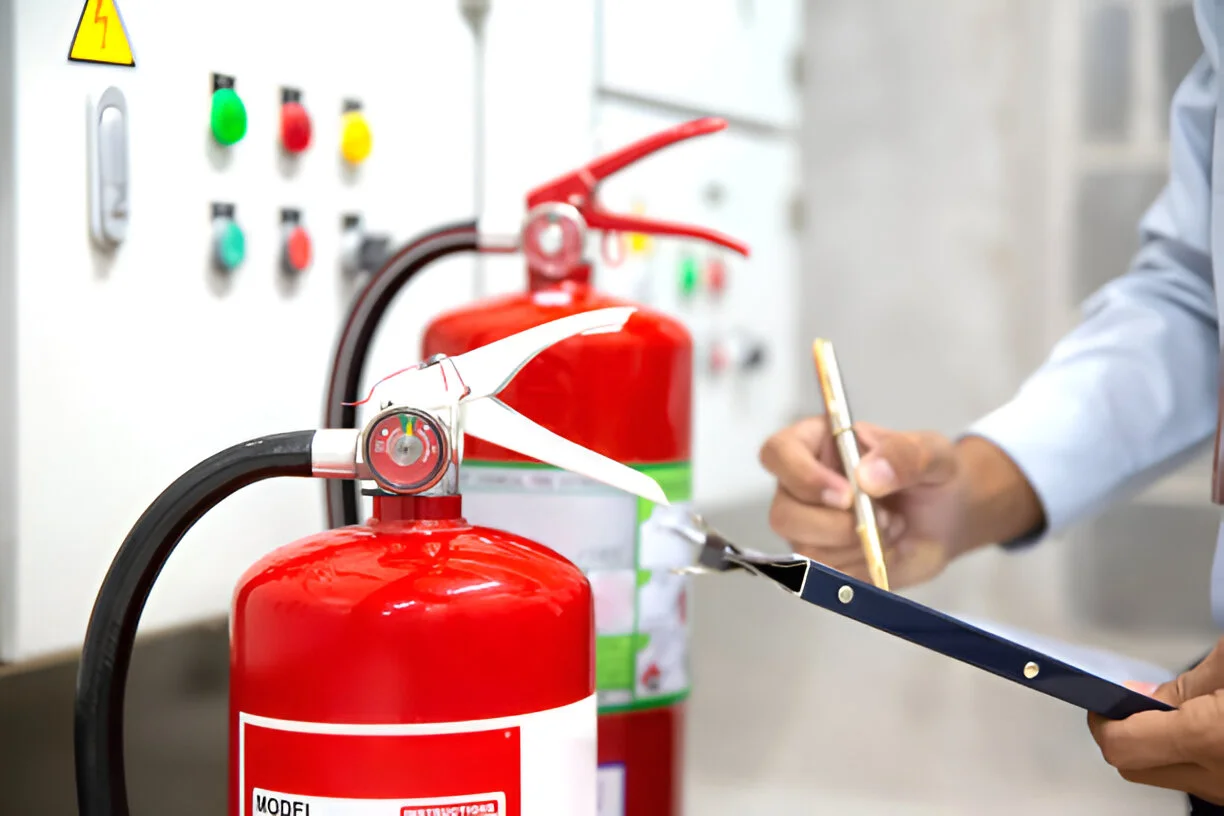
Landlord fire safety responsibilities can include specific fire door duties in multi-occupied residential buildings.
Under the Fire Safety (England) Regulations 2022, Responsible Persons in buildings with two or more domestic premises and common parts must give residents information about fire doors.
Where the top storey is more than 11 metres above ground level, communal fire doors must be checked at least every three months. Best endeavours must also be used to check flat entrance doors at least every 12 months.
If you need a professional inspection, see our Fire Door Certificate service.
You can also read the official GOV.UK fire door guidance.
Fire Alarms, Escape Routes and Emergency Lighting
Fire alarms and escape routes must suit the property and the risks found there.
A landlord should not assume that one basic smoke alarm setup is enough for every building. HMOs, blocks of flats and mixed-use buildings may need more extensive detection and warning arrangements.
Communal escape routes should be kept clear. Storage should not block stairs, corridors or exits. Where emergency lighting is required, it should be maintained and tested properly.
For specialist work, you can use our Fire Alarm Installation service or Emergency Lighting Testing service.
Keeping these systems maintained is a practical part of landlord fire safety responsibilities, especially in buildings with shared escape routes.
Give Tenants Clear Fire Safety Information
Another part of landlord fire safety responsibilities is making sure residents know what to do.
In multi-occupied residential buildings covered by the Fire Safety (England) Regulations 2022, Responsible Persons must provide residents with relevant fire safety instructions and information about fire doors.
The information should be easy to understand. Residents should know what the evacuation strategy is, how to report a damaged fire door and what to do if they discover a fire.
London landlords can also refer to the London Fire Brigade guidance for private rented sector landlords.
Keep Records and Act on Problems
Good records make these fire safety duties easier to manage.
Keep copies of fire risk assessments, alarm test records, emergency lighting records, fire door checks and any evidence of remedial work.
If an assessment finds a problem, record what needs to be done, who is responsible and when the work is completed.
For example, if a fire door is not closing properly, do not leave the issue sitting on the report. If an alarm fault keeps returning, get the cause investigated instead of simply resetting the panel each time.
When Should You Get Professional Help?
Some checks can be part of normal property management, but more complex buildings often need specialist input.
Professional help is sensible where a property has shared escape routes, several storeys, sleeping accommodation for multiple households, mixed commercial and residential use, complex alarm systems or concerns about fire doors and compartmentation.
The more complicated the building, the less useful a generic checklist becomes.
A professional assessment can help you understand which fire safety duties apply to the property and which actions should be dealt with first.
Final Thoughts
Staying on top of landlord fire safety responsibilities means understanding the building, keeping the right safety measures working and acting when problems are found.
The aim is not to collect paperwork for the sake of it. The real goal is to protect residents and show that fire risks are being managed properly.
If your property has communal areas or you are unsure whether the current assessment is still suitable, booking a professional Fire Risk Assessment in London is a sensible next step.
About the Author: LandlordCertificate

Related Posts
Get Social
Recent Posts
- Residential EICR London: Complete Electrical Safety Inspection Guide for Landlords & Homeowners
- Property Owners and Landlords Across London
- Emergency Lighting Assessment Failure Signs: 4 Critical Indicators Your System Needs Immediate Attention
- Annual Fire Alarm Inspection Checklist and Industrial Facility Solutions Safety Plan: 5-Step Shield
- Fuse Box Installation by a Certified Fuse Box Electrician for Circuit Failures and Safety Control