




Energy Performance Certificate (EPC) requirements in the UK apply whenever a residential or commercial property is built, marketed for sale, or let to tenants. While home sellers only need a valid EPC of any band before marketing, private landlords in England and Wales must also meet Minimum Energy Efficiency Standards (MEES) of Band E or above unless a valid exemption is registered.
Understanding who needs an EPC, how long certificates remain valid, which exemptions exist on the PRS Exemptions Register, and what penalties apply helps property owners avoid delays and costly fines during sales, lettings, and lease renewals.

Field Insight from Hassan Sharif
Business Development Manager & Compliance Specialist at Landlord Certificate London
“One of the most frequent misunderstandings we clear up for London property owners is the difference between selling and letting rules. Home sellers in boroughs like Barnet or Bromley often worry unnecessarily about hitting Band E before listing, whereas only rental properties fall under MEES Band E enforcement. Conversely, landlords buying a tenanted F- or G-rated property sometimes assume an existing PRS exemption transfers to them—when in fact exemptions cease on transfer and the new owner must either upgrade or re-register.”
What Is an Energy Performance Certificate (EPC)?
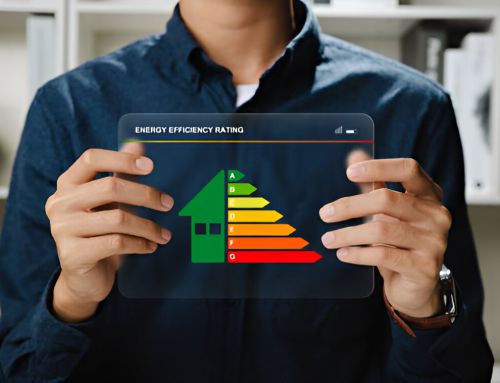
An Energy Performance Certificate (EPC) grades a building’s energy efficiency from A (most efficient) to G (least efficient), estimating typical heating, hot water, and lighting costs alongside CO₂ emissions. Produced by an accredited energy assessor, the certificate remains valid for 10 years and includes tailored recommendations to cut energy waste.
Who Must Comply with EPC Requirements & When?
Under GOV.UK rules for selling and renting property, you must commission an EPC before marketing a residential or commercial building. Requirements differ slightly depending on your property role:

| Property Group | EPC Requirement | Minimum Band Rule |
|---|---|---|
| Home Sellers | Valid EPC ordered before marketing | No minimum band (any A–G grade valid) |
| Residential Landlords | Valid EPC before marketing & move-in | Minimum Band E (unless exempt) |
| Commercial Landlords | Valid EPC on lease, sale, or renewal | Minimum Band E (unless exempt) |
| New Build Developers | On-construction SAP EPC on completion | Must meet Building Regulations Part L |
MEES Band E Rules, PRS Exemptions & Upgrade Steps
If a rented dwelling scores Band F or G, landlords must carry out cost-effective upgrades up to the £3,500 cost cap (including VAT) to reach Band E, or register qualifying evidence on the PRS Exemptions Register. Most registered exemptions last five years (while a temporary recent-landlord exemption lasts six months).
- ✓Upgrade insulation first: Top up loft insulation to 270mm and insulate cavity walls, floors, and hot water tanks.
- ✓Modernise heating & controls: Fit condensing boilers, programmable thermostats, and thermostatic radiator valves (TRVs).
- ✓Seal heat loss: Install double or triple glazing and draught-proof older timber windows and external doors.
- ✓Prepare paperwork: Keep boiler manuals, glazing FENSA certificates, and insulation invoices ready for the assessor.

Common EPC Mistakes, Validity & Marketing Penalties
Per GOV.UK EPC marketing and letting guidance, failing to display the EPC rating in commercial property listings can trigger a £200 fine per advertisement, while letting a non-compliant Band F or G rental without an exemption carries MEES penalties up to £5,000.
- ✓Marketing without an EPC: Always commission your assessment before advertising online or holding property viewings.
- ✓Assuming EPCs never expire: Certificates last 10 years—check the national register before starting a new sale or tenancy.
- ✓Forgetting post-upgrade renewals: Although not legally mandatory after renovations, ordering a fresh EPC locks in your improved score.
EPC Assessment Pricing in London
At Landlord Certificate London, domestic EPCs are priced at fixed tiers (Studio £89.99, Up to 3 Bedrooms £109.99, 4 Bedrooms £129.99, 5 Bedrooms £149.99) and commercial EPCs by floor area (Up to 50m² £250, 50m²–100m² £320, 100m²–250m² £399), with transparent extras limited to £5 parking (where no free parking is available) and £18 Congestion Charge where applicable. Call 020 4518 8198 or book online below.
Frequently Asked Questions
+ Can I challenge or appeal an inaccurate EPC rating?
Yes. Contact the energy assessor who produced the certificate first with supporting evidence (such as wall insulation or boiler installation certificates). If unresolved, you can escalate the query to their accreditation scheme listed on the EPC.
+ Do homeowners selling a property need a minimum Band E rating?
No. The minimum Band E rule under MEES applies to privately rented properties, not owner-occupied home sales. Sellers simply need a valid EPC (any rating from A to G) before marketing the home.
+ Which properties are exempt from EPC requirements?
Common EPC exemptions include places of worship, temporary buildings used for two years or less, stand-alone non-dwellings under 50m², low-energy industrial/agricultural buildings, and certain listed buildings where energy upgrades would unacceptably alter their character.
+ Can I use an EPC from another country in the UK?
No. UK property sales and lettings require an official EPC produced by a UK-accredited energy assessor and lodged on the relevant UK national register.
About the Author: Hassan Sharif

Related Posts


Get Social
Recent Posts
- Asbestos Management Surveys for London Rental Properties: CAR 2012 Landlord Guide
- Commercial Fire Risk Assessment London: Workplace Fire Compliance & Safety Certification
- Commercial Gas Safety Certificate CP42 London: Commercial Kitchen & Catering Compliance
- Landlord Gas Safety Certificate CP12 London: Annual Inspection & Legal Compliance Guide
- Commercial EICR London: Business Electrical Testing & Workplace Compliance Guide