





An EICR electrical test (Electrical Installation Condition Report) is a thorough inspection and test of a property’s fixed wiring, consumer unit, sockets, lighting circuits, and protective earthing. Whether you are a landlord meeting statutory duties or a homeowner safeguarding your family, regular testing uncovers hidden faults—such as overloaded circuits, loose terminations, or ageing insulation—before they cause electric shocks or electrical fires.
At Landlord Certificate London, our qualified electricians carry out BS 7671 EICR inspections for residential homes, rental properties, and commercial premises across Greater London, delivering clear digital reports without unnecessary technical jargon.

Field Insight from Hassan Sharif
Business Development Manager & Compliance Specialist at Landlord Certificate London
“Property owners often tell us their lights and sockets work fine, so they assume their wiring is completely safe. Yet during EICR testing across London—especially in converted Victorian flats and older terraced houses—our engineers regularly uncover perished rubber-insulated cables, borrowed neutrals, or melted terminal blocks hidden inside consumer units and ceiling voids. A proper EICR electrical test combines calibrated dead and live instrument readings with visual checks so concealed fire risks are caught well before an emergency occurs.”
What Is an EICR Electrical Test & Why Does It Matter?
An EICR (Electrical Installation Condition Report) evaluates the safety and condition of all fixed electrical installations within a building against IET Wiring Regulations (BS 7671). Unlike a quick visual check or portable appliance test (PAT), an EICR examines the core wiring infrastructure concealed behind walls, floors, and ceilings.
Under the Electrical Safety Standards in the Private Rented Sector (England) Regulations 2020, landlords are legally required to hold a valid EICR for every let property. For homeowners, periodic testing provides peace of mind, supports building insurance claims, and highlights ageing components before they fail.
- ✓Core components inspected: Fixed wiring, consumer units (fuse boxes), sockets, switches, lighting circuits, earthing, and bonding.
- ✓Qualified engineers only: Must be carried out by a competent, qualified electrician using calibrated multifunction test equipment.
- ✓Clear outcome ratings: Reports classify installations as either Satisfactory or Unsatisfactory using C1, C2, C3, and FI codes.
- ✓Legal & insurance protection: Demonstrates compliance for councils, letting agents, mortgage lenders, and property insurers.
What Happens During an EICR Electrical Test?
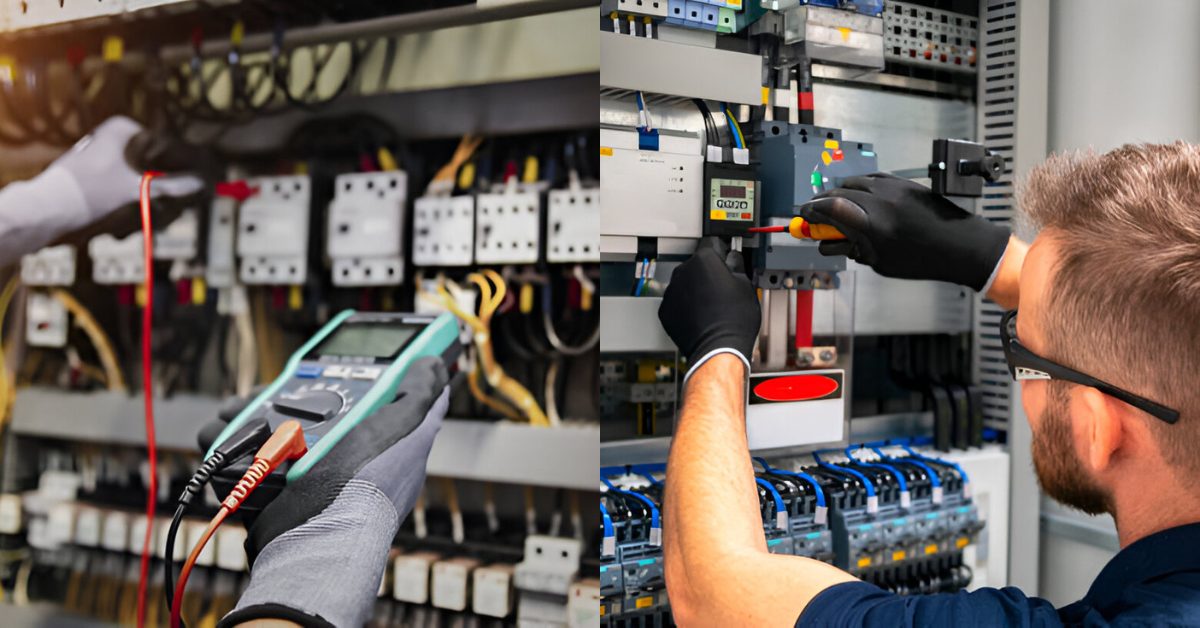
Knowing what to expect makes preparing for an EICR inspection in London straightforward. A typical domestic check takes between one and three hours depending on property size and circuit count, and follows a structured sequence:
- ✓1. Visual inspection: Checks switches, sockets, consumer unit enclosures, earthing/bonding clamps, and visible cables for overheating, scorch marks, or loose fittings.
- ✓2. Dead testing (power off): Circuits are temporarily isolated to test continuity of protective conductors, ring circuit integrity, and insulation resistance.
- ✓3. Live testing (power on): Verifies polarity, earth fault loop impedance (Ze/Zs), prospective fault current, and RCD trip speeds in milliseconds.
- ✓4. Report & schedule of results: You receive a complete EICR detailing every circuit tested, any coded observations, and the overall compliance status.
How to Read & Understand Your EICR Report Codes
Every departure from current BS 7671 standards is recorded using four standardised observation codes. Understanding these codes shows whether your property passes immediately or requires remedial repairs:
| Code | Official Classification | Report Result | Required Next Step |
|---|---|---|---|
| C1 | Danger present (risk of injury) | Unsatisfactory | Immediate action; engineer makes safe on site |
| C2 | Potentially dangerous | Unsatisfactory | Urgent repair required within 28 days |
| FI | Further investigation required | Unsatisfactory | Investigate & resolve without delay (within 28 days) |
| C3 | Improvement recommended | Satisfactory | Advisory upgrade only; no legal duty to fix |
How Often Should You Get an EICR Electrical Test?
Inspection frequency depends on how the property is used. Per GOV.UK electrical safety guidance and BS 7671 recommendations, standard intervals are:
| Property Type | Testing Frequency | Key Compliance Note |
|---|---|---|
| Private Rented Properties | Every 5 years (maximum) | Legal requirement; supply copy to tenants & councils |
| Owner-Occupied Homes | Every 10 years | Recommended on house purchase or after major rewiring |
| Commercial Offices & Shops | Every 5 years (or tenancy change) | Supports Electricity at Work Regulations & insurers |
| Industrial Sites | Every 3 years | Higher wear, heavy machinery, and three-phase loads |
Ready to arrange your inspection? Book online below or call our London compliance team on 020 4518 8198 (or email info@landlordcertificatelondon.co.uk).
Frequently Asked Questions
+ How long does an EICR electrical test take?
An average residential EICR takes between one and three hours depending on the number of bedrooms, circuits, and consumer units. Larger homes or commercial premises may take half a day or longer.
+ Will the power be turned off during the inspection?
Yes, temporary circuit isolation is necessary to carry out dead tests safely. Engineers normally isolate one circuit at a time so disruption to Wi-Fi, appliances, and lighting is kept brief.
+ Is an EICR test legally required for homeowners?
No, it is only a legal requirement for private landlords. However, BS 7671 strongly recommends that owner-occupiers have an EICR every 10 years—or when buying a property—to identify hidden wiring faults.
+ What happens if the EICR test finds problems?
If any C1, C2, or FI codes are recorded, the report is marked Unsatisfactory. Landlords must complete the required remedial work within 28 days (or sooner if stated) and obtain written confirmation of compliance.
+ Who can perform an EICR electrical test?
Only a qualified and competent electrical engineer—such as an NICEIC or NAPIT registered electrician—with up-to-date BS 7671 inspection and testing qualifications can issue a valid EICR.
About the Author: Hassan Sharif

Related Posts

Get Social
Recent Posts
- Asbestos Management Surveys for London Rental Properties: CAR 2012 Landlord Guide
- Commercial Fire Risk Assessment London: Workplace Fire Compliance & Safety Certification
- Commercial Gas Safety Certificate CP42 London: Commercial Kitchen & Catering Compliance
- Landlord Gas Safety Certificate CP12 London: Annual Inspection & Legal Compliance Guide
- Commercial EICR London: Business Electrical Testing & Workplace Compliance Guide