




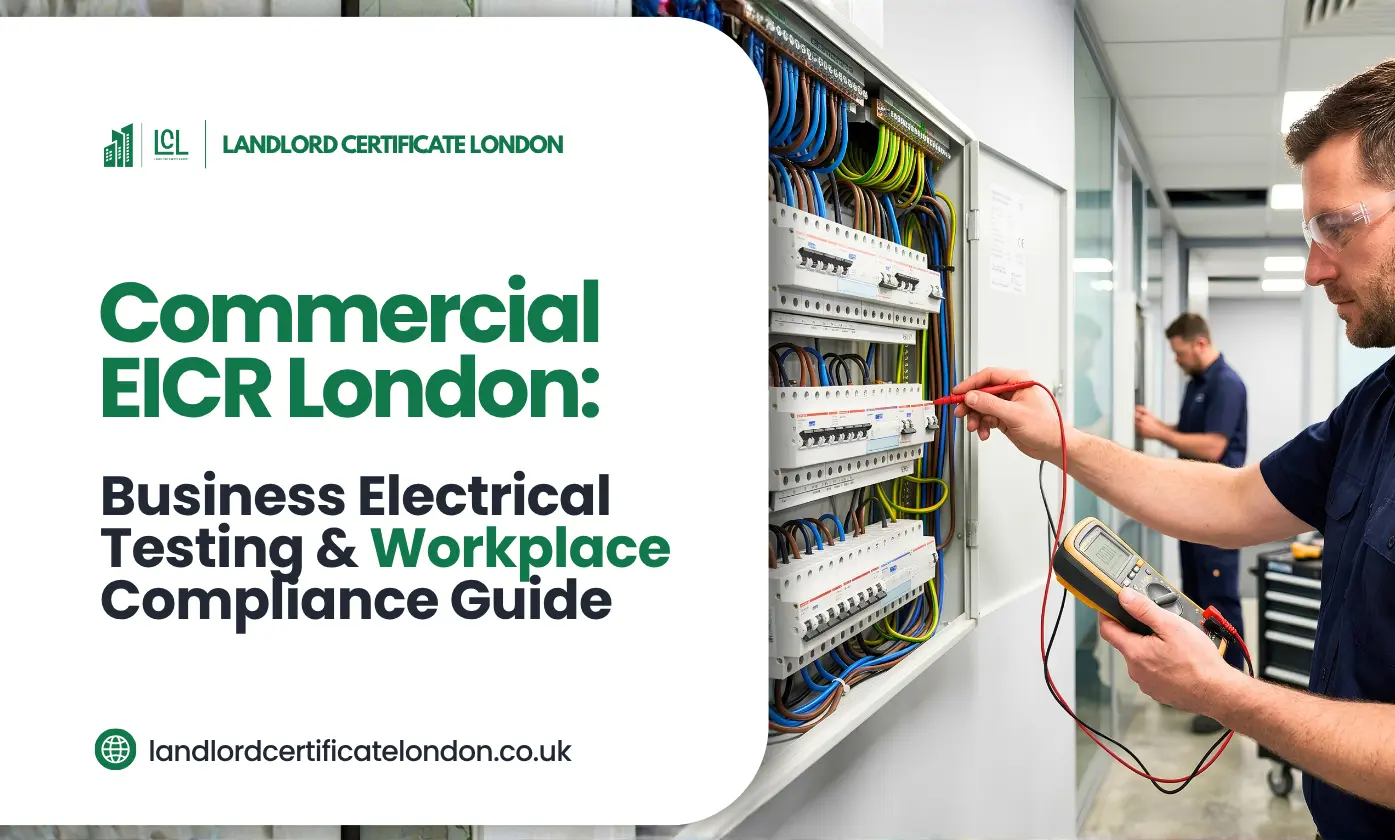
A commercial EICR reveals electrical faults before they threaten staff, customers or your business. Whether you run a Canary Wharf office or a Croydon shop, an inspection shows the condition of your fixed installation. You can then organise essential repairs before a fault interrupts your working day.
If you are looking for a commercial EICR in London, start with three questions: what needs checking, who is responsible, and how will testing fit your working day? This guide explains the practical steps, costs and safety duties without confusing technical language. It also shows you how to prepare for an inspection.
An electrical problem rarely arrives at a convenient moment. A failed supply can interrupt customer bookings, damage stock and leave employees unable to work. Understanding the installation before something goes wrong helps you decide what needs fixing and who should authorise the work.
For a landlord or managing agent, the report also supports a clearer conversation with tenants. Everyone can see which areas were checked and where a repair is needed. You still need to follow through on the findings rather than treat the certificate as a guarantee. Keep these records readily available.
What is a Commercial EICR & Why is it Critical for London Businesses?
A commercial Electrical Installation Condition Report (EICR) assesses the condition of fixed wiring, distribution boards and circuits at business premises. A competent inspector identifies defects, records test results and recommends action. The report helps you protect staff, visitors and operations before electrical faults become serious.
Think about how much your business depends on electricity. Computers, refrigeration, lighting, machinery and security systems may all share an installation that has changed over the years. A fault in one neglected circuit can interrupt trading, damage equipment or create a serious shock or fire risk.
If you searched for “business EICR inspection London”, expect a report explaining the areas checked, test results and whether the installation is satisfactory for continued use. It lists any agreed limitations and recommends when to inspect again. Clear observation codes help you understand which electrical defects need immediate action, further investigation or improvement.
- C1 means you need immediate action to remove a present danger.
- C2 points to a potential danger that needs urgent remedial attention.
- FI signals an issue that cannot safely be left unexplored.
- C3 highlights a recommended improvement rather than, by itself, making the report unsatisfactory.
An EICR is useful when taking over premises or when earlier records are missing. It also gives facilities teams a sensible starting point for budgeting remedial work. Keep a copy with your maintenance records and share relevant findings with whoever controls repairs.

What is a Commercial EICR & Why is it Critical for London Businesses?
Legal Obligations: Electricity at Work Regulations 1989 & Health and Safety at Work Act
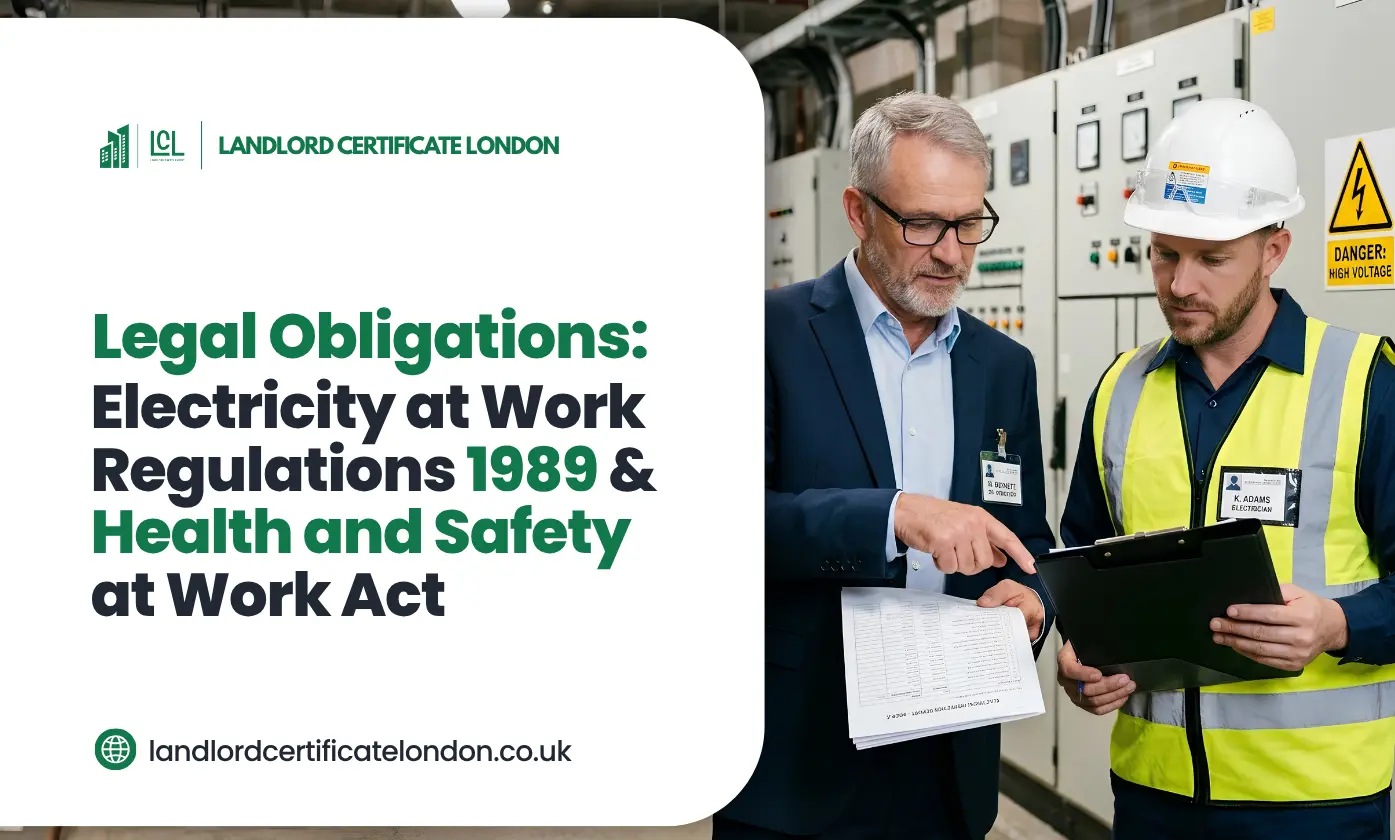
The Electricity at Work Regulations 1989 require employers and other duty holders to manage electrical danger, including maintaining systems where necessary. The Health and Safety at Work etc. Act 1974 adds wider duties. An EICR supports sensible maintenance decisions, but legislation sets no universal testing interval.
Regulation 4(2) covers safe maintenance, while Regulation 16 addresses competence. The Health and Safety at Work etc. Act 1974 also places general duties on employers to protect employees and others affected by their undertaking. BS 7671, Requirements for Electrical Installations, provides the technical framework used for inspection and testing.
Duty holder responsibilities may sit with employers, landlords, tenants and managing agents, depending on who controls the installation. When reviewing landlord responsibilities, commercial lease electrical clauses should clarify maintenance, although a lease cannot remove statutory safety duties. Identify responsible people early and agree who commissions testing and follows up defects.
- Check the electrical maintenance responsibilities in your commercial lease.
- Identify who controls the incoming supply, common areas and individual units.
- Keep dated EICRs, repair records and evidence of completed follow-up work.
- Review inspection arrangements after alterations, damage or a change of use.
An electrical report alone does not discharge every legal duty. If defects are reported, record what you have done about them and ask a competent electrician what should happen next. Where there is immediate danger, make the affected installation safe before normal use resumes.
Commercial Inspection Protocol: 3-Phase Systems, Sub-Boards, and High-Load Circuits
Commercial Inspection Protocol: 3-Phase Systems, Sub-Boards, and High-Load Circuits
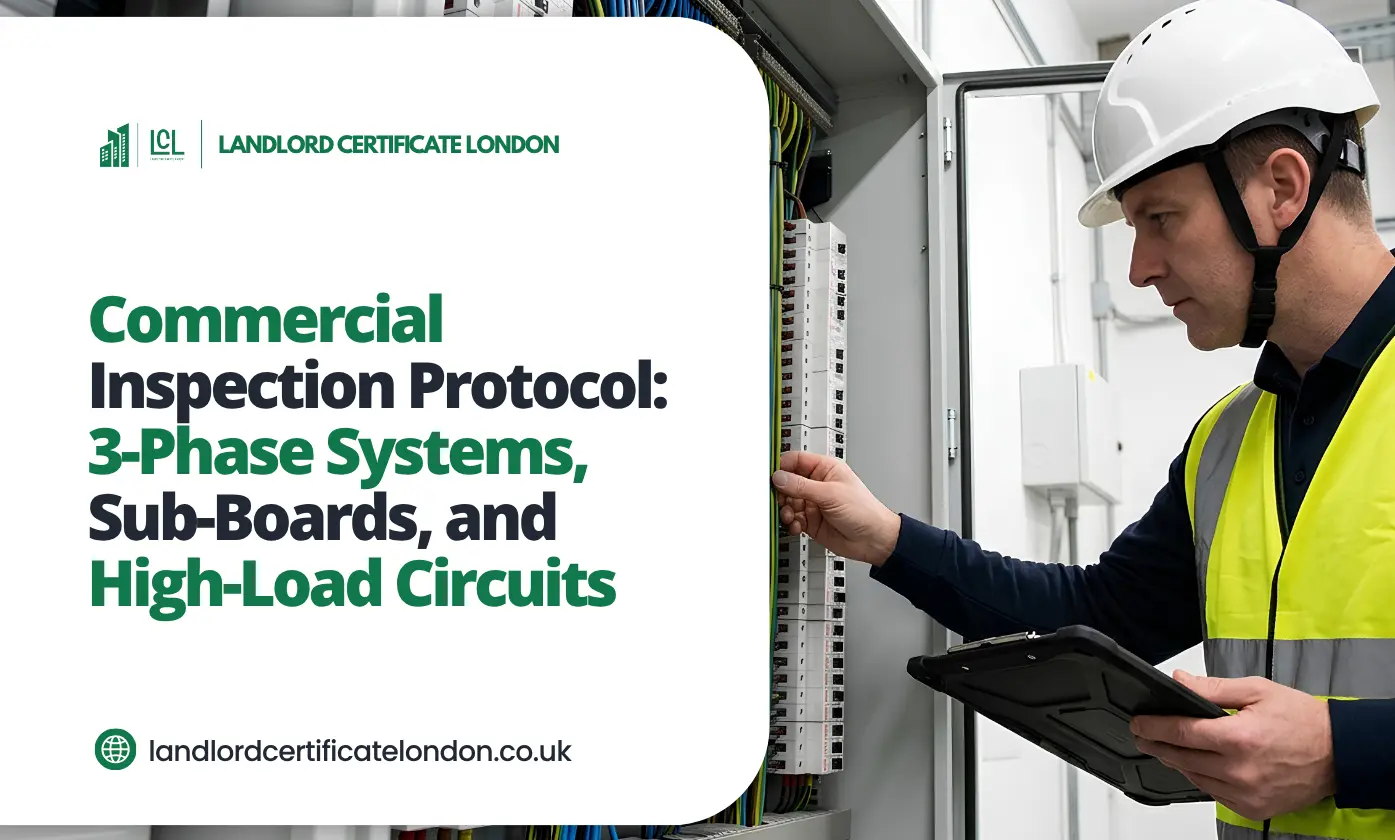
Commercial inspections may involve three-phase supplies, high-load machinery and several distribution boards across one building. Your electrician needs a clear circuit schedule, safe access and an agreed testing plan. Identifying critical equipment beforehand helps minimise disruption while ensuring meaningful checks of the installation.
A 3 phase EICR London service may cover three-phase supplies feeding lifts, air conditioning, commercial kitchens or machinery. The engineer checks suitable protective devices, earthing, bonding, circuit identification and relevant test results. Commercial distribution boards and sub-boards need careful tracing, particularly where previous contractors have made alterations.
The electrician starts by examining accessible parts of the fixed installation and carrying out appropriate tests under safe working arrangements. Planned isolation may be necessary. You should arrange access, explain operational restrictions and ask for every inspection limitation to be recorded in the finished report.
- Provide previous EICRs, circuit schedules and drawings, if available.
- Tell the engineer which systems cannot be interrupted during trading.
- Arrange keys, permits and a responsible site contact for each electrical room.
- Agree safe shutdown windows and warn affected staff or tenants beforehand.
- Ask how inaccessible circuits and other limitations will be documented.
Thermal imaging electrical inspection can highlight overheating but does not replace conventional EICR tests. Likewise, an inspection cannot verify concealed wiring that is genuinely inaccessible without further work. A clear report should explain these limits rather than implying everything was tested.
Commercial Inspection Protocol: 3-Phase Systems, Sub-Boards, and High-Load Circuits
Commercial vs Residential EICR: Key Differences in Scope, Testing & Frequency
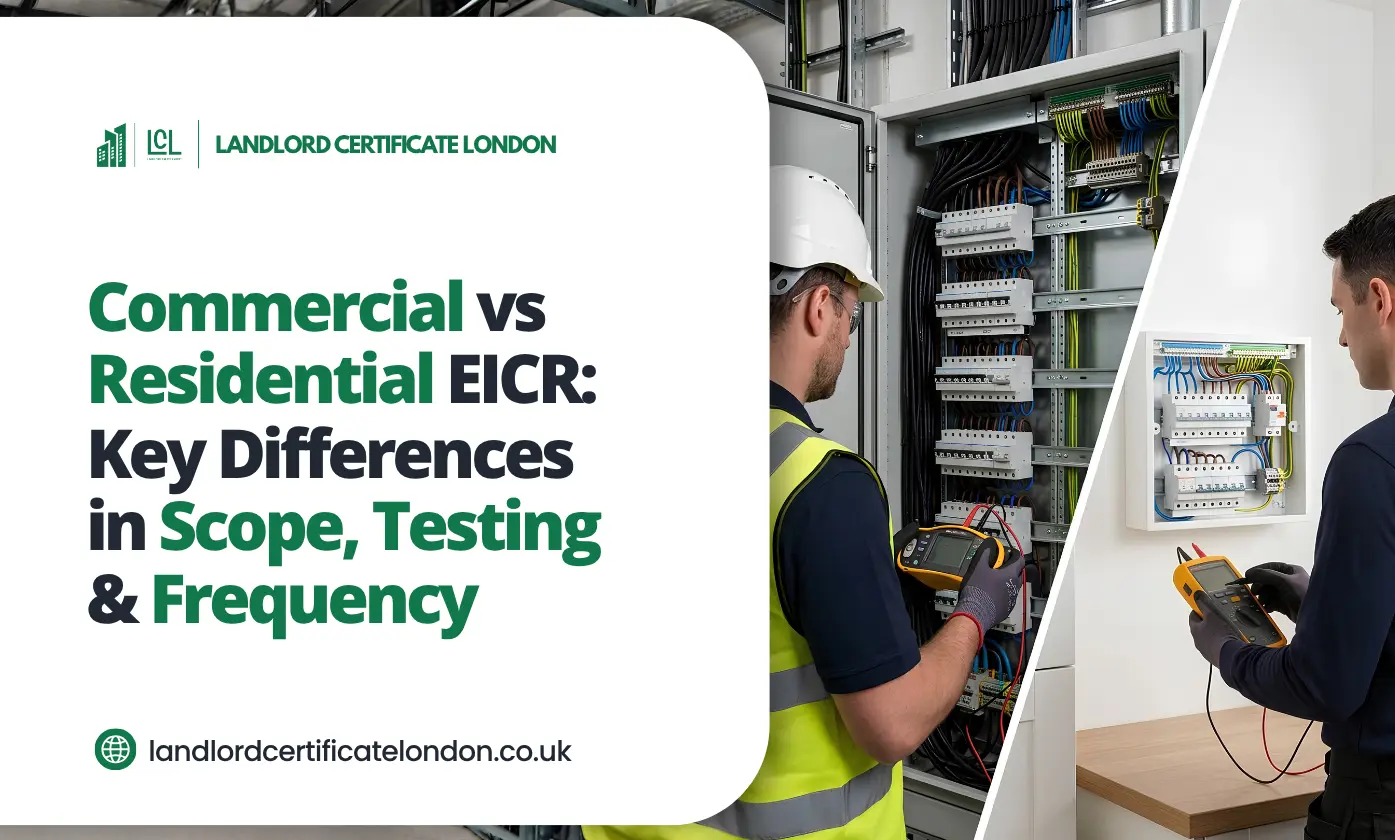
Commercial and residential reports both assess fixed electrical safety, but business installations are often harder to inspect. Workplaces may use three-phase distribution, several sub-boards and essential equipment that cannot stop unexpectedly. Testing intervals should reflect the premises, condition and risks, rather than a blanket rule.
Commercial reports require extra preparation and time on site. A shop EICR report may cover lighting and sockets, while a warehouse report may include machinery and sub-boards. The circuit count and practical access usually matter more than the building’s square footage alone.
For many ordinary business settings, three to five years is a useful starting point for discussing inspection frequency. It is not a universal legal expiry date. Your electrician should recommend a suitable interval based on installation condition, usage, environmental risks and the findings of earlier reports.
If you searched for “office electrical certificate London”, check your installation’s condition rather than relying only on the date of the previous inspection. Check whether anything has changed: extra workstations, new kitchen equipment, water damage or a new electrical contractor. Ask the inspector to explain the recommended next date and review it if the risks change as your business grows or evolves.
Commercial vs Residential EICR: Key Differences in Scope, Testing & Frequency
Pricing & Circuit Tiers: Up to 12 Circuits (£149.99) vs 12-36 Circuits (£249.99)
Commercial EICR testing starts from £149.99 for up to 12 circuits. The company’s online booking form also displays +£249.99 for 12–36 circuits. Confirm how this additional charge applies and check the final inspection scope, particularly where the premises have multiple distribution boards.
| Commercial EICR pricing tier | Price | What to confirm |
|---|---|---|
| Up to 12 circuits | From £149.99 | Board count, access and testing scope |
| 12–36 circuits | £249.99 | Board count, access and testing scope |
| Larger or complex sites | Quotation required | Sub-boards, three-phase supply and shutdowns |
- Count distribution boards and note the number of occupied circuits.
- Confirm whether the supply is single-phase or three-phase.
- Mention restricted access, night work or tenant coordination requirements.
- Ask whether remedial repairs, re-testing and specialist diagnostics are separate.
Not every commercial building qualifies for the £149.99 starting price. Request an itemised quotation, especially where the number of circuits or additional distribution boards may affect the overall cost. A clear quotation should explain what the engineer can test and whether a return visit might be necessary.
Sector-Specific Compliance (Offices, Retail, Restaurants, Schools & Warehouses)
Commercial EICR frequency UK guidance depends on how you use the property and what could go wrong. Offices, shops, restaurants, schools and warehouses have different loads, access arrangements and environmental risks. A competent person should adjust the inspection timetable to those real working conditions.
The following intervals are indicative, not fixed legal deadlines. Many offices and shops consider roughly five years, while tougher industrial environments may need more frequent inspections. Always use your installation’s condition, risk assessment and the inspector’s recommendation to decide.
| Premises type | Indicative interval | What affects it |
|---|---|---|
| Offices and shops | Around 5 years | Condition, alterations, server rooms |
| Restaurants and schools | 3 to 5 years | Kitchen loads, heavy daily use |
| Warehouses and industrial | Often 3 years or less | Machinery, dust, damp, harsh environment |

Industry Insight | Hassan Sharif, Landlord Certificate London
“London commercial spaces have a hidden blind spot. You’ll frequently see modern businesses operating inside 100-year-old properties with electrical boards that haven’t been thoroughly tested in a decade. Over time, successive tenants add extra sockets, patch in bespoke lighting, and vacate without documenting a single change. In our day-to-day inspections across London portfolios, the dangerous faults that actually fail an EICR almost never come from the building’s base structure—they come from years of unchecked, DIY tenant fit-outs.”
Booking a Commercial EICR in London: A Practical Checklist
A smoother commercial EICR starts with accurate information about your site. Gather the address, approximate circuit count, number of electrical boards and any restrictions on switching off power. Share existing inspection records if available. The electrician can then help you plan access, scope and timing.
- Share the site contact’s details and any access or permit requirements.
- Agree when essential equipment can be safely switched off.
- Ask when the report is expected and how urgent findings will be communicated.
- Confirm the quoted price and whether remedial works are excluded.
Explore Landlord Certificate London services, read about commercial EICR inspections, or request a commercial EICR booking through our enquiry form. You can also ask about fire risk assessments and related workplace compliance services. Call 020 4518 8198 or email info@landlordcertificatelondon.co.uk with your premises details.
A commercial electrical safety certificate is only useful if you act on what it says. Arrange the inspection, review the observations, prioritise any dangerous conditions and keep evidence of completed repairs. Doing that consistently is far better than treating the report as paperwork to file away. Review the paperwork with whoever approves maintenance work.
A fresh report is not a substitute for regular checks between inspections. Encourage staff to report damaged sockets, overheating or tripping protective devices as soon as they notice them. Acting promptly can prevent a small problem from becoming an expensive interruption to trading.
Frequently Asked Questions
About the Author: Hassan Sharif

Related Posts


Recent Posts
- Commercial EICR London: Business Electrical Testing & Workplace Compliance Guide
- Residential EICR London: Complete Electrical Safety Inspection Guide for Landlords & Homeowners
- Property Owners and Landlords Across London
- Emergency Lighting Assessment Failure Signs: 4 Critical Indicators Your System Needs Immediate Attention
- Annual Fire Alarm Inspection Checklist and Industrial Facility Solutions Safety Plan: 5-Step Shield





Get Social