



A fire extinguisher may sit unused for months, but it still needs regular attention. If a fire starts, the extinguisher must be easy to reach, suitable for the risk and ready to use.
A regular Fire Extinguisher Inspection helps spot damage, low pressure, missing seals and other problems before the equipment is needed. It is an important part of fire safety for offices, shops, restaurants, HMOs, communal areas and many other premises.
This guide explains what is checked, how often extinguishers should be reviewed and why proper servicing matters.
What Is a Fire Extinguisher Inspection?
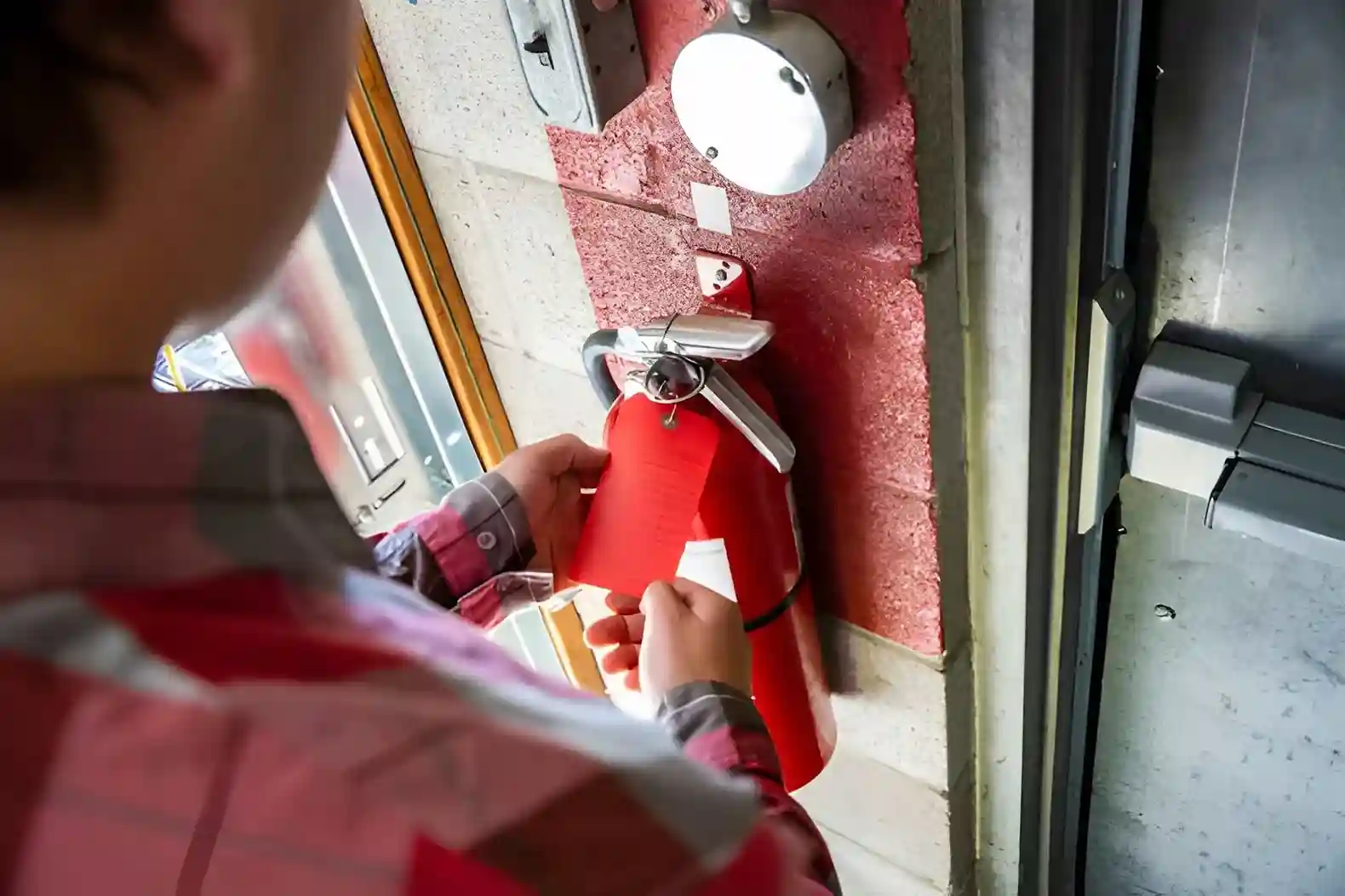
A Fire Extinguisher Inspection checks portable firefighting equipment to make sure it is in suitable condition and ready for use.
The inspection can include:
- Extinguisher body and general condition
- Pressure gauge, where fitted
- Safety pin and tamper seal
- Hose and nozzle
- Labels and operating instructions
- Signs of rust, dents, leaks or damage
- Mounting bracket or stand
- Accessibility and location
- Signs that the extinguisher has already been used
The exact checks depend on the extinguisher type and the level of service needed.
If you need an inspection in London, see our Fire Extinguisher Testing service.
Why Is Fire Extinguisher Inspection Important?
Fire extinguishers are useful only if they work when they are needed.
A Fire Extinguisher Inspection can find problems that are easy to miss during normal day-to-day use of a building. An extinguisher may have been moved, damaged or partly discharged. Furniture, stock or other items may also be blocking access.
London Fire Brigade guidance says the type, number and position of extinguishers should be based on the risks identified in the fire risk assessment. It also refers to BS 5306-3 for the maintenance of portable fire extinguishers.
For more information, see the London Fire Brigade guidance on portable firefighting equipment.
| Inspection Type | Price | Notes |
|---|---|---|
| Visual Monthly Check | £15 – £25 per unit | Quick verification of pressure, seals, and placement |
| Annual Professional Test | £50 – £80 per unit | Detailed functional and internal assessment |
| Specialized Equipment Test | £70 – £120 per unit | For CO2, foam, or wet chemical extinguishers |
| Replacement / Refill | £40 – £100 per unit | Includes service verification and documentation |
How Often Should Fire Extinguishers Be Checked?
There is a difference between a simple visual check and professional servicing.
A visual Fire Extinguisher Inspection should form part of routine fire safety management. Look for visible damage, missing seals, pressure problems and anything blocking access.
Portable extinguishers should also be maintained in line with the relevant servicing requirements and the manufacturer’s instructions. London Fire Brigade refers to BS 5306-3 for the commissioning and maintenance of portable fire extinguishers.
Many standard extinguishers receive a basic service every year. However, the correct maintenance needs can depend on the type of extinguisher, its age and its condition.
Do not wait for the next planned Fire Extinguisher Inspection if an extinguisher has been used, damaged or appears unsafe.
Common Problems Found During an Inspection
A Fire Extinguisher Inspection may find:
- Low or incorrect pressure
- Broken or missing tamper seals
- Missing safety pins
- Damaged hoses or nozzles
- Rust or corrosion
- Dents or physical damage
- Unreadable instructions
- Loose mounting brackets
- Blocked access
- Signs of previous use
Some problems can be dealt with during servicing. Others may mean the extinguisher needs to be replaced.
Never assume an extinguisher is safe simply because it is still hanging on the wall.
Where Should Fire Extinguishers Be Located?
Location matters.
London Fire Brigade guidance says extinguishers should normally be placed in clear positions on escape routes, preferably near exit doors. The correct type, number and location should be based on the risks found within the premises.
During a Fire Extinguisher Inspection, access should therefore be checked as well as the condition of the extinguisher itself.
An extinguisher should not be hidden behind furniture, stock or locked doors. People should be able to find and reach it without unnecessary delay.
Fire Extinguisher Inspection and Fire Risk Assessment
A Fire Extinguisher Inspection and a Fire Risk Assessment are not the same service.
A Fire Risk Assessment looks at the wider fire risks within a building. It may consider escape routes, fire alarms, emergency lighting, fire doors, people at risk and firefighting equipment.
The Fire Extinguisher Inspection focuses on the extinguisher equipment and its condition.
Your Fire Risk Assessment should help identify what firefighting equipment is suitable for the premises.
Read more about our Fire Risk Assessment London service.
GOV.UK states that responsible persons for business and other non-domestic premises must carry out a fire risk assessment and put suitable fire safety measures in place and maintain them.
You can read the official GOV.UK workplace fire safety guidance.
Different Types of Fire Extinguishers
Common fire extinguisher types include:
- Water
- Foam
- CO2
- Dry powder
- Wet chemical
Different extinguishers are designed for different fire risks. The correct choice depends on the materials, equipment and activities within the area.
London Fire Brigade guidance separates fire risks into different classes and explains that the correct extinguishing medium should be chosen for the particular risk.
A Fire Extinguisher Inspection should therefore consider whether the equipment is still suitable for the area where it is located.
Who Is Responsible for Fire Extinguisher Safety?
For workplaces and many other non-domestic premises, fire safety duties normally sit with the responsible person.
According to GOV.UK, the responsible person can include:
- An employer
- Owner
- Landlord
- Occupier
- Facilities manager
- Building manager
- Another person with control of the premises
The responsible person must carry out and review a Fire Risk Assessment, maintain suitable fire safety measures and plan for emergencies.
Arranging a Fire Extinguisher Inspection at the right time is one part of managing the fire safety equipment within the property.
London Fire Brigade also explains the duties placed on responsible persons under the Regulatory Reform (Fire Safety) Order 2005.
Should You Keep Fire Extinguisher Inspection Records?
Yes. Clear records make fire safety easier to manage.
Your records may include:
- Date of inspection or service
- Extinguisher location
- Extinguisher type
- Condition found
- Work completed
- Replacement or refill details
- Next service date
This is especially useful for landlords, businesses and managing agents looking after several extinguishers or multiple properties.
What Happens After an Extinguisher Has Been Used?
A used extinguisher should not simply be put back into position.
Even if only a small amount has been discharged, it should be checked before anyone relies on it again.
Depending on its type and condition, it may need servicing, refilling or replacement.
If you are unsure about its condition, arrange a professional Fire Extinguisher Inspection.
Fire Extinguisher Inspection in London
Fire safety equipment needs more than installation. It also needs ongoing checks and maintenance.
Regular Fire Extinguisher Inspection helps find damaged, discharged, poorly positioned or unsuitable equipment before an emergency occurs.
Landlord Certificate London provides Fire Extinguisher Testing in London for landlords, managing agents and businesses.
You may also need related fire safety services such as:
Book your Fire Extinguisher Inspection in London and keep your firefighting equipment properly maintained.
Frequently Asked Questions
Many standard portable extinguishers receive a basic service annually. Other maintenance requirements can depend on the extinguisher type, condition and manufacturer’s guidance.
Look for visible damage, corrosion, missing pins or seals, pressure problems, blocked access and signs that the extinguisher has already been used.
No. Different extinguishers are designed for different fire risks. The correct extinguisher should be selected according to the hazards within the premises.
Firefighting equipment should be considered during a Fire Risk Assessment, but extinguisher inspection and servicing are separate maintenance activities.
The responsible person may be an employer, owner, landlord, occupier or another person who has control of the premises. In shared premises, there can be more than one responsible person.
Conclusion
Fire extinguisher inspection remains essential for safety and compliance. Regular checks ensure that extinguishers are functional, reachable, and dependable in the course of emergencies. Accurate facts, a useful resource for fire extinguisher compliance, and reveal adherence to safety necessities. Choosing licensed carrier businesses guarantees thorough inspections and proper preservation. Staff training reinforces accurate utilization and readiness. Maintaining a base inspection software reduces risks and improves the protection of the workplace. Integrating inspections, documentation, and training creates a tradition of preparedness. Fire extinguisher inspection protects belongings, occupants, and operations whilst strengthening ordinary fire safety techniques. Consistency and professionalism are key to dependable protection.
About the Author: LandlordCertificate

Related Posts
Get Social
Recent Posts
- Residential EICR London: Complete Electrical Safety Inspection Guide for Landlords & Homeowners
- Property Owners and Landlords Across London
- Emergency Lighting Assessment Failure Signs: 4 Critical Indicators Your System Needs Immediate Attention
- Annual Fire Alarm Inspection Checklist and Industrial Facility Solutions Safety Plan: 5-Step Shield
- Fuse Box Installation by a Certified Fuse Box Electrician for Circuit Failures and Safety Control