



Ensuring fire safety in residential flats is one of the highest responsibilities for landlords, freeholders, and block managing agents across the UK. When residents share hallways, staircases, bin stores, and service risers, a fire in one flat or communal cupboard can quickly affect the entire building if protective measures are not maintained.
Many property owners ask for a “fire safety certificate for flats” when arranging insurance or council licensing. While traditional Fire Certificates were replaced by the Regulatory Reform (Fire Safety) Order 2005, buildings with two or more flats still require a formal written Fire Risk Assessment alongside regular fire door, alarm, and escape-route checks.
What “Fire Safety Certificate for Flats” Means Under UK Law
In England and Wales, any building containing two or more domestic flats with shared common parts falls under the Regulatory Reform (Fire Safety) Order 2005. Instead of a single legacy Fire Certificate, the Responsible Person must hold an up-to-date written Fire Risk Assessment covering communal corridors, stairs, flat entrance doors, and external walls.
Under the Fire Safety Act 2021, the Fire Safety (England) Regulations 2022, and Section 156 of the Building Safety Act 2022, landlords and managing agents must record the assessment in full in writing and share clear fire safety instructions with residents, as detailed in the GOV.UK residents’ guide to fire safety in blocks of flats.
Core Fire Safety Checks for Blocks of Flats
Whether you manage a converted Victorian house split into three flats or a multi-storey purpose-built block, the London Fire Brigade guidance for residential blocks highlights four essential areas:
Self-Closing Fire Doors
Flat front doors and communal corridor or stairwell doors must close smoothly into their frames without banging or being wedged open.
Fire Stopping in Risers
Pipework, broadband cables, and utility penetrations between flats and shared corridors must be properly sealed against smoke spread.
Clear Hallways & Stairs
Bikes, prams, shoes, and rubbish must never be stored in communal escape routes or inside gas and electrical meter cupboards.
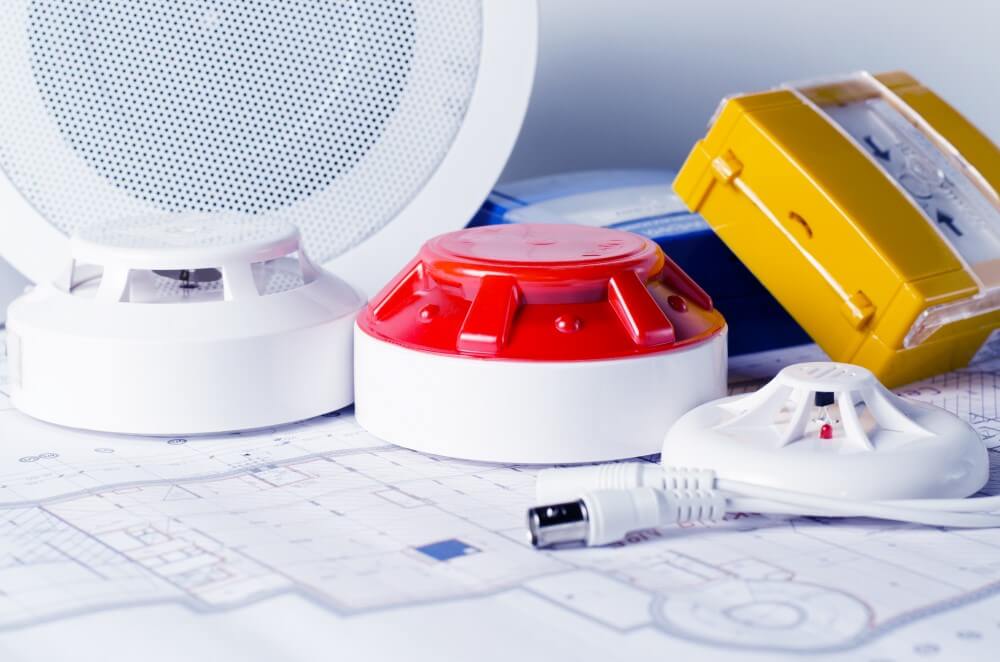
Alarms & Emergency Lighting
Detection systems, smoke vents, and escape lighting must match the building’s evacuation strategy and be tested on schedule.

Evacuation Plans & Resident Information
Every block of flats needs a clear evacuation strategy (such as Stay Put for modern compartmented blocks or Simultaneous Evacuation for converted houses) supported by visible signage and resident instructions. Following the London Fire Brigade emergency plan principles helps residents understand how to report a fire, keep fire doors closed, and exit safely if needed.

Field Insight
Hassan Sharif, Business Development Manager & Compliance Specialist
Block managers often ask for a “fire safety certificate for flats” when an insurer or council requests proof of compliance. Providing a current written Fire Risk Assessment alongside up-to-date emergency lighting and fire alarm logs satisfies both regulators and underwriters cleanly.
Fire Risk Assessment Prices for Flats & Blocks in London
Below are our live London rates for studio flats, communal areas, HMOs, and larger residential or commercial buildings:
Residential Fire Risk Assessment Prices
| Property / Scope | Price |
|---|---|
| Studio Apartment | £74 |
| Communal Area (1–3 Floors) | £129.99 |
| Communal Area (3–6 Floors) | £149.99 |
| 1–3 Bedrooms | £139.99 |
| 4 Bedrooms | £179.99 |
| 5 Bedrooms | £189.99 |
| 6 Bedrooms | £249.99 |
| 7 Bedrooms | £299.99 |
| 8 Bedrooms | £349.99 |
Commercial Fire Risk Assessment Prices
| Premises / Scope | Price |
|---|---|
| Communal Area (Up to 3 Floors) | £149.99 |
| Communal Area (3–5 Floors) | £189.99 |
| Communal Area (5–10 Floors) | £279.99 |
| Building (1–3 Floors) | £249.99 |
| Building (3–5 Floors) | £369.99 |
| Building (5–8 Floors) | £459.99 |
| Building (8–12 Floors) | £539.99 |
| More than 12 Floors | Get a Quote |
Note: Additional charges apply only where relevant: £5 for paid parking (where free parking is unavailable) and £18 if the property sits inside the London Congestion Charge zone.
Frequently Asked Questions
+ Why is having a fire evacuation plan important for a block of flats?
A clear evacuation plan tells residents whether to evacuate immediately or follow a Stay Put strategy, prevents panic in shared stairwells, and keeps escape routes clear for firefighters.
+ Why must flammable items be kept out of communal areas?
Bikes, prams, cardboard, and stored household items in hallways or meter cupboards can fuel a fire, block exits, and fill escape stairs with toxic smoke.
+ Can fire extinguishers be reused after discharge?
No. Once discharged (even partially), a fire extinguisher loses pressure and must be refilled or replaced immediately by a competent service engineer.
+ What should never be used to put out a kitchen grease fire?
Never use water, flour, or ice on burning oil, as water causes an explosive flare-up. Turn off the heat if safe and smother the pan with a fire blanket or metal lid, or use a Class F extinguisher.
+ Why is good housekeeping important in shared residential buildings?
Keeping communal corridors, bin rooms, and riser cupboards tidy removes accidental ignition fuel and ensures residents and emergency crews can move freely at all times.
Check Out Our Other Landlord Services
Book Your Fire Risk Assessment for Flats Today
Keep your block of flats compliant from £74 (studio) or £129.99 (communal areas 1–3 floors). Call 020 4518 8198 or email info@landlordcertificatelondon.co.uk.
About the Author: Hassan Sharif

Related Posts
Get Social
Recent Posts
- Asbestos Management Surveys for London Rental Properties: CAR 2012 Landlord Guide
- Commercial Fire Risk Assessment London: Workplace Fire Compliance & Safety Certification
- Commercial Gas Safety Certificate CP42 London: Commercial Kitchen & Catering Compliance
- Landlord Gas Safety Certificate CP12 London: Annual Inspection & Legal Compliance Guide
- Commercial EICR London: Business Electrical Testing & Workplace Compliance Guide