




Gas safety is one of those landlord duties that should never be left until the last minute. If a rented home has gas appliances or flues that you provide for tenants, they need regular checks by a qualified engineer. A rental property gas safety check helps confirm that the appliances are operating safely and that problems are identified early.
For landlords managing one flat or a larger portfolio, keeping inspection dates, certificates and tenant records organised makes compliance much easier.
What Does the Annual Inspection Involve?
The inspection must be carried out by a Gas Safe registered engineer. The engineer checks the relevant gas appliances and flues provided by the landlord and records the results in a Landlord Gas Safety Record, often called a CP12.
This is not the same as a full boiler service. A safety inspection focuses on whether gas appliances and flues are safe to use. A boiler service is more focused on the condition, performance and maintenance of the boiler. HSE also warns landlords not to assume that an annual boiler service automatically covers every point required for the legal gas safety check.
If you need an inspection in London, see our Gas Safety Certificate (CP12) service.
How Often Do Landlords Need a Gas Safety Check?
Where a landlord provides relevant gas appliances or flues, a rental property gas safety check must be arranged every year. UK guidance states that landlords must have a Gas Safe registered engineer carry out an annual gas safety check on gas appliances and flues they provide.
It is sensible to book before the existing record expires. This gives you time to arrange tenant access and deal with any issue the engineer may find.
There is also some useful flexibility. HSE states that the annual check can be completed up to two months before the deadline while retaining the original renewal date, provided the relevant requirements are followed.
What Does the Engineer Check?
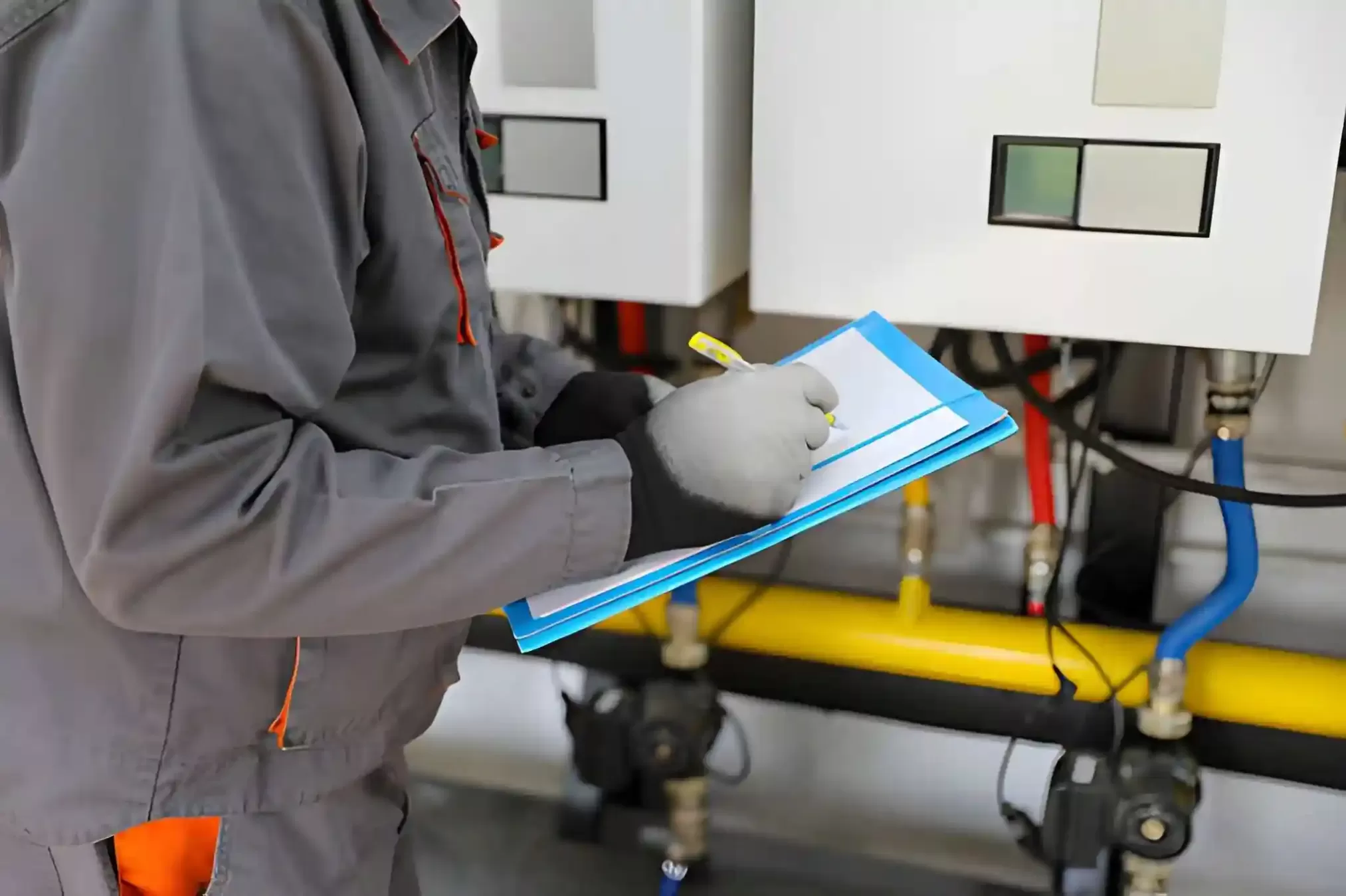
During a rental property gas safety check, the engineer will look at the gas appliances and flues covered by the landlord’s duties. Depending on the property, this may include a gas boiler, gas fire, hob or another landlord-supplied gas appliance.
Checks can include safe appliance operation, flue performance, ventilation, safety devices and signs that an appliance may be unsafe.
If a serious fault is found, the appliance may need to be switched off until it has been repaired. Landlords should act promptly on any defect recorded by the engineer.
What Record Does the Landlord Receive?
After the rental property gas safety check, the engineer provides a written gas safety record.
The record normally includes:
- the property address
- appliances or flues checked
- the inspection date
- safety-related defects
- any remedial action taken
- the engineer’s name and Gas Safe registration number
- landlord or agent details
These details form part of the minimum information required on a gas safety record.
Landlords must keep gas safety records for at least two years. Existing tenants should receive a copy within 28 days of the check, while new tenants should receive the current record before moving into the property.
What About Tenant-Owned Gas Appliances?
The landlord’s annual check mainly covers gas appliances and flues that the landlord owns and provides for the tenant to use.
If the tenant owns their own gas appliance, the landlord is generally not responsible for the appliance itself. However, responsibilities can still apply to associated installation pipework.
If appliance ownership is unclear, confirm it before the inspection rather than leaving a gap in the property records.
Gas Safety Between Tenancies
A change of tenant is a good time to review gas safety paperwork. Even where the current record is still in date, landlords should make sure the property and relevant appliances remain safe before the new tenancy begins.
A rental property gas safety check should not be treated as paperwork only. If the previous tenant reported boiler problems, unusual smells or appliance faults, those issues should be investigated before the next tenant moves in.
HSE guidance also states that appliances and flues should be safe and have an up-to-date gas safety record before a property is re-let.
Landlords reviewing other compliance items may also want to check the property’s electrical inspection. Our Residential EICR service covers the electrical side of rental property compliance.
Carbon Monoxide Alarms Still Matter
A valid gas safety record does not replace carbon monoxide alarm duties.
In England, relevant landlords must provide a carbon monoxide alarm in any room used as living accommodation that contains a fixed combustion appliance, apart from gas cookers. Landlords must also repair or replace required alarms once they are informed that an alarm is faulty.
The annual gas inspection is only one part of a wider property safety routine. Required alarms, electrical safety and ongoing maintenance all need separate attention.
For further official information, landlords can read the GOV.UK landlord safety guidance and the HSE guidance for landlords and letting agents.
Common Mistakes Landlords Can Avoid
Many gas-safety problems are administrative rather than technical.
Landlords may forget the renewal date, struggle to arrange tenant access, lose the previous record or assume a boiler service automatically replaces the annual safety inspection.
A simple compliance calendar can prevent most of these issues. Add the renewal date, arrange the appointment early, keep digital records in one place and send the tenant copy without delay.
For landlords with several properties, arranging each rental property gas safety check before expiry can reduce last-minute problems and make the whole portfolio easier to manage.
Book a Gas Safety Check in London
Landlord Certificate London provides gas safety inspections for landlords, homeowners and property managers across London and the M25.
Gas Safe registered engineers can inspect the relevant appliances and provide the required gas safety record after the visit.
If your certificate is due for renewal, you can book your rental property gas safety check online and arrange a suitable appointment for the property.
Final Thoughts
Keeping gas safety up to date is a basic part of responsible property management. An annual inspection provides a clear record of the checks carried out and helps identify unsafe appliances before they put tenants at risk.
Track the renewal date, use a Gas Safe registered engineer, keep your records organised and make sure tenants receive the correct paperwork on time.
About the Author: LandlordCertificate

Related Posts
Get Social
Recent Posts
- Residential EICR London: Complete Electrical Safety Inspection Guide for Landlords & Homeowners
- Property Owners and Landlords Across London
- Emergency Lighting Assessment Failure Signs: 4 Critical Indicators Your System Needs Immediate Attention
- Annual Fire Alarm Inspection Checklist and Industrial Facility Solutions Safety Plan: 5-Step Shield
- Fuse Box Installation by a Certified Fuse Box Electrician for Circuit Failures and Safety Control