




Emergency lighting only gets noticed when the mains power fails, yet in a smoke-filled corridor or dark stairwell, those battery-backed fittings are what guide residents and staff safely outside. Keeping them ready is not just a formality for inspections: UK fire safety law requires every commercial premises, HMO, and residential common part to maintain working emergency escape lighting.
Understanding Emergency Lighting Under BS 5266

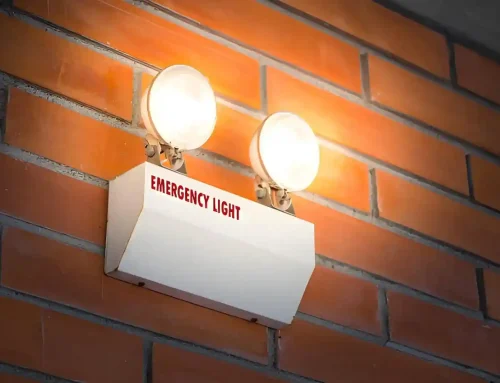
Emergency lighting switches on automatically via internal backup batteries the moment normal mains lighting fails. As set out in the FIA guide to BS 5266 emergency lighting standards, systems are grouped into three main categories depending on the space:
Escape Route Lighting
Illuminates corridors, stairways, fire doors, changes of level, and external exit paths so occupants can evacuate safely.
Open-Area (Anti-Panic) Lighting
Provides sufficient ambient light in larger open halls, offices, or retail floors (typically over 60m2) so people can reach escape routes.
High-Risk Task & Standby
Allows dangerous machinery or plant processes to be shut down safely before staff evacuate during a mains power cut.
Monthly vs. Annual Testing Intervals
Under BS 5266-1 and BS EN 50172, emergency lighting cannot simply be installed and forgotten. Batteries degrade over time, and LED drivers or charging circuits can fail silently while mains power is on. Two distinct testing routines keep your building compliant:
Monthly Functional Test (Flick Test)
A brief simulation of mains failure (long enough to confirm every luminaire and exit sign illuminates on battery power and its charging LED returns to normal once restored). Often carried out by a trained building manager or caretaker and logged on site.
Annual Full-Rated Duration Test (3 Hours)
A full three-hour battery discharge test carried out by a qualified engineer to prove every fitting stays lit for the entire rated emergency period, followed by checking that batteries recharge properly afterwards.
Step-by-Step Procedure for Testing Emergency Lights

Whether you are carrying out a routine monthly check or booking an annual inspection through our London emergency light testing service, every compliant test follows four clear steps:
Verify Normal Charging Status: Check that green charge-indicator LEDs are lit on all luminaires before isolating the test switch.
Simulate Mains Failure: Use the dedicated key-switch or circuit isolator to cut normal supply and confirm all emergency fittings switch to battery mode.
Inspect Output & Battery Autonomy: Walk the entire escape route, checking for dim lamps, cracked diffusers, missing exit signs, or fittings that fail before the three-hour annual mark.
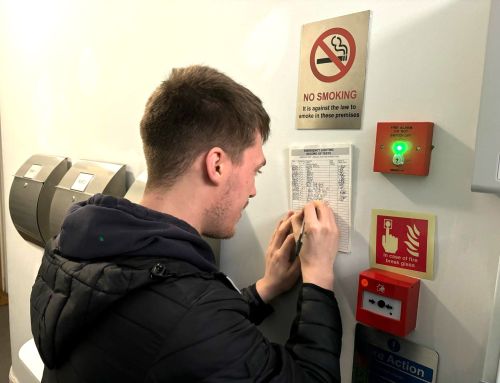
Restore Supply & Record Results: Re-enable mains power, confirm all charging indicators illuminate again, and log every pass or defect in the fire safety logbook.

“The most common failure we uncover during annual three-hour tests in London HMOs is a bulkhead fitting whose green LED glows normally all year, yet dies after ten minutes on battery because the internal NiCd cell has reached end of life. That is why the full annual discharge test matters just as much as the monthly flick check.”
Documentation, Logbooks & UK Legal Duties

Under The Regulatory Reform (Fire Safety) Order 2005 and the Health and Safety at Work etc. Act 1974, Responsible Persons and employers must ensure emergency routes remain safely lit and keep written proof of maintenance. Your emergency lighting logbook should record the date of every monthly and annual test, any failed luminaires, and confirmation of battery or fitting replacements.
Frequently Asked Questions
+ Who can carry out monthly vs. annual emergency light testing?
+ Why must the annual emergency light test last three hours?
+ What happens if an emergency light fails during a test?
+ Do residential HMOs and blocks of flats need emergency lighting certificates?
Other Landlord Compliance Services
Emergency Lights Test
BS 5266 emergency lighting testing and certification starting from £55.
Residential EICR
Five-year electrical installation safety reports for London flats and houses.
Commercial EICR
Circuit-tested electrical safety reports for shops, offices, and commercial units.
Fire Risk Assessment
Compliant fire safety evaluations for HMOs, blocks of flats, and workplaces.
Fire Door Certificate
Detailed fire door gap, seal, hinge, and self-closer inspections from £120.
Fire Alarm Testing
BS 5839 smoke and heat detector testing starting from £55.
Need an Emergency Lighting Certificate in London?
Book online in minutes or speak with our team on 020 4518 8198 or info@landlordcertificatelondon.co.uk.
About the Author: Hassan Sharif

Related Posts
Get Social
Recent Posts
- Asbestos Management Surveys for London Rental Properties: CAR 2012 Landlord Guide
- Commercial Fire Risk Assessment London: Workplace Fire Compliance & Safety Certification
- Commercial Gas Safety Certificate CP42 London: Commercial Kitchen & Catering Compliance
- Landlord Gas Safety Certificate CP12 London: Annual Inspection & Legal Compliance Guide
- Commercial EICR London: Business Electrical Testing & Workplace Compliance Guide