




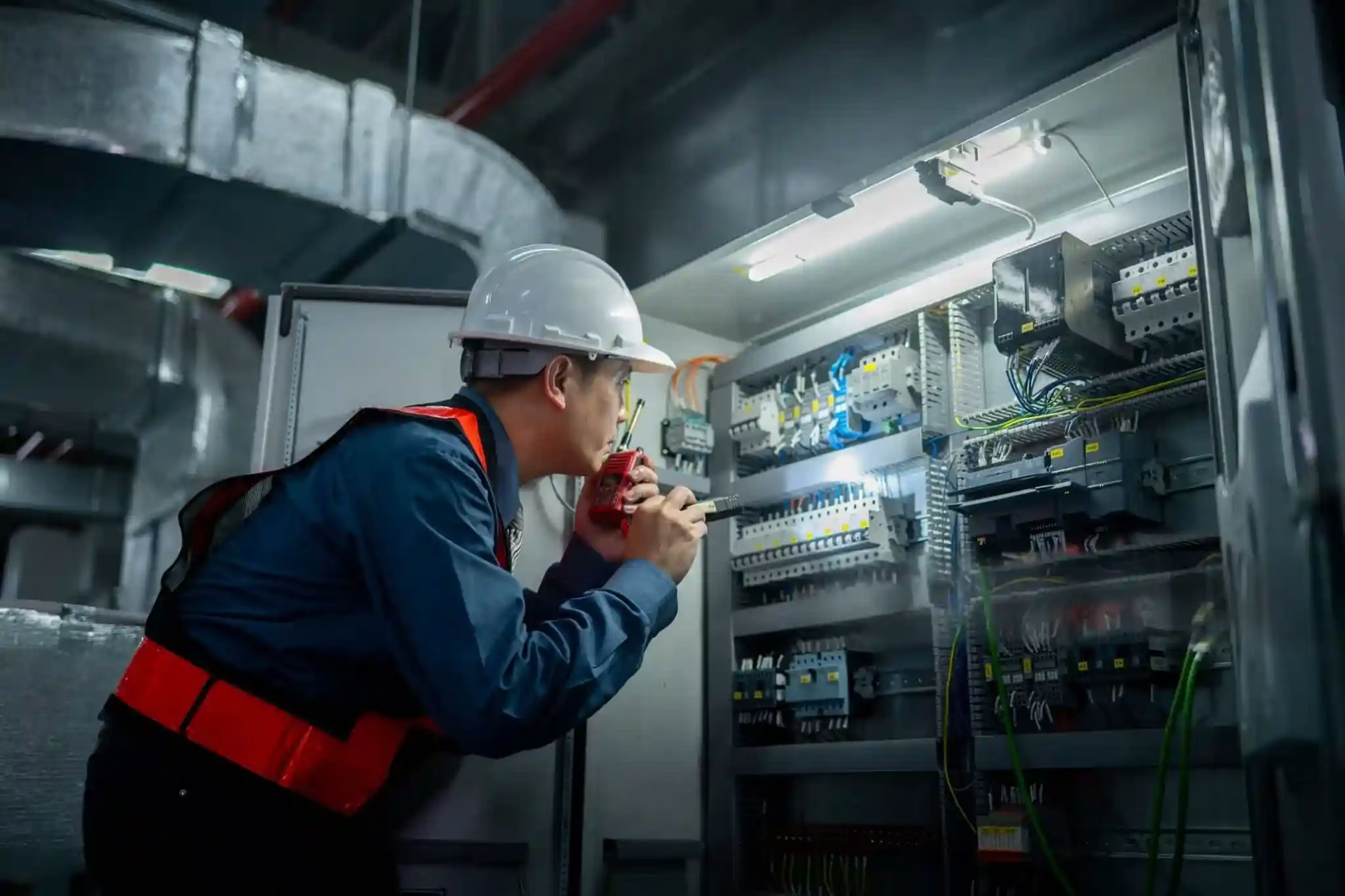
Electrical problems can be annoying, especially when you do not know what is causing them. Maybe a breaker keeps tripping. A light starts flickering for no clear reason. Or one of the sockets suddenly stops working.
It is easy to reset the breaker or change a bulb and carry on. But if the same problem comes back, there is usually something behind it that needs checking.
Diagnostic Testing helps an electrician find the cause of the problem. Instead of replacing random parts, they can test the electrical system and see where the fault is coming from.
For landlords, homeowners and property managers, this can save time and also stop a small electrical issue from turning into a bigger one.
What Does Electrical Fault-Finding Involve?
There is no single test that works for every electrical problem.
Diagnostic Testing normally starts with the electrician asking what has been happening. They may want to know when the problem started, how often it happens and whether anything was changed before the fault appeared.
For example, if a breaker keeps tripping, they may ask if it happens when you turn on a certain appliance. If lights keep flickering, they may ask whether it happens in one room or across the whole property.
These details help the electrician work out where to start.
They can then use electrical test equipment to check things such as voltage, continuity, insulation resistance, earthing and RCD operation. The tests used will depend on the fault.
The Health and Safety Executive explains how electrical testing should be carried out safely in its guidance on electrical test equipment.
Signs That Something May Be Wrong
Some electrical faults are obvious. Others start with small signs that are easy to ignore.
It is worth getting the electrics checked if you notice:
- Breakers that keep tripping
- Lights that regularly flicker or dim
- A socket or switch that feels warm
- Buzzing or crackling sounds
- A smell of burning or hot plastic
- Sockets that suddenly stop working
- Power going off in one part of the property
- Burn or scorch marks around fittings
- A small shock or tingling feeling from electrical equipment
One flickering light may simply be a bad bulb. But if you replace the bulb and the problem keeps coming back, it makes sense to look further.
The same applies to a breaker. A breaker is there to cut the power when something is wrong. Resetting it once may restore the electricity, but regularly resetting it without finding out why it trips is not a good idea.
If you can see smoke, sparks or exposed live parts, or there is a strong burning smell, stop using the affected equipment if it is safe to do so. Do not try to take sockets, switches or the consumer unit apart yourself.

What Will the Electrician Do?
When an electrician arrives, they will usually talk to you first.
This may sound basic, but knowing what you have noticed can save a lot of time. A fault that only appears when the shower is running is very different from one that happens every time the kitchen lights are switched on.
The electrician will normally look at the consumer unit and check the sockets, switches or other electrical parts connected to the problem.
Sometimes the cause is easy to spot. There may be heat damage, a broken socket, moisture or a loose part.
If there is nothing obvious, Diagnostic Testing can help find the problem.
A breaker that keeps tripping, for example, could be caused by damaged wiring. It could also be a faulty appliance, moisture, an overloaded circuit or an insulation fault.
Testing helps the electrician work through these possibilities instead of guessing.
If you already have this type of problem, you can arrange an electrical diagnostic visit through Landlord Certificate London.
Is Diagnostic Testing the Same as an EICR?
No. Although both involve electrical testing, they are not the same service.
Diagnostic Testing is normally used when there is already a particular problem that needs to be found.
You may have one circuit that keeps tripping, a group of sockets with no power or lights that keep flickering.
An EICR looks at something wider. It checks the general condition of the fixed electrical installation in the property. The electrician carries out inspections and tests and then provides a report showing any faults or safety concerns that were found.
Landlords who need a full electrical inspection can book an EICR in London. Businesses and commercial property owners can use the commercial EICR service.
There are also times when an EICR finds an issue that needs more investigation. In that case, separate fault-finding may be needed before the electrician knows exactly what has to be repaired.
The Problem May Not Be Where You Think It Is
Electrical faults can be misleading.
Imagine a socket that feels warmer than normal. It would be easy to assume the socket itself needs replacing. But the real issue could be a loose connection behind it.
The same thing happens with lights. A flickering light does not always mean there is something wrong with the bulb. The fault might be in the switch, wiring or another connection on the circuit.
Diagnostic Testing may find problems such as:
- Loose electrical connections
- Damaged cables
- Poor earthing
- Faulty RCDs or RCBOs
- Worn sockets and switches
- Moisture near electrical parts
- Damaged cable insulation
- Overloaded circuits
Sometimes the problem is connected to the consumer unit. If it is damaged or no longer suitable, further work may be needed. You can read more about this on the fuse box installation service page.
Why Guessing Can End Up Costing More
Trying different repairs until one works can get expensive.
If a breaker keeps tripping, simply replacing the breaker may not solve anything. The old breaker might have been working correctly and cutting the power because there was a fault somewhere else.
The same goes for replacing sockets, switches or light fittings without first knowing what is wrong.
This is where Diagnostic Testing can help. Finding the cause first means the electrician has a much better idea of what actually needs fixing.
For landlords, it also makes it easier to keep a proper record of the problem, what the electrician found and what work was carried out.
What If an Appliance Is Causing the Problem?
Sometimes the fixed wiring is not the cause at all.
A damaged kettle, washing machine, heater or another appliance can cause a circuit to trip. If an electrician thinks an appliance may be responsible, they can check it as part of their investigation.
That is different from routine appliance checks.
If you provide electrical appliances in a rented property or workplace, more information is available on the portable appliance testing service.
Can Fault-Finding Stop the Problem from Getting Worse?
There is no electrical test that can promise a property will never develop another fault.
Wiring can be damaged later. Parts wear out. Water can get into electrical fittings. Appliances can also fail.
What Diagnostic Testing can do is find a problem that already exists before it gets worse.
A loose electrical connection may become hotter over time. Damaged insulation can affect the safety of a circuit. A breaker that keeps tripping may be warning you about a problem that needs repair.
Finding the cause early can also make the repair easier to deal with. That matters in a rented property or workplace where losing electricity can affect other people as well.

A Simple Point for Landlords
A current EICR does not mean the electrical system cannot develop a new fault.
An EICR tells you about the condition of the installation when the inspection was carried out. Things can change after that date.
So, if a tenant tells you a socket is getting hot, the lights are flickering or the power keeps going off, it is worth taking the report seriously.
Diagnostic Testing can help find out what has happened and what needs to be repaired.
It is also a good idea to keep a record of when the tenant reported the problem, when the electrician visited and what work was done.
Tenants should also be encouraged to report electrical problems early. It is much easier to deal with a small warning sign than wait until the circuit stops working completely.
Book Electrical Fault-Finding in London
If your electrics keep tripping, buzzing or cutting out, there is little benefit in repeatedly resetting them and hoping the fault disappears.
It is better to find out what is causing the problem.
Landlord Certificate London provides electrical fault-finding services for landlords, homeowners, property managers and businesses across London.
You can arrange an electrical diagnostic visit or contact the team if you are not sure which electrical service is right for your property.
Frequently Asked Questions
It depends on the problem.
A simple fault may be found quite quickly. A fault that only happens now and then can take longer because the electrician may need to test different parts of the circuit before finding the cause.
Problems affecting several circuits can also take more time.
No.
PAT, or in-service inspection and testing, is mainly used for electrical appliances.
Fault-finding is different because the electrician is looking for the cause of a particular problem. That problem could be in the fixed wiring, a circuit or something connected to it.
No. If it happens regularly, it needs checking.
The breaker may be doing exactly what it is supposed to do by cutting the supply when a fault occurs. Resetting it over and over does not remove the cause of the problem.
Not always.
If there is one clear problem, such as a dead socket or a circuit that keeps tripping, fault-finding may be the better place to start.
An EICR is a wider check of the fixed electrical installation.
In many cases, they can narrow the problem down without opening the wall straight away.
Electrical test equipment can help identify the affected circuit or part of the wiring.
If a damaged cable or connection needs repairing, some physical access may still be needed. This depends on where the fault is and how the wiring was installed.
Final Thoughts
Electrical problems have a habit of coming back when the real cause has not been fixed.
A breaker that trips once may be nothing serious. A light may flicker because the bulb is old. But when the same thing keeps happening, it is worth finding out why.
Diagnostic Testing gives the electrician a way to do that. Instead of changing parts and hoping for the best, the fault can be traced first. The electrician can then repair the part that actually needs attention.
That is usually better for the property, better for the person paying for the repair and, most importantly, safer for the people using the electrics every day.
About the Author: LandlordCertificate

Related Posts
Get Social
Recent Posts
- Residential EICR London: Complete Electrical Safety Inspection Guide for Landlords & Homeowners
- Property Owners and Landlords Across London
- Emergency Lighting Assessment Failure Signs: 4 Critical Indicators Your System Needs Immediate Attention
- Annual Fire Alarm Inspection Checklist and Industrial Facility Solutions Safety Plan: 5-Step Shield
- Fuse Box Installation by a Certified Fuse Box Electrician for Circuit Failures and Safety Control