




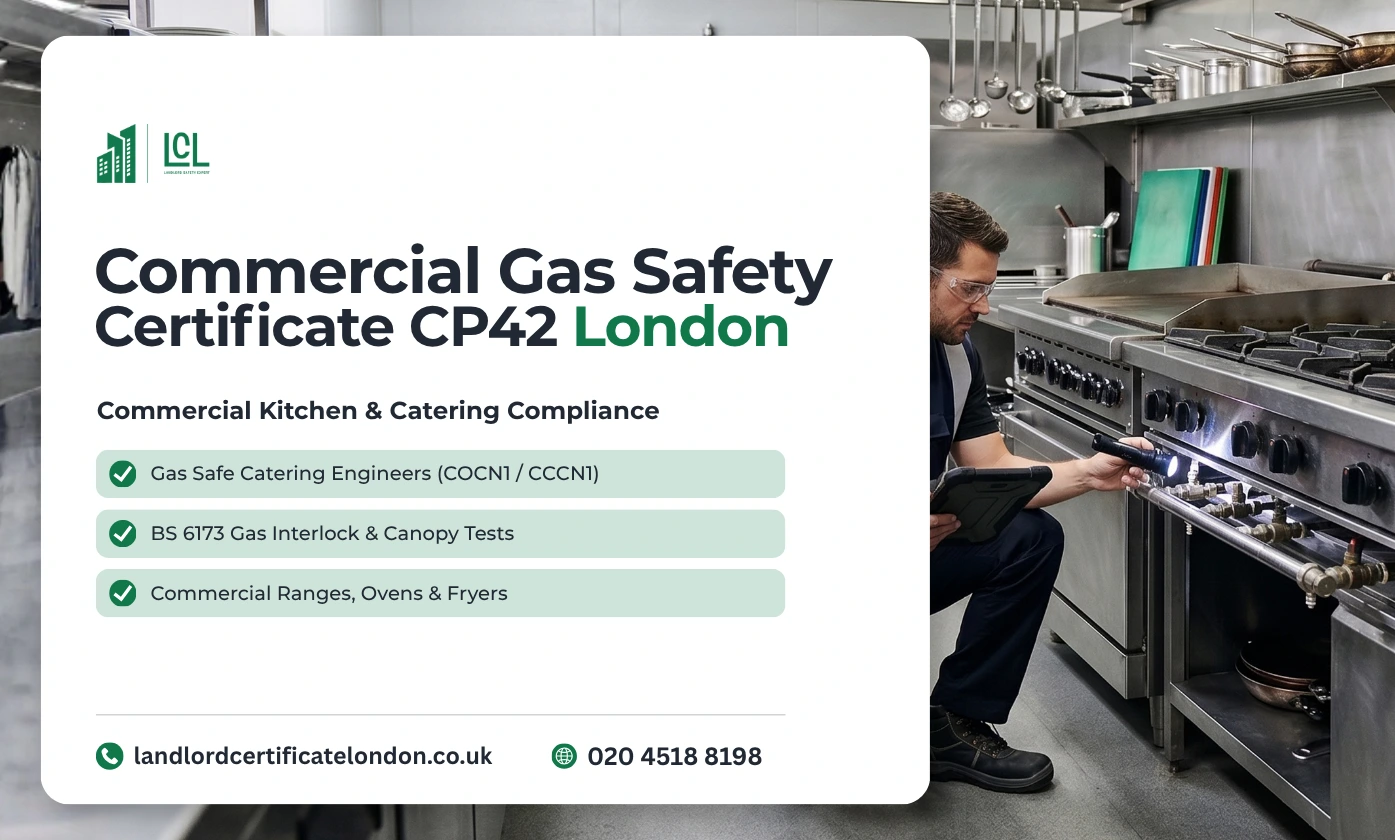
A CP42 commercial gas safety certificate records an inspection of commercial catering appliances, associated gas pipework and relevant safety systems. It identifies observed defects, safety risks and any inspection limitations. London kitchen operators should appoint a Gas Safe registered engineer qualified for every appliance category being examined.
London businesses seeking a commercial gas safety certificate should start with a complete appliance list for their records. A café, takeaway and hotel kitchen may all need different checks. Tell your engineer what you use, and ask them to note anything they could not test.

Field Insight from Hassan Sharif
Business Development Manager & Compliance Specialist at Landlord Certificate London
“When auditing busy commercial kitchens, high-volume hotel caterers, and West End restaurants across Greater London, the single most critical safety hazard we encounter isn’t a faulty burner—it is a compromised or tampered gas interlock system. Under BS 6173, mechanical extraction canopies and incoming gas supplies must be fail-safe interlocked via differential air pressure switches. During intense service rushes, kitchen managers faced with a tripping extraction fan occasionally wire around the gas solenoid valve to keep fryers running. Doing so creates an immediate lethal environment where toxic carbon monoxide, nitrogen dioxide, and unburned hydrocarbons rapidly accumulate in unventilated food prep lines. An official CP42 commercial gas safety inspection isn’t merely an administrative checkbox for Environmental Health officers; it is the verifiable legal proof that your flame supervision devices, canopy interlocks, and emergency isolation valves will automatically shut off fuel delivery before an explosive or asphyxiating event occurs.”
CP42 is a widely used trade description, rather than a single statutory operating licence that every commercial kitchen must hold. Your underlying legal obligation is to keep gas installations safe and arrange competent work. The Gas Safety (Installation and Use) Regulations 1998, including regulations 3 and 35, establish important competence and workplace maintenance duties under Regulation 35 of the Gas Safety Regulations.
When booking a CP42 certificate in London, request the engineer’s Gas Safe registration number and relevant work categories. Explain whether your premises includes a separate commercial boiler or plant room. This helps ensure that the right inspections, report and specialist competencies are included.
- List every gas appliance and its exact location.
- Check Gas Safe registration and commercial catering work categories.
Why Commercial Kitchens Require CP42 vs Domestic CP12
A CP42-style report concerns commercial catering installations, whereas a domestic CP12 record commonly documents residential landlord gas safety checks. Their equipment, operating risks and inspection duties differ. For your restaurant or takeaway, appoint a Gas Safe registered professional whose commercial catering qualifications cover every relevant appliance and system.
Commercial kitchens can operate powerful burners for long periods, producing substantial heat and combustion products. Their safety may depend on canopy extraction, make-up air, flame supervision and automatic shut-off controls. A routine domestic inspection may not examine these commercial arrangements or be performed by someone with the necessary catering competencies.
UK commercial kitchen gas safety regulations require businesses to keep their gas equipment safe. Regulation 35 of the Gas Safety (Installation and Use) Regulations 1998 covers workplace appliances, pipes and flues. Section 2 of the Health and Safety at Work etc. Act 1974 also protects staff. These rules apply whatever your report is called.
If you need a restaurant gas safety certificate, start by listing the equipment in your kitchen. The CP42 vs CP12 difference matters when a building also has flats or shared boilers. Tell the engineer about heating, hot water and shared pipes so the right person can check each area.
- Separate commercial catering equipment from domestic installations.
- Confirm which certificate or inspection record each area needs.
The Gas Interlock System Mandate: BS 6173 Compliance Explained
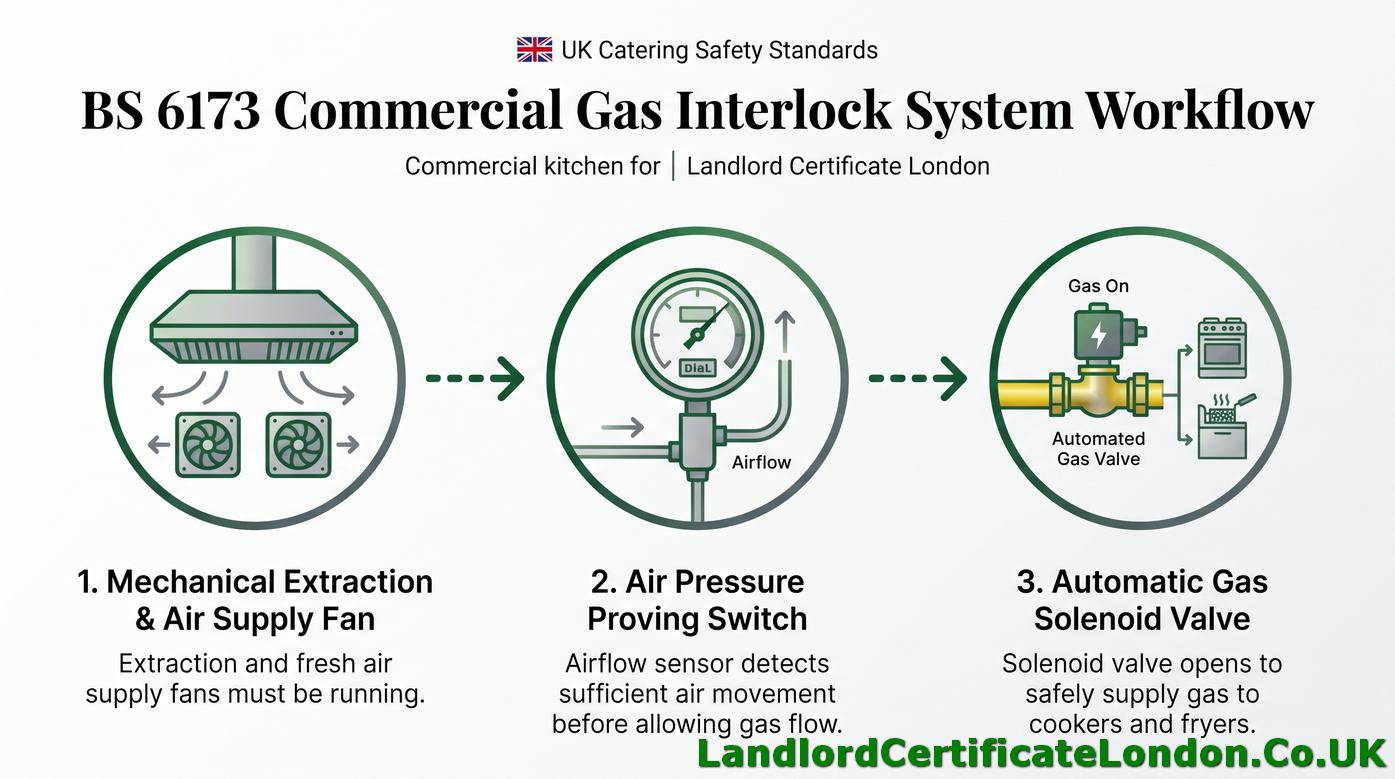
Workflow of a compliant BS 6173 commercial gas interlocking system linking kitchen ventilation to gas fuel supply.
A gas interlocking system links a commercial kitchen’s gas supply to its essential mechanical ventilation. When required airflow fails, a suitable interlock isolates the affected gas equipment, helping prevent dangerous combustion conditions. BS 6173 covers recognised design arrangements, but applicability must be assessed for your particular installation.
Many gas interlocking systems use airflow-proving devices connected to extraction and supply fans to control a gas isolation valve. When the required airflow is not established, the arrangement should prevent unsafe gas operation. This helps control combustion risks, including the build-up of carbon monoxide, which can be dangerous or fatal.
BS 6173 catering standards are technical standards, not themselves Acts of Parliament, and their application to older installations requires professional assessment. The statutory guidance outlined in the HSE CAIS10 kitchen ventilation guidance discusses interlocking and the risks of inadequate ventilation. A business must still meet its legal workplace safety duties even if its installation predates a particular standard edition.
Never bypass a kitchen extraction canopy interlock when required ventilation has failed. If a control is faulty, follow the competent engineer’s instructions on safe isolation and repair. Ask for written confirmation of the repair and any successful functional retest before affected equipment is returned to service.
- Check canopy extraction and make-up air provision.
- Arrange a functional gas isolation and airflow-proving test where relevant.
Commercial Gas Equipment Audited: Range Cookers, Fryers, Rational Ovens, Tandoors & Commercial Boilers
A commercial catering gas check may examine range cookers, fryers, Rational-type combination ovens, tandoors, boilers and associated gas systems. The precise tests depend on the appliance and agreed scope. Give your Gas Safe engineer an accurate inventory so they can confirm their qualifications and identify necessary specialist checks.
Range cookers and grills can require flame-safety and combustion assessments, while commercial fryers face ignition problems and heavy grease exposure. Combination ovens, including Rational-type ovens, may have manufacturer-specific servicing or flue requirements. Ask your contractor to confirm that each appliance category is included in their registration.
Commercial Gas Pipework and Safety Checks
Commercial gas pipe soundness testing helps assess the integrity of relevant pipework under appropriate test procedures. Other checks may concern accessible isolation valves, operating pressure, ventilation and safety controls. The exact scope depends on equipment design, installation conditions, the competent engineer’s judgement and any agreed maintenance work.
The following checklist illustrates common inspection considerations, not a universal mandatory test list. Some installations need specialised flue testing or a separately commissioned ventilation inspection. Provide appliance manuals, previous reports and access to the meter so the engineer can identify restrictions before testing.
| Appliance Type | Ventilation Requirement | Interlock Test | Common Failure Points |
|---|---|---|---|
| Range cookers and grills | Canopy/extraction as applicable | Verify gas shut-off on required ventilation failure | Flame-safety faults; blocked burners |
| Commercial fryers | Suitable extraction and make-up air | Confirm linked isolation where required | Grease build-up; ignition faults |
| Combination/Rational ovens | Appliance-specific canopy/flue assessment | Confirm relevant control integration | Combustion faults; restricted airflow |
| Tandoors | Suitable removal of combustion products | Check interlock where fitted/required | Poor extraction; flue faults |
| Commercial boilers | Suitable flue and ventilation design | Check applicable boiler safety controls | Flue, pressure or isolation defects |
- Provide a list of cookers, fryers, ovens, tandoors and boilers.
- Make meters, isolation valves and plant rooms accessible.
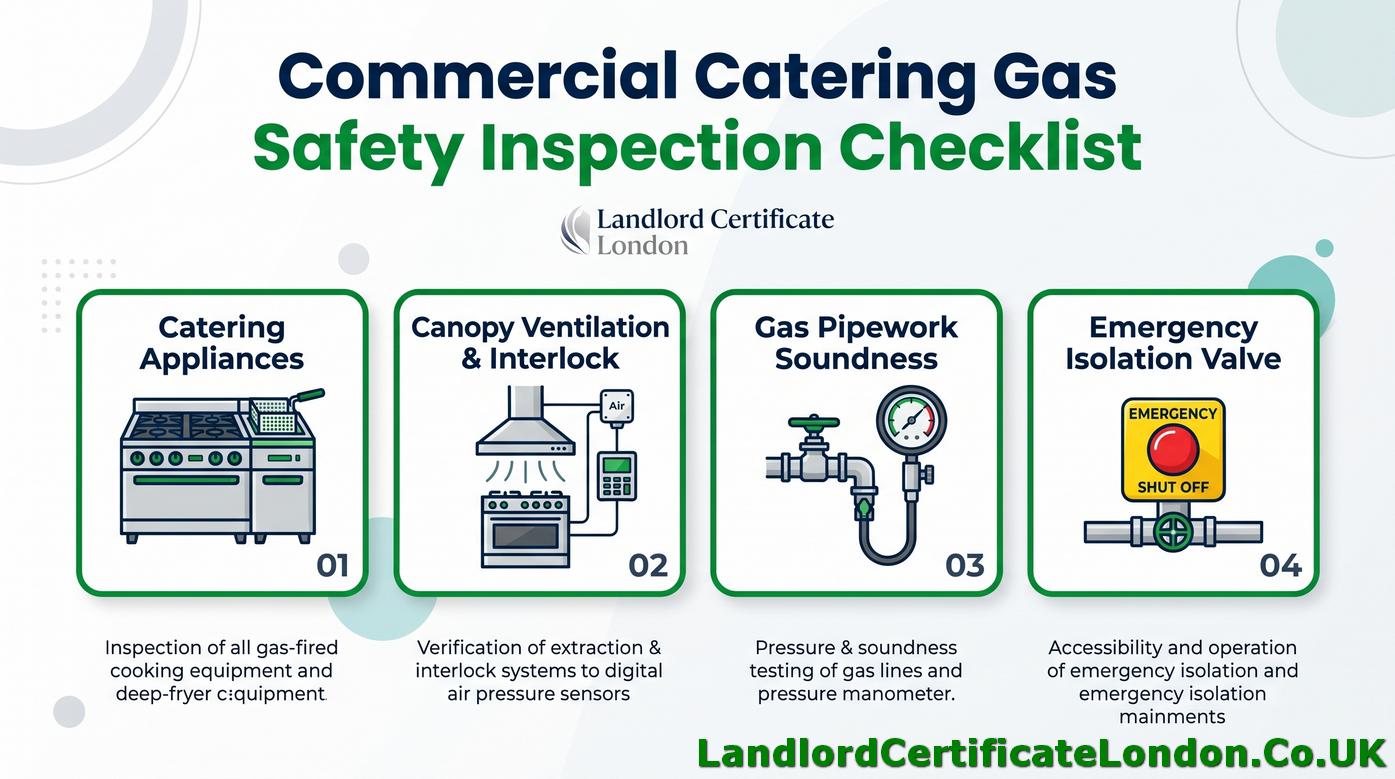
Core inspection areas evaluated during an accredited London CP42 commercial gas safety check.
Environmental Health & Insurance Risks of Operating Without CP42
Operating unsafe commercial gas equipment can expose your restaurant to injury, enforcement, interrupted trading and insurance disputes. A CP42-style inspection record helps document checks but is not a universal statutory licence. Regulators assess actual safety, competent maintenance and whether dangerous appliances are promptly isolated and repaired.
Regulation 34 of the Gas Safety (Installation and Use) Regulations 1998 prohibits the responsible person from using, or allowing the use of, a gas appliance they know or suspect could endanger anyone. Regulation 35 requires safe maintenance of workplace gas equipment, pipework and flues. These are enforceable duties, and a recently issued inspection record does not excuse a known unsafe installation.
Your insurer may ask for evidence of competent gas inspections, servicing and prompt correction of defects. The exact policy wording and circumstances determine whether an omission affects a claim. Keep inspection reports, written repair instructions, invoices and test results accessible to show how you manage ongoing gas safety risks.
If a competent engineer identifies an immediately dangerous appliance, follow the isolation advice and do not restart it until it is safe. Tell relevant staff how to report ventilation faults or unusual combustion behaviour. Review your maintenance plan periodically, especially after equipment changes or alterations to the extraction system.
- Maintain inspection and servicing records.
- Act immediately on dangerous defects and isolation instructions.
Choosing a Commercial Gas Safe Engineer in London
In London, choose a commercial Gas Safe engineer whose registration you can verify on the official register. Check that their listed work categories cover your catering appliances. Domestic-only qualifications may exclude professional fryers, tandoors or commercial boilers. Confirm any additional ventilation or interlock expertise before booking.
When choosing a commercial Gas Safe engineer in London, verify their qualifications rather than relying on a job title. Check their Gas Safe ID card and the official register. Make sure their work categories cover your ovens, fryers, boilers and any other equipment. Some appliances need extra commercial qualifications.
Request a written report listing appliances tested, limitations, observations and recommendations. Ask how quickly dangerous defects must be addressed and whether a return visit will be needed. Keep that record with your planned preventive maintenance documents and share relevant information with staff who operate the gas equipment. For a busy restaurant, agree a quieter inspection window but do not compromise essential safety testing. If you have a separate boiler plant room, arrange a commercial boiler gas inspection with a suitably qualified engineer and confirm whether a separate report is needed.
- Verify Gas Safe registration and relevant appliance work categories.
- Agree ventilation, interlock and plant-room scope in writing.
Booking Your Commercial CP42 Inspection in London
To book a commercial CP42-style inspection in London, send your business address, access details and full appliance inventory. Tell the booking team whether you operate a restaurant, café, takeaway or hotel kitchen. Confirm the quotation includes relevant interlock checks, commercial plant-room equipment and the written inspection report.
Start at Landlord Certificate London and review the commercial CP42 service. Request your inspection using the contact and booking enquiry page. A clear equipment inventory will help the team plan the appropriate commercial catering visit. Include the number of appliances and note whether a separate commercial boiler serves the property.
For additional property obligations, explore electrical installation condition reports (EICRs) and book those compliance services separately. Combining appointments may be convenient, but an electrical inspection does not replace a competent gas examination. Keep an accessible record of all recommendations, repairs and next inspection dates.
The technical benchmarks established under the HSE CAIS23 catering gas safety sheet treat annual checks as a sensible general baseline, with the actual maintenance interval informed by operating conditions and competent advice. Follow manufacturers’ instructions and any applicable insurance requirements. Proactively schedule the next review instead of waiting for a fault to stop your kitchen.
- Send appliance counts, site address and the access contact.
- Confirm meter, canopy, interlock and plant-room access.
Commercial Gas CP42 FAQs
+ Can a restaurant or takeaway legally operate without a valid CP42 certificate?
A restaurant cannot lawfully continue operating dangerous gas equipment. Environmental Health or HSE enforcement may restrict or prohibit unsafe operations, including kitchen activity. However, CP42 is a common industry record rather than a universal statutory operating licence. Arrange competent checks, keep evidence and remedy defects promptly.
+ What is a gas interlocking system and why is it mandatory under BS 6173?
A gas interlock isolates relevant gas equipment if the necessary mechanical ventilation fails. BS 6173 specifies recognised arrangements for many gas-fired catering installations; its application must be assessed for the actual kitchen. Do not bypass an interlock, and ask a competent engineer to verify its operation.
+ Who is qualified to carry out and issue a CP42 certificate in London?
Use a Gas Safe registered engineer with the appropriate commercial catering and appliance-specific work categories. Commercial core qualifications, such as relevant CCCN1/COCN1 pathways, may be part of the competence required, but the ID card must cover the actual work. Check registration before the appointment.
+ How frequently must commercial catering gas equipment be inspected?
HSE catering guidance treats annual inspection as a reasonable general minimum frequency. Actual inspection and servicing intervals depend on the equipment, its use and the manufacturer’s recommendations. Arrange competent checks at appropriate intervals; the CP42 label alone does not create a universal statutory twelve-month certificate requirement.
+ Do commercial plant rooms need a separate gas safety inspection?
Commercial plant rooms may contain boilers, pipework, flues and safety controls outside the kitchen inspection scope. Tell your provider about this equipment and request an engineer with the appropriate commercial boiler qualifications. Agree whether plant-room work requires a separate report or service visit.
About the Author: Hassan Sharif

Related Posts
Recent Posts
- Commercial Gas Safety Certificate CP42 London: Commercial Kitchen & Catering Compliance
- Landlord Gas Safety Certificate CP12 London: Annual Inspection & Legal Compliance Guide
- Commercial EICR London: Business Electrical Testing & Workplace Compliance Guide
- Residential EICR London: Complete Electrical Safety Inspection Guide for Landlords & Homeowners
- Property Owners and Landlords Across London




Get Social