



Legionella Risk Assessment London ( Commercial )
Start from £250.00
All inclusive (No hidden Cost)
Excellent

 Trustpilot
about 14 days ago
Great service
Booked gas, EICR and fire safety checks. Easy online booking, good communication from office team and engineer, arrived on time, friendly service, certificates issued promptly. Great service.
about 26 days ago
Very good process and available at…
Very good process and available at short notice.
about 15 days ago
Great company.
Prompt service. Excellent inspection. Competitive price.
about 20 days ago
Excellent service from start to finish
Excellent service from start to finish. The gas safety certificate and electrical certificate were completed professionally and efficiently. The engineer was punctual, polite and knowledgeable, and explained everything clearly. The whole process was smooth and the certificates were provided promptly. I would definitely recommend this company to other landlords and will use them again.”
about 20 days ago
Great service and really good value
Great service and really good value for money! I got an appointment for the next day, and the certificate was issued on the same day as the inspection. Everything was quick, easy and hassle-free. Definitely recommend!
about 20 days ago
I had a very positive experience with…
I had a very positive experience with this company. The service was professional, friendly, and efficient from start to finish. Communication was clear, and everything was handled exactly as promised.I’m very happy with the overall experience and would definitely recommend this company to anyone looking for reliable, professional service.
What is Electrical Diagnostic?
Electrical diagnostic is the process of assessing an electrical system to determine if there are any problems with it. This can be done for a variety of reasons, such as to troubleshoot a problem or to make sure that a system is functioning properly.
There are a number of different methods that can be used for electrical diagnostic, such as testing the voltage, current, or resistance of a system. Additionally, visual inspections can also be helpful in identifying any potential problems.
Once any issues are identified during an electrical diagnostic, they can then be addressed accordingly. This may involve making repairs to the system or replacing components as necessary. Electrical diagnostic can help to ensure that an electrical system is safe and reliable.
If you want an EICR – Electrical Installation Condition Report done at your property us well, book your EICR Online.
*£5 Parking charges are applicable in case of paid parking.
*£18 Congestion Charge applicable in case the property is in congestion charge zone

Who Needs a Commercial Legionella Risk Assessment?
Legionella risk management applies to employers and those who control commercial premises. The level of assessment required depends on the type of building and the complexity of the water system. A small office with a straightforward hot and cold water system may require a relatively simple assessment.
A hotel, leisure facility, care home or larger managed building may have:
- Stored water
- Multiple plant areas
- Larger numbers of outlets
- Longer pipework runs
- More complex hot-water systems
- Areas that are used infrequently
- Vulnerable building users
These types of premises may require more detailed Legionella management and ongoing control measures.

Legionella Risk Assessments for Hotels and Guest Accommodation
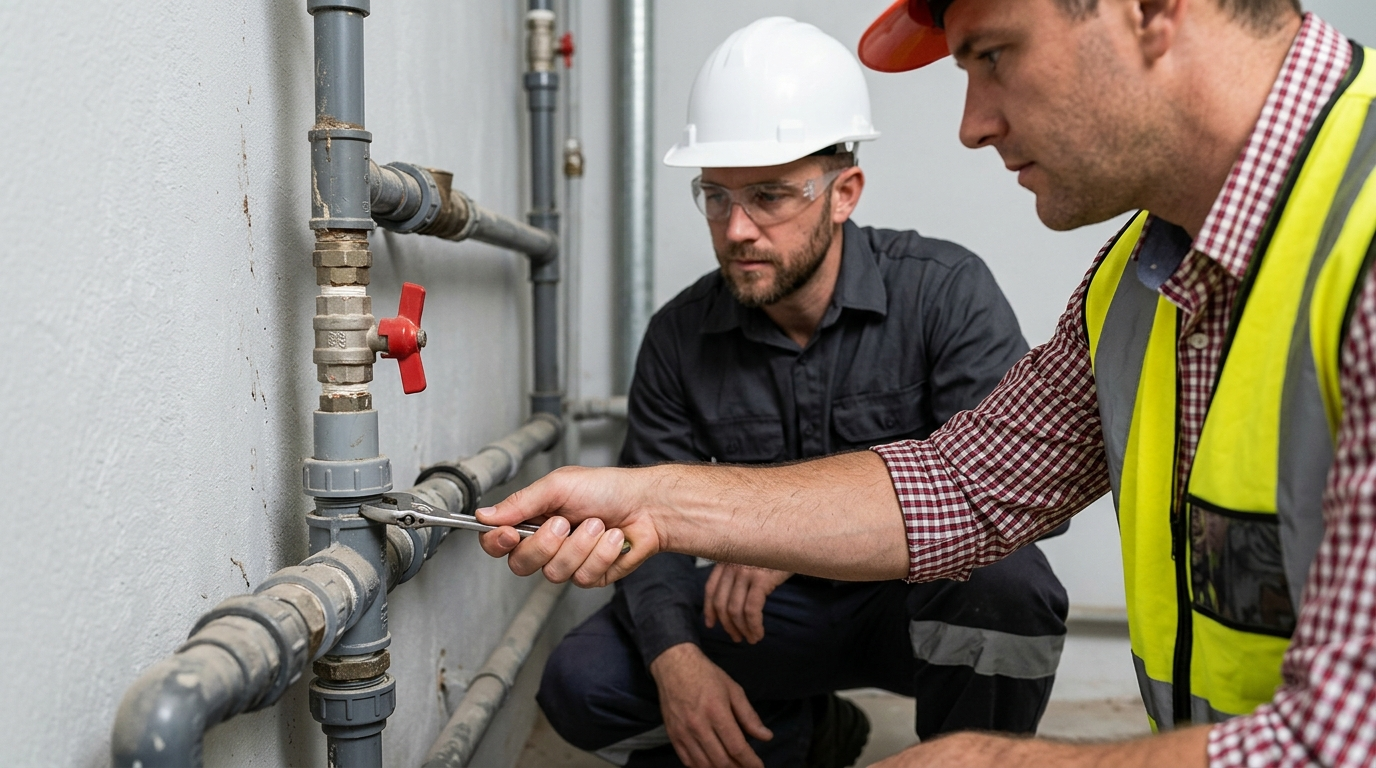
Hotels and guest accommodation can have larger and more complex water systems than standard commercial premises.
There may be:
These factors can increase the importance of appropriate monitoring and water-management procedures.
Our assessment reviews the system and identifies the measures needed to help manage the risk.
Legionella Risk Assessments for Care Homes
Care homes require particular attention because the building may have a complex water system and may also be occupied by people who could be more vulnerable.
The assessment can consider:
Where necessary, recommendations are made for improving the existing control measures.

Legionella Risk Assessments for Schools and Nurseries
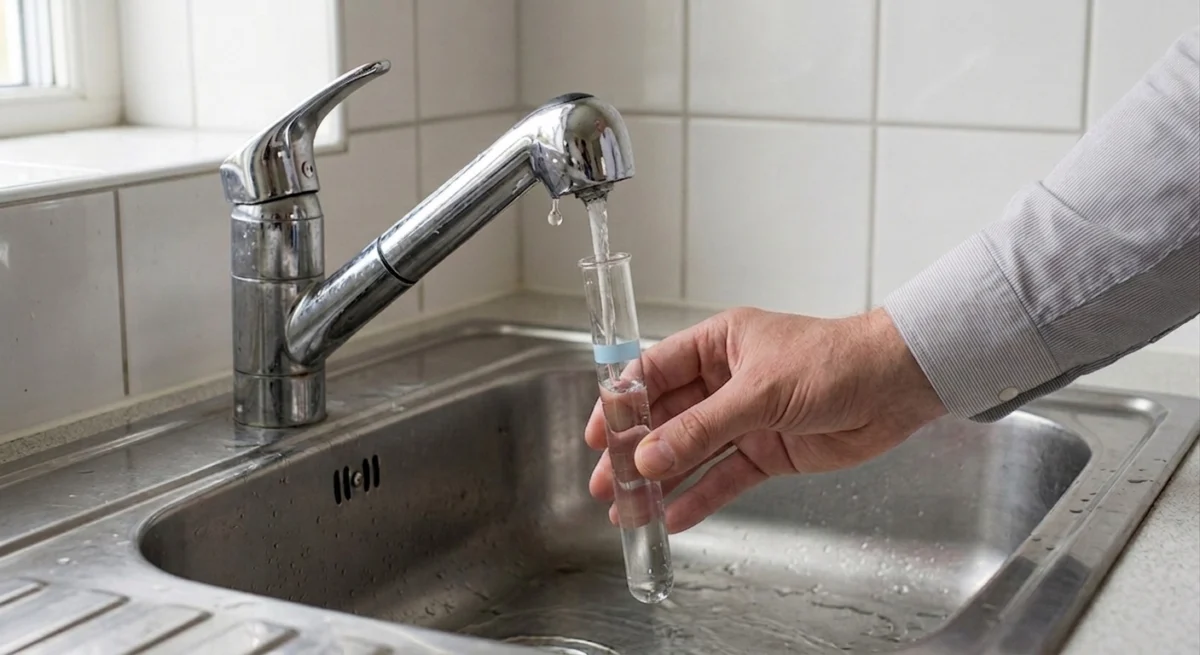
Schools and nurseries may contain water outlets that are used at different frequencies throughout the year.
Periods of lower occupancy can also mean some outlets remain unused for longer periods.
An assessment can identify:
The report explains any recommended actions in clear language.
Legionella Risk Assessments for Gyms and Leisure Facilities
Gyms and leisure settings may contain multiple showers, changing facilities, hot and cold water systems and other outlets that can produce fine water droplets.
These systems may require greater attention because of:
Our assessment reviews the relevant parts of the system and identifies appropriate control measures.
Our Commercial Legionella Assessment Process
We keep the process clear and straightforward.
1. Tell Us About Your Premises
Provide basic details about the building, its use and the water system. This allows us to understand the likely scope of the assessment.
2. Arrange the Site Visit
The assessor attends the site at a suitable time. Access may be required to taps, showers, plant areas, boilers, cylinders, storage tanks, and other relevant water-system components.
3. We Assess the Water System
The assessor reviews the water system, identifies potential sources of risk and considers the control measures already in place. Where appropriate, water samples may also be taken.
4. Receive Your Written Report
Following the assessment, you receive a clear written report outlining: What was inspected, Risks identified, existing controls, Overall risk level, recommended control measures, and any remedial actions
5. Follow the Recommended Actions
If improvements are recommended, the report explains what should be addressed.The recommendations are based on the actual risks identified within your premises.
What Does a Commercial Legionella Risk Assessment Include?
The exact scope depends on the building and its water system.
A typical assessment may ide incluhe following.
Hot and Cold Water Systems
We review how water enters, circulates through and leaves the building. This may include pipework, connections and stored-water arrangements.
Water Temperatures
Temperatures may be checked to determine whether the water system is operating in a way that helps control Legionella growth.
Water Storage Tanks and Cylinders
Where storage tanks or cylinders are present, their condition and operation are considered.
Showers and Spray Outlets
Showers and other outlets producing fine water droplets receive particular attention because they can provide a route of exposure.
Little-Used Outlets
Taps, showers and other outlets that are rarely used may allow water to stagnate. These are identified as part of the assessment.
Dead Legs and Redundant Pipework
Unused pipework can create areas where water remains stagnant.Potential dead legs or redundant pipework are considered where relevant.
Condition of the System
Visible issues such as:
- Scale
- Corrosion
- Poor insulation
- General deterioration
may be recorded as part of the assessment.
People Who May Be at Greater Risk
The way the premises are used and the people using them can affect the overall risk.
Settings with vulnerable occupants may require additional consideration.
Existing Control Measures
We can review existing measures such as:
- Flushing routines
- Temperature checks
- Cleaning procedures
- Maintenance programmes
- Monitoring records
These measures are considered when determining the overall level of risk.
Legionella Risk Assessment vs Legionella Water Testing
A Legionella risk assessment and Legionella water testing are not the same service.
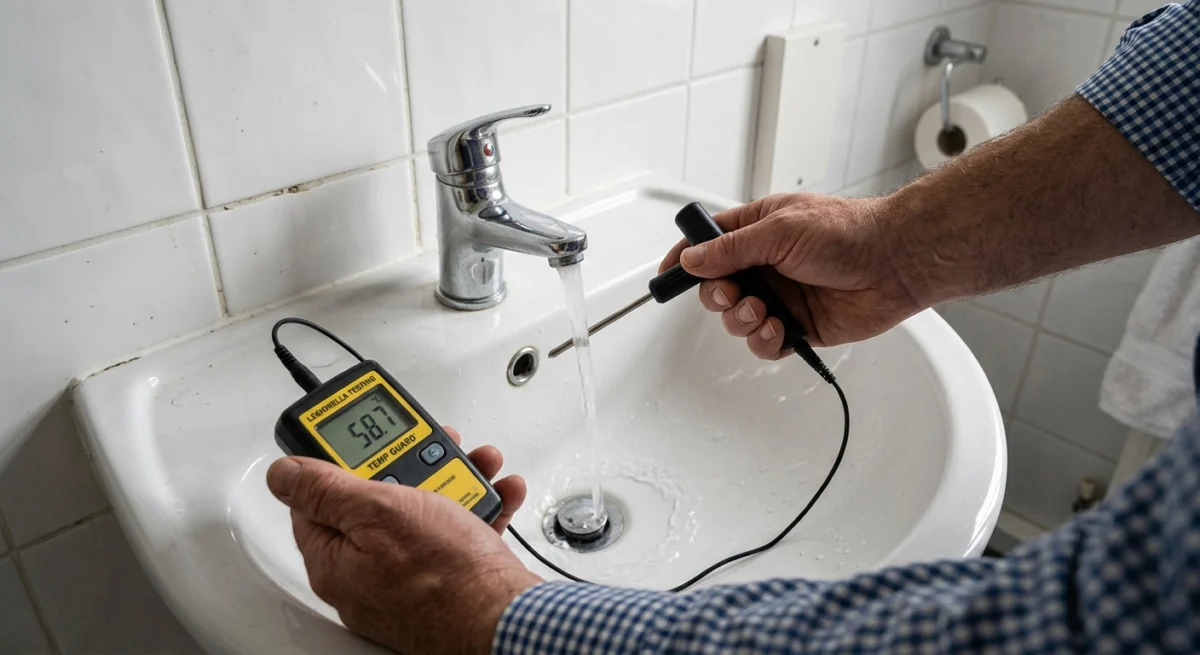
Commercial Legionella Monitoring and Control
For larger or more complex water systems, Legionella management may involve ongoing controls following the initial risk assessment.
Depending on the premises, this may include:
The level of ongoing management should reflect the complexity of the building and its water system.
Water Temperature and Legionella Control
Temperature management is an important part of controlling Legionella in hot and cold water systems.
HSE guidance states that cold water should be maintained below 20°C where possible.
Hot water stored in cylinders should generally be kept at 60°C or above and should normally reach at least 50°C at outlets within one minute.
Different requirements can apply in healthcare settings.
The assessment considers whether temperature management is appropriate for the specific premises and water system.
What Is ACoP L8?
ACoP L8 is the Health and Safety Executive’s Approved Code of Practice and guidance relating to the control of Legionella bacteria in water systems.
It provides guidance for:
- Employers
- Landlords
- Property managers
- Other duty holders
Technical guidance is also provided through HSG274, which covers different types of water systems.
Our assessments take relevant HSE guidance, including ACoP L8 and HSG274, into account.
Frequently Asked Questions
Excellent
Trustpilotabout 14 days ago
Great service
Booked gas, EICR and fire safety checks. Easy online booking, good communication from office team and engineer, arrived on time, friendly service, certificates issued promptly. Great service.
about 26 days ago
Very good process and available at…
Very good process and available at short notice.
about 15 days ago
Great company.
Prompt service. Excellent inspection. Competitive price.
about 20 days ago
Excellent service from start to finish
Excellent service from start to finish. The gas safety certificate and electrical certificate were completed professionally and efficiently. The engineer was punctual, polite and knowledgeable, and explained everything clearly. The whole process was smooth and the certificates were provided promptly. I would definitely recommend this company to other landlords and will use them again.”
about 20 days ago
Great service and really good value
Great service and really good value for money! I got an appointment for the next day, and the certificate was issued on the same day as the inspection. Everything was quick, easy and hassle-free. Definitely recommend!
about 20 days ago
I had a very positive experience with…
I had a very positive experience with this company. The service was professional, friendly, and efficient from start to finish. Communication was clear, and everything was handled exactly as promised.I’m very happy with the overall experience and would definitely recommend this company to anyone looking for reliable, professional service.