



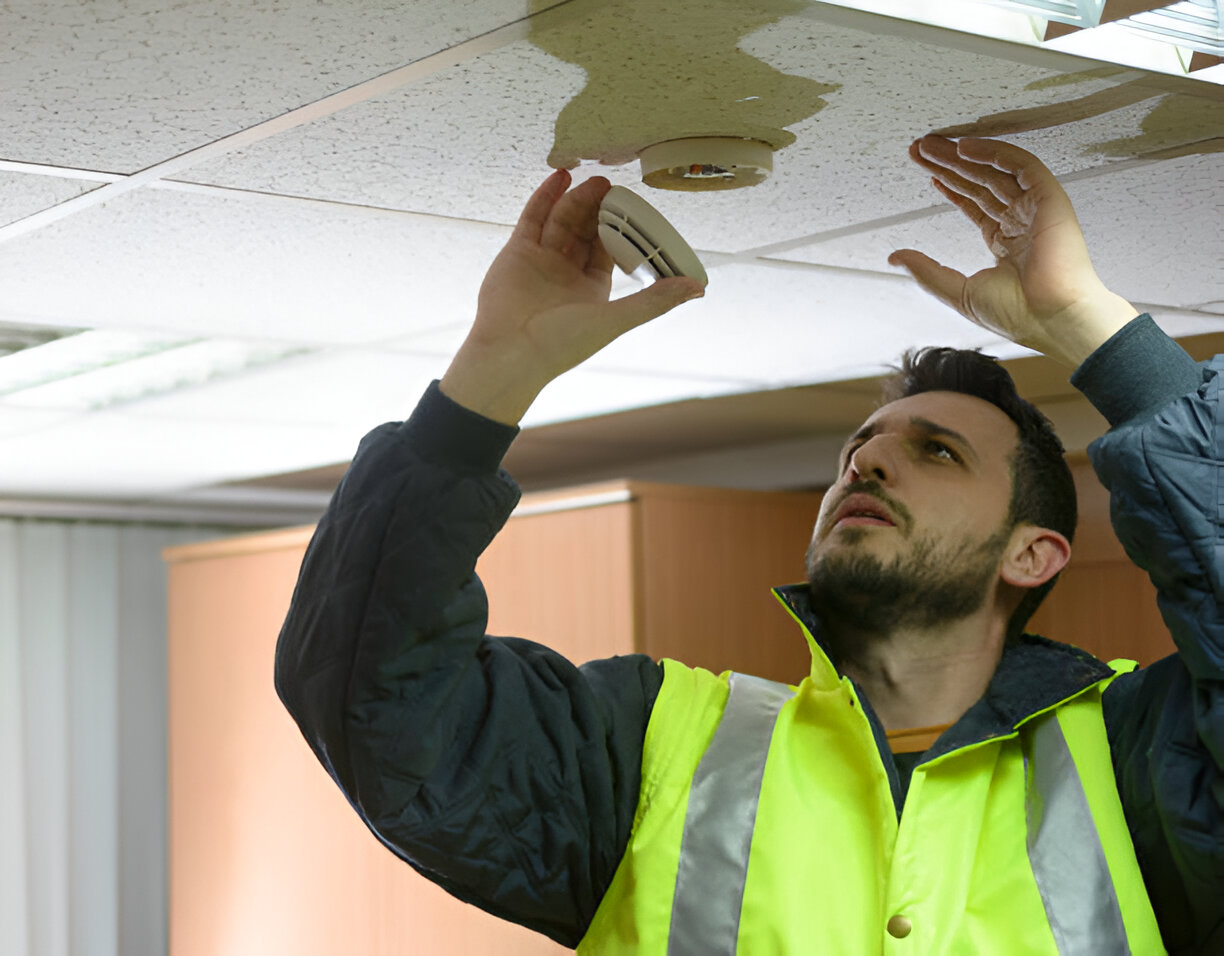
Fire alarm requirements are easy to overlook until a tenant reports a fault, a new tenancy starts, or an HMO inspection raises questions about the system already in place.
Understanding landlord fire alarm requirements helps you deal with these issues before they become urgent. A single rented flat does not always need the same fire detection system as a large HMO or a building with shared areas.
What Are the Basic Fire Alarm Rules for Rented Homes?
For rented homes in England, landlords must provide at least one smoke alarm on every storey where there is a room used as living accommodation. A carbon monoxide alarm is also required in any room used as living accommodation that contains a fixed combustion appliance, except a gas cooker.
Required alarms must be working at the start of a new tenancy. If a tenant reports an alarm as faulty and it is found not to be working, the landlord must repair or replace it as soon as reasonably practicable.
These landlord fire alarm requirements are explained in the official GOV.UK guidance for landlords and tenants.
Does Every Rental Property Need a Full Fire Alarm System?
No. The minimum smoke alarm rules do not mean every rented home needs a control panel, manual call points and a commercial-style alarm network.
The suitable level of protection depends on the building, how it is occupied and any other legal or licensing requirements that apply. A normal single-let flat may need a very different setup from a multi-storey HMO.
If you are unsure what your property needs, a professional fire alarm installation assessment is better than choosing alarms only by price or copying another property.
What About HMOs?
HMOs need more careful attention because the layout, number of occupants and shared escape routes can increase risk.
Landlord fire alarm requirements for an HMO may go beyond the basic smoke alarm rules for an ordinary rented home. Licensing conditions, property layout and local authority requirements can affect what is needed.
A larger or more complex HMO may need an interconnected system that gives occupants enough warning wherever a fire starts. The correct design should be based on the property, not a one-size-fits-all rule.
If the building has communal areas or more complex risks, a fire risk assessment can help identify whether the existing detection and warning arrangements are suitable.
Do Smoke Alarms Have to Be Mains Powered?
The Smoke and Carbon Monoxide Alarm Regulations do not prescribe one specific type of smoke alarm. GOV.UK says landlords should choose alarms based on the needs of the building and tenants and recommends alarms that comply with the relevant British Standard.
So the rules should not be reduced to “battery alarm versus mains alarm”. The useful question is whether the system suits the building and gives people reliable early warning.
In some HMOs and more complex buildings, a professionally designed mains-powered or interlinked system may be more appropriate.
Where Should Smoke Alarms Be Installed?
The regulations require a smoke alarm on each storey used as living accommodation, but they do not set one exact position for every property.
GOV.UK advises following the manufacturer’s instructions. In general, smoke alarms are commonly placed on the ceiling in a circulation area such as a hall or landing.
The London Fire Brigade’s landlord fire-safety guidance also recommends thinking beyond the bare minimum. Its guidance suggests extra detection such as a heat alarm in the kitchen and smoke alarms in halls and lounges where appropriate.
Who Is Responsible for Testing and Repairs?
Landlords must make sure required alarms are working on the first day of a new tenancy. It is sensible to record that test in the inventory or check-in report.
During the tenancy, tenants should report faults promptly. If a prescribed alarm is reported and found faulty, the landlord is responsible for arranging repair or replacement.
This part of landlord fire alarm requirements is easy to miss. Installing an alarm once does not end the landlord’s responsibility.
When Should You Replace or Upgrade the System?
Get professional advice if alarms are repeatedly failing, the property has been converted, the layout has changed, an HMO licence has new conditions, or the system no longer suits how the building is occupied.
Smoke and heat alarms also have a service life. Check the manufacturer’s replacement date rather than relying only on the test button.
A system may also need upgrading when a fire risk assessment finds that warning would not reach everyone quickly enough.
Fire Alarm Installation and BS 5839
BS 5839 is the main British Standard series used for fire detection and alarm systems in buildings. Different parts apply to different types of premises.
For landlords, the key point is not to choose a system grade or category from a blog and assume it fits every property. The right design depends on the building and the fire risk.
A competent installer can assess the property and recommend a suitable system. Landlord Certificate London provides fire alarm installation services across London for landlords who need new alarms, interlinking or a larger fire detection system.
A Simple Checklist Before a New Tenancy
Before handing over the keys, check the landlord fire alarm requirements that apply to your property.
Make sure the required smoke and carbon monoxide alarms are installed. Test them on the first day of the new tenancy and record the test. Check whether HMO or licensing conditions require extra measures. Replace damaged or expired alarms and act on reported faults.
For a more complex property, combine this with a current fire risk assessment rather than treating alarms as a standalone box-ticking exercise.
Final Thoughts
The safest approach is to match the alarm system to the property, not simply install the cheapest device that appears to meet a minimum rule.
Landlord fire alarm requirements start with basic smoke and carbon monoxide alarm duties, but some London properties need more. HMOs, communal areas and converted buildings can require a more considered approach.
If you are unsure whether your existing alarms are suitable, have the property assessed before making changes. A properly planned system is easier to maintain and gives tenants better early warning when it matters.
Frequently Asked Questions
Yes. In England, relevant landlords must provide at least one smoke alarm on every storey where there is a room used as living accommodation.
Landlords must make sure prescribed alarms are working on the first day of a new tenancy. Keeping a written record is sensible.
They can be. HMOs may have additional licensing and fire safety requirements depending on the size, layout, occupancy and local authority conditions.
About the Author: LandlordCertificate

Related Posts

Get Social
Recent Posts
- Residential EICR London: Complete Electrical Safety Inspection Guide for Landlords & Homeowners
- Property Owners and Landlords Across London
- Emergency Lighting Assessment Failure Signs: 4 Critical Indicators Your System Needs Immediate Attention
- Annual Fire Alarm Inspection Checklist and Industrial Facility Solutions Safety Plan: 5-Step Shield
- Fuse Box Installation by a Certified Fuse Box Electrician for Circuit Failures and Safety Control